
A week of high-stakes exploration has ignited fresh hope for the Lagina brothers and their team on Oak Island, as they uncover tantalizing clues in the northern region of the triangle-shaped swamp that could crack a 230-year-old treasure puzzle.
Brothers Rick and Marty Lagina, along with partner Craig Tester and a dedicated crew including archaeologist Laird Niven, archaeometallurgist Emma Culligan, and metal detection expert Gary Drayton, have revealed two man-made features: a stone pathway and a enigmatic vault-like structure. These findings are stirring speculation about their connection to the island’s storied past, particularly the 19th-century landowner Anthony Graves.
The stone pathway, described by team members as consisting of uniformly sized rocks without gravel—suggesting deliberate construction—has prompted comparisons to Graves’ era. “If this was natural, you wouldn’t have such a tight distribution of size,” noted surveyor Ian Spooner during the dig. Alex Lagina, son of Marty, concurred, linking it to Graves’ influence on the property.
Even more intriguing is the submerged vault, initially mistaken for a simple cellar but now believed to be a potential hiding spot. “Purpose unknown,” Rick Lagina reflected. “So was it a hiding place? Did Anthony Graves set it up himself to hide his own stuff in? That’s what we hope to find out.”
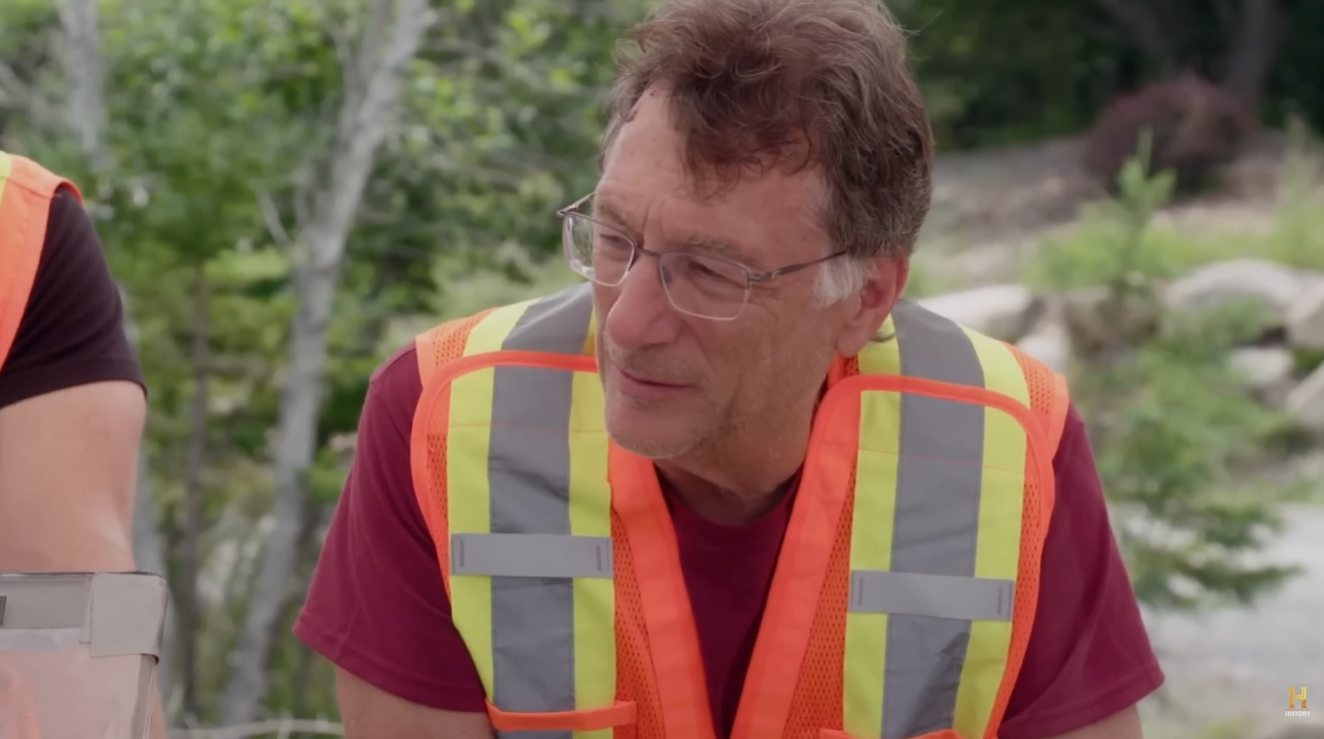
Graves, who purchased much of Oak Island in 1857 and built his home north of the swamp, was never directly involved in the Money Pit treasure hunts. However, local lore claims he unearthed a cache of Spanish silver coins on his land, using them as currency for purchases. The team wonders if the vault ties into this legend.
During excavation, metal detection yielded unexpected artifacts. Drayton pulled up a rusted pipe attached to a piece of brick, puzzling the group. “That is certainly not what I expected,” Alex Lagina exclaimed. Further digs by Rick Lagina and landowner Tom Nolan revealed a handle—possibly from a chest or crank—and a wrought iron hook. “A handle off a chest,” Rick suggested, while Nolan marveled at the perfectly cut slate lining the structure.
Analysis in the Oak Island laboratory provided chronological insights. Culligan examined the items using CT scans and metallurgy tests. The handle and hook showed wood grain-like structures indicative of wrought iron, with the hook dating to the early to mid-1800s due to manganese content—aligning with Graves’ time (he died in 1888). However, the pipe and crank handle trace back to the late 1700s, predating Graves’ recorded ownership. “That’s before we have a record of Anthony Graves on that lot,” Culligan explained.
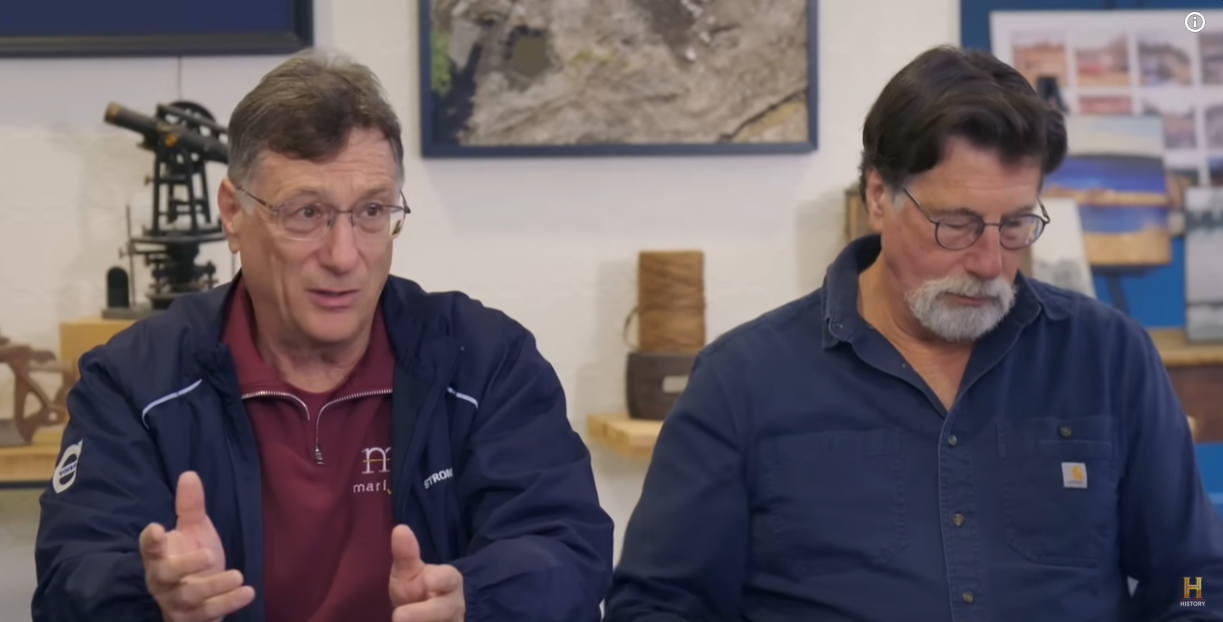
This discrepancy raises profound questions: Who built the vault, and for what? “There’s a purpose to this feature,” Rick Lagina asserted. “I think it has to do with Anthony Graves. I think it was his safety deposit box.” He connected it to a Spanish coin found on nearby Lot 5 and Graves’ rumored coin usage.
The team, undeterred by the swamp’s challenges, plans further excavation. “We need to excavate this and see what is at the bottom of it,” Nolan urged. Rick Lagina, ever the optimist, added, “I’m trying to find this treasure. Sometimes, you got to get dirty.”
As the Lagina team presses on, these discoveries add layers to Oak Island’s enigma, blending history, archaeology, and the allure of hidden riches. Whether the vault holds more secrets—or ties into the elusive Money Pit—remains to be seen. For now, the swamp continues to yield surprises, keeping the 230-year quest alive.
The Oak Island Chronicle will provide updates as the investigation unfolds.