Fact or Fake? Mysterious Medieval Map Could Rewrite Oak Island’s 230-Year Legend


A 14TH-CENTURY MAP OR A MODERN HOAX?
A newly surfaced “medieval” map dated 1347 is shaking the foundations of one of North America’s greatest unsolved mysteries — the legend of Oak Island. The document, written in shaky French and marked with baffling codes, appears to depict Smith’s Cove and the infamous Money Pit, the very heart of the 230-year-old treasure hunt.
The map’s cryptic notations — including the phrases “l’île desen” (“the islands of oak”) and “latrus trap” (“hole under the hatch”) — seem eerily connected to key Oak Island landmarks. Even more startling, hidden symbols allegedly spell out the words “gold” and “Joab,” a Biblical reference to King David’s general.
If authentic, this parchment could rewrite the history of exploration — proving that Europeans mapped Nova Scotia a century before Columbus. But if fake, it could become the latest in a long line of Oak Island hoaxes.
Historians, however, are skeptical.
“The grammar is wrong, the compass orientation is wrong, and the timing is suspicious,” said Professor André Costouolis of Dalhousie University. “It looks like someone trying to write medieval French after watching the TV show.”
THE LEGEND THAT NEVER DIES
The fascination began in 1795, when a teenager named Daniel McInnis and his friends found a strange depression in the earth on Oak Island, Nova Scotia. Beneath it lay wooden platforms, one every ten feet, hinting at a man-made structure. Locals whispered of pirate treasure and an ancient curse — that seven must die before the treasure is found.
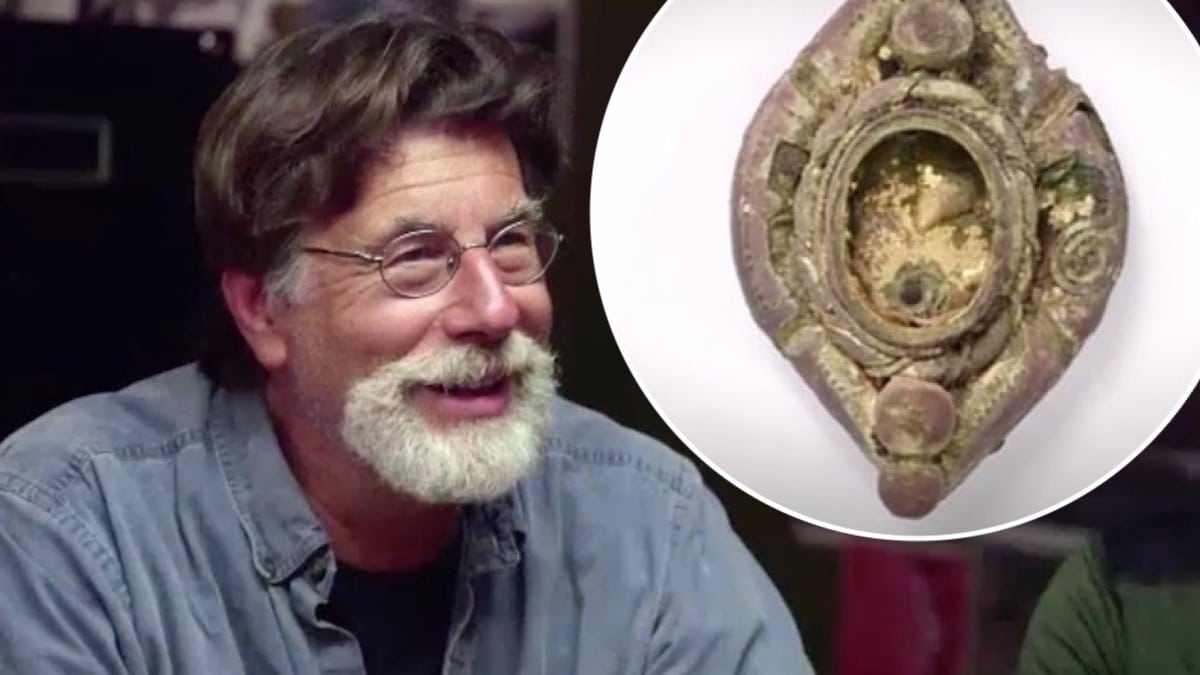
Over the next two centuries, dozens of companies, from the Onslow Company (1802) to Triton Alliance (1970s), spent fortunes digging deep shafts, draining flood tunnels, and unearthing curious clues — coconut fibers, carved stones, and ancient timber — but no treasure.
Tragedy often followed. Explosions, gas leaks, and collapses have claimed six lives — just one short of the fabled curse’s deadly tally.
THE LAGINA BROTHERS REVIVE THE HUNT
The mystery found new life in 2005, when Michigan brothers Rick and Marty Lagina bought a controlling stake in Oak Island Tours and launched a modern-day expedition combining science, engineering, and historical research.
Their quest was captured by the hit series The Curse of Oak Island on the History Channel, which debuted in 2014. Viewers watched the team discover a medieval-style cross, a 1650s Spanish coin, and coconut fiber carbon-dated to 1200–1400 AD — proof, perhaps, that something ancient lies buried deep beneath the island.
Still, the treasure itself has never surfaced.
So when the so-called 1347 map appeared online in late 2024, fans and skeptics alike took notice.
THE MAP THAT CHANGED EVERYTHING
The document, attributed to a mysterious figure named Halpern, was supposedly discovered in a private European collection. It depicts a small island off the Atlantic coast with hand-drawn coves, strange French captions, and compass markings that place west at the top — a detail almost unheard of in authentic medieval maps.

Key phrases include:
-
“L’il desens” — “The islands of oak.”
-
“Latrus trap” — “Hole under the hatch.”
-
“No ei” — “Don’t go here by boat.”
-
“Leas trabon” — “Southern Indians work well.”
But linguists say these phrases are grammatically broken — full of errors no medieval French speaker would make.
“The person who wrote this didn’t understand French,” said one translator. “It reads like modern English passed through an online translator.”
Even so, the Lagina brothers refuse to dismiss it outright. “We’ve seen stranger things turn out to be real,” Rick said. “If there’s even a one percent chance this is legitimate, we have to look.”
Marty agreed: “We’re not calling it proof — we’re calling it motivation.”
A HOAX, A CLUE, OR A CATALYST?

Skeptics say the map’s sudden appearance — right as the TV series enters a new season — is just too convenient.
“After 700 years of silence, a map from 1347 suddenly surfaces and points to the exact same cove the show just excavated?” said historian Dan Conlin, who has tracked the Oak Island story for decades. “That’s not history. That’s marketing.”
But treasure hunters know better than to ignore coincidence. The Laginas have already reopened archival research, revisiting old leads tied to French explorers, Templar legends, and Masonic symbols. They’ve even reexamined the mysterious inscribed stone reportedly found at 90 feet in the original pit — now lost to time.
Every anomaly, every scrap of lore, is being re-evaluated through the lens of the new map.
THE CURSE CONTINUES
For all its controversy, the so-called Map of 1347 has reignited global interest in Oak Island. Online forums are flooded with debates, overlays, and armchair codebreakers claiming to spot hidden messages.
Whether it’s a fake, a forgotten relic, or a clever piece of modern myth-making, the map has done what no gold bar ever has — it’s breathed new life into a 230-year-old mystery.
As for the Laginas, their hunt continues. “We’ve come too far to stop now,” Rick said. “If this map is real, we’re closer than ever. And if it’s not… well, we’ll find out soon enough.”