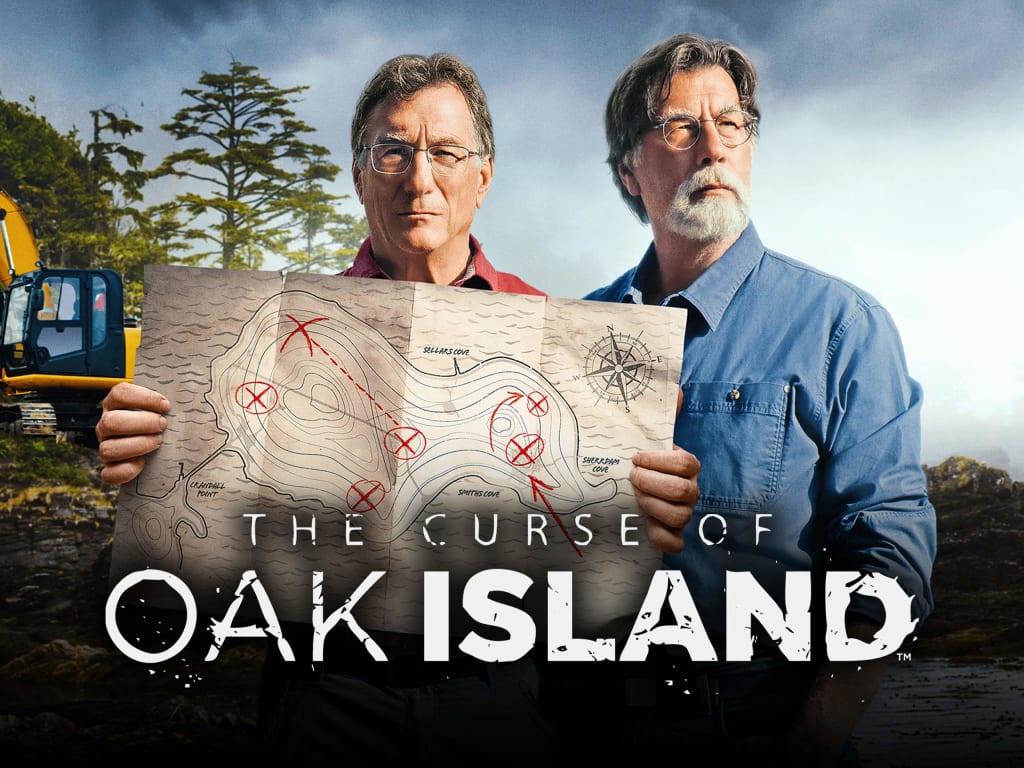
The legendary mystery of Oak Island — long said to hide the world’s most sought-after treasure — may have reached its most extraordinary turning point yet. After years of exploration, setbacks, and speculation, Rick and Marty Lagina and their team have uncovered a series of discoveries that could rewrite the island’s 230-year-old enigma.
In the latest season of The Curse of Oak Island, the team’s persistence has revealed new structures, artifacts, and tunnels suggesting that something of immense historical and possibly religious significance still lies buried beneath the island’s surface.
A DISCOVERY THAT STUNNED THE CREW
“Holy cow. Is it truly silver?” gasped one crew member as a bright fragment emerged from the soil.
“It is silver,” came the reply.
That moment, captured during filming, marked the beginning of a cascade of discoveries that has electrified both fans and experts. Excavations in the swamp and Money Pit regions have yielded 15th-century wooden structures, cobblestone paths, and gold-plated military buttons — artifacts that point to organized human activity centuries before European settlers officially recorded the area.
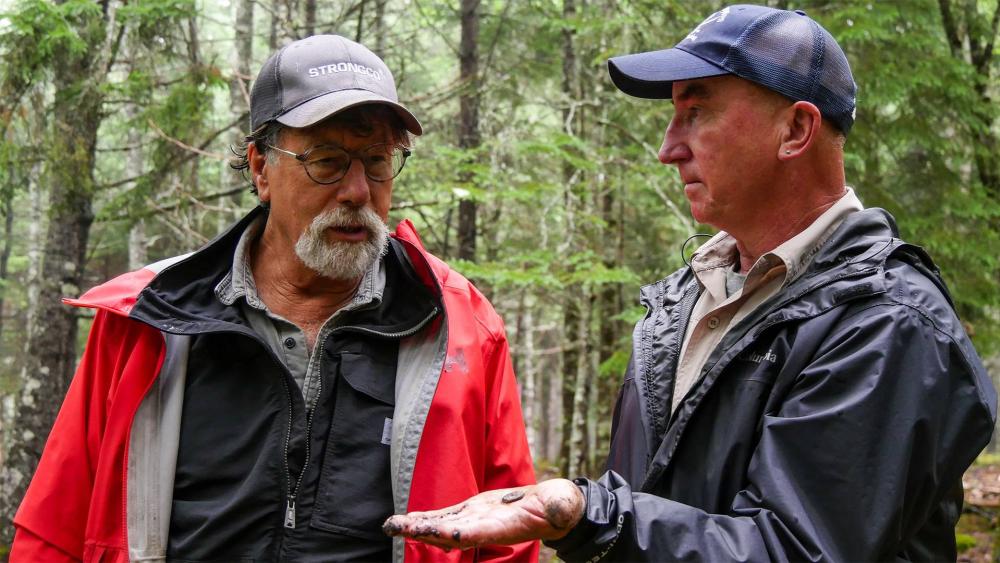
On Lot 5, archaeologists unearthed a rectangular stone foundation and a hand-forged nail that metallurgical testing traced to the 12th century — a result so old it left even the team’s scientists stunned. “The iron has high sulfur and no manganese,” explained metallurgist Emma Culligan, “which means it was smelted using medieval-era techniques.”
ANCIENT RELICS AND A MYSTERIOUS MAP
Adding to the intrigue, researcher John Edwards, an expert in Masonic and Templar symbolism, believes Oak Island may be the final resting place of one of history’s most sacred relics — the Ark of the Covenant.
According to Edwards, early Masonic texts and Rosicrucian manuscripts hint that Freemasons and Templars hid religious treasures in Nova Scotia between the 12th and 18th centuries.
Edwards recently presented the Lagina brothers with two rare manuscripts — one containing a coded map dated 1812. “The map’s outline is unmistakable,” he said. “It resembles Oak Island, and the symbols correspond to Masonic references to the Holy Ark and a sacred vault.”
The theory connects with the island’s Nolan’s Cross, a set of six megalithic boulders aligned like the Tree of Life — a revered symbol among the Knights Templar and Freemasons.
THE GARDEN SHAFT AND THE HIDDEN TUNNEL
Meanwhile, engineering work by Dumas Contracting Ltd. has reignited interest in the fabled Money Pit — the original site where treasure hunters first dug in 1795. Extending the 18th-century Garden Shaft to a depth of 100 feet, the crew discovered the remains of a wooden tunnel carbon-dated to the 17th century.
“The wood dates between 1631 and 1684,” confirmed engineer Craig Tester. “That’s more than a century before the first recorded searchers arrived. Whatever was built down there predates modern exploration.”
Water-testing in the same shaft has shown unusually high traces of gold and silver, fueling hopes that the tunnel may lead directly to the Money Pit or a concealed treasure chamber.

TREASURE, TECHNOLOGY, AND TEMPLARS
Archaeological finds have continued to surface across the island:
-
Gold-plated naval button — identified as belonging to an 18th-century British officer.
-
Silver artifact — nearly 100 percent pure, possibly from the lost Spanish treasure ship Concepción, recovered in part by privateer Sir William Phips in the 1600s.
-
Concrete-like mortar — suggesting advanced, human-made structures far older than local records indicate.
These results have strengthened the theory that Freemasons or Knights Templar engineers may have built secret vaults beneath the island to conceal gold, silver, and religious relics brought from Europe.
“The chemistry of the artifacts matches metals recovered from the Concepción,” said archaeologist Laird Niven. “It’s a strong clue that the island’s builders had access to global trade — or global secrets.”
THE SWAMP THAT WON’T GIVE UP ITS SECRETS
In Oak Island’s southern swamp, Gary Drayton, Jack Begley, and Billy Gerhardt uncovered timber planking fitted with tongue-and-groove joints — unmistakable signs of ship construction. “It looks like deck planking,” Drayton said. “Could be from a vessel deliberately sunk here centuries ago.”
Nearby, the team mapped a stone-paved road and stair-like boulders leading toward a massive rock outcrop believed to be a landmark for early workers. Ground-penetrating radar then revealed anomalies beneath the swamp, pointing to a network of interconnected tunnels — possibly leading to a buried chamber.

THE DISCOVERY THAT SHOOK OAK ISLAND
After months of excavation at the B4C shaft, the team struck a tunnel around 90 feet deep containing broken timbers, iron fragments, and evidence of metal traces consistent with gold. Excitement reached fever pitch when further drilling revealed what appeared to be a large chamber sealed beneath layers of rock.
As they breached the final barrier, cameras captured the team’s astonishment: a hidden vault lined with silver ornaments, gemstones, and gilded artifacts — long-awaited proof that Oak Island’s legends may be rooted in truth.
While full verification is pending laboratory analysis, early results indicate the metals are centuries old and of European origin.
“This is the discovery of a lifetime,” said Rick Lagina. “We’ve chased shadows for years, and now we’re finally seeing light.”
A NEW CHAPTER IN A 200-YEAR-OLD MYSTERY
The Lagina brothers’ achievement marks a watershed moment in Oak Island’s history — part science, part legend, and part faith.
For centuries, the small island off Nova Scotia’s coast has inspired treasure hunters, scholars, and skeptics alike. From early digs in 1795 to modern-day sonar and carbon-dating, every generation has inched closer to an answer.
If confirmed, the team’s findings could link the island to lost Templar riches, colonial conspiracies, or even biblical relics — rewriting not just Canadian lore but global history.
“WE’RE JUST GETTING STARTED”
Despite whispers that the “Curse of Oak Island” has finally been broken, the team remains cautious. “Every discovery opens ten more questions,” Marty Lagina said. “But this time, we might actually be holding the key.”
The next phase of exploration will focus on expanding the Garden Shaft and analyzing the newly found chamber. Laboratory results are expected later this year.
For now, one truth is undeniable: after centuries of mystery, Oak Island is no longer just a legend — it’s a living archaeological frontier.
