
Oak Island, NS – In a stunning twist on this week’s episode of The Curse of Oak Island, the search for legendary treasure took a medieval turn. The team unearthed artifacts so ancient and distinct, experts believe they could reshape our understanding of who may have visited the island centuries before the infamous Money Pit was discovered.
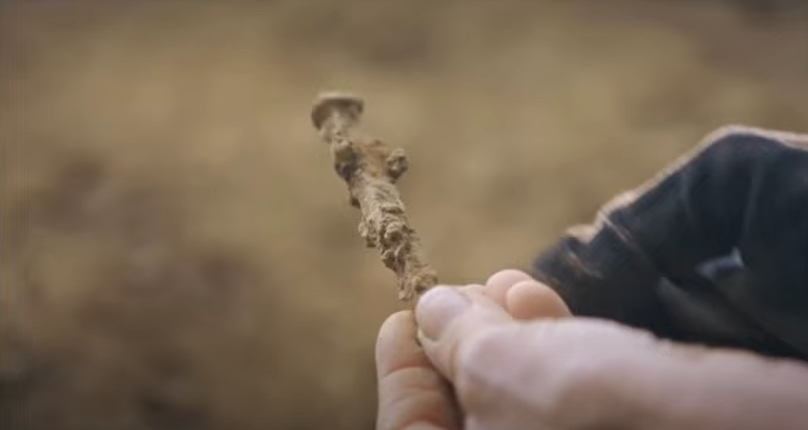
While excavating a northern section of the island’s swamp—near a site long suspected to be a man-made dam—Gary Drayton and Tom Nolan uncovered a heavily corroded iron object. Initially appearing as little more than rusted metal, it quickly drew attention for its unique design. Drayton believes it may be a ramrod guide, a key component of a musket potentially dating back to the 16th century.
“This could predate the Money Pit entirely,” said Drayton. “We’re talking about the kind of weaponry linked to elite medieval forces—possibly even the Knights Templar or the Knights of Malta.”
Adding fuel to the historical fire, just steps away from the find, the team discovered an aged, handmade brick—eerily similar to those found atop a previously uncovered slate-and-brick vault. However, this one wasn’t part of that structure, suggesting a second vault site, possibly supporting the late Fred Nolan’s long-held theory of multiple treasure caches on the island.
Tom Nolan, Fred’s son, sees this as vindication: “My father believed Oak Island held more than one secret. This could be the proof.”
Even more compelling, the artifacts were located near what some believe matches the layout of a 14th-century map allegedly created by the Templars—a map once provided to the team by the late historian Zena Halpern.
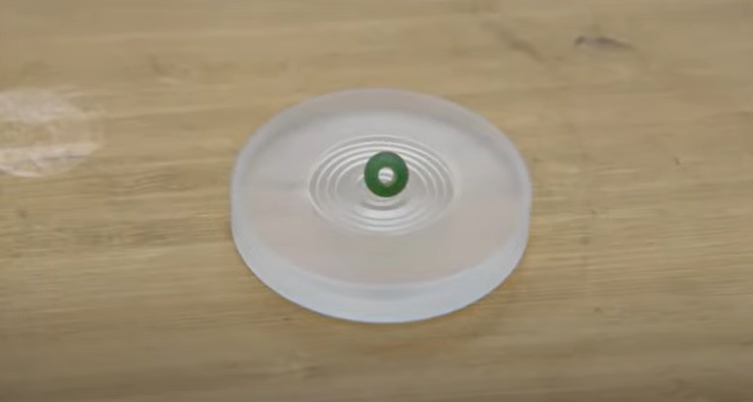
Meanwhile, over on Lot 5, the discoveries continued. Jack Begley and archaeologist Fiona Steel uncovered a square nail, likely pre-1795, possibly even medieval. But the real bombshell came when Steel found a wound glass bead—a rare artifact featuring tiny spiraled striations, indicating it was made using a labor-intensive, pre-industrial technique.
Back in the lab, Emma Culligan and Laird Niven analyzed the bead using X-ray fluorescent spectrometry. The result? A glass composition of 26% potassium and nearly zero sodium—confirming the bead as medieval Northern European forest glass, not Venetian.
“This type of glass was made from ferns, not sand,” said Culligan. “It’s a hallmark of medieval European craftsmanship.”
These discoveries add to a growing body of evidence on Lot 5, which has already yielded a 14th-century barter token, Venetian trade beads, and symbols linked to secretive medieval orders. Combined, these finds suggest the site was visited repeatedly by multiple waves of historically significant travelers, possibly with military or religious affiliations.
“This is no longer legend,” said Rick Lagina during the episode. “We’re talking about tangible, datable, physical evidence. The story is becoming clearer—and far older—than we ever imagined.”
As Oak Island continues to give up its secrets, one question looms larger than ever: What was so valuable—or so dangerous—that it had to be hidden with such precision and secrecy?
Whether it’s treasure, relics, or ancient knowledge, one thing is certain: the past is speaking, and Oak Island is far from finished.
