Oak Island Digs Deep: Gold Coin, Ancient Artifacts, and Flood Tunnel Clues Unearthed at Smith’s Cove

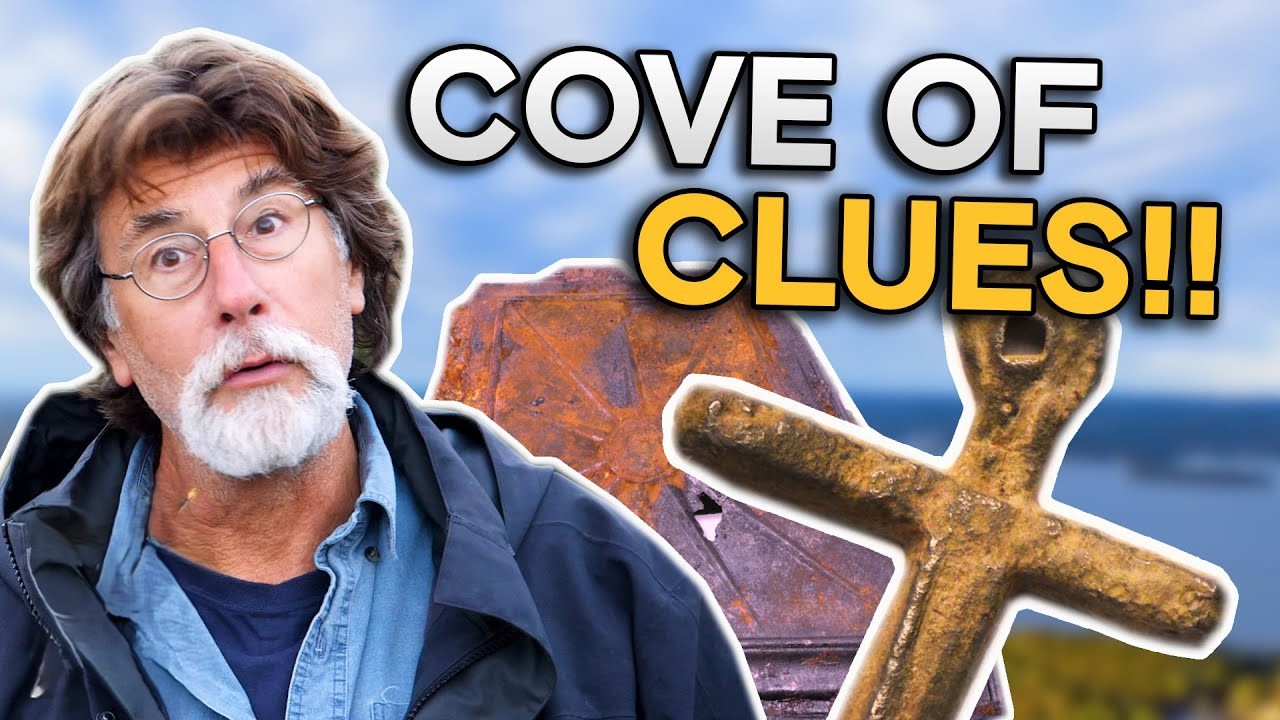
In a surge of excitement that’s captivating treasure hunters worldwide, the Oak Island team led by brothers Rick and Marty Lagina has made a series of tantalizing discoveries during their ambitious excavation of Smith’s Cove. With a massive 525-foot-wide steel cofferdam now enclosing the 12,000-square-foot site, the team is peeling back layers of history in pursuit of the island’s 223-year-old enigma, potentially linking to legendary treasures, Knights Templar relics, and elusive flood tunnels guarding the infamous Money Pit.
The dig kicked off with high hopes, as the team targeted the enigmatic U-shaped structure first unearthed by Dan Blankenship in 1971. “I’m feeling sort of a childish excitement,” Rick Lagina admitted, eager to reveal the feature in full and share findings with the veteran searcher. Metal detection expert Gary Drayton wasted no time, scanning spoil piles and unearthing a gold-colored object resembling a coin. “I can see gold color,” Drayton exclaimed. Lacking milled edges—a feature common after the mid-18th century—the artifact could predate the 1795 Money Pit discovery. “It’s not copper either. It’s like gold plated,” he noted, pocketing the “top-pocket find” for further analysis.

As operations continued, heavy equipment operator Billy Gerhardt spotted leaking water and buried timbers beneath a crane pad. “There’s some timbers in there too,” he reported. The team uncovered planks and cross pieces, suggesting a man-made structure possibly designed to block a flood tunnel. “Why so many structures in a very confined space?” Rick pondered. “It doesn’t get any better than this—maybe it is a floodgate.”
Returning to the site where a 14th-century lead cross—potentially tied to the Knights Templar—was recently found, Drayton and Lagina discovered a lead spoon handle. “That looks like an old shape,” Drayton observed, speculating it was mold-cast. Nearby, a decorative brass piece, possibly from a boat, emerged. “Some kind of decorative brass piece, maybe off the side of a boat,” he said, attributing the finds to storms or erosion exposing long-buried items.

The drama escalated when Drayton and Alex Lagina detected a deep signal along the shoreline. After enlisting help to excavate a water-filled hole, they hauled out a large, encrusted iron object. “We’re gonna need a bigger pouch,” Drayton joked. In the lab, archaeometallurgist Emma Culligan and archaeologist Laird Niven revealed it as a cast-iron stove door with a starburst design, echoing a medieval button found on Lot 5 in 2023. Compositional analysis dated it to the mid-1800s, with manganese levels pushing it later than the 1700s. “It’s a beautiful design,” Niven said, as the team vowed to research its origins for clues to the island’s “complex story.”
Shifting focus to the legendary flood tunnel, the team honed in on a vertical shaft associated with the Restall family’s 1961 efforts. Modern nails and a broken spike surfaced, confirming proximity to the Restalls’ concrete-pouring site. “These traces of the Restalls’ activity to me are saying that we’re getting close,” Rick stated. Craig Tester added, “The next five, ten feet is gonna give us some information.”
As digs persist, the discoveries fuel theories of ancient visitors, searcher interventions, and hidden vaults. “There are clues to the location of the Money Pit here in Smith’s Cove,” Rick asserted. With artifacts piling up—from potential treasure coins to structural remnants—the Oak Island mystery inches closer to resolution, proving hope indeed springs eternal on this storied isle.