Oak Island Mystery Deepens: Folded Copper Coin Hints at Templar Rituals and Hidden Treasures


In a thrilling development on the enigmatic Oak Island, treasure hunters have uncovered a peculiar folded copper artifact that experts believe may tie into ancient religious rituals dating back to the medieval era, potentially linking the site to the legendary Knights Templar and their successors, the Knights of Malta.
The discovery was made during a scan of spoil piles from Lot 5, where team member Gary unearthed the item amid excavations of a round feature. Described initially as a “folded coin or token,” the artifact has sparked intense speculation among the team led by Rick Lagina, with contributions from archaeologist Laird Niven, researcher Emma Culligan, and coin expert Sandy Campbell.
Rick Lagina expressed excitement over the find, noting its uniqueness on the island. “When it came out, I’m thinking, ‘Oh, some kind of like folded coin.’ I’m hoping these are unusual,” he said during a lab examination. The team quickly turned to advanced analysis, including CT scans and compositional testing, to unravel its secrets.
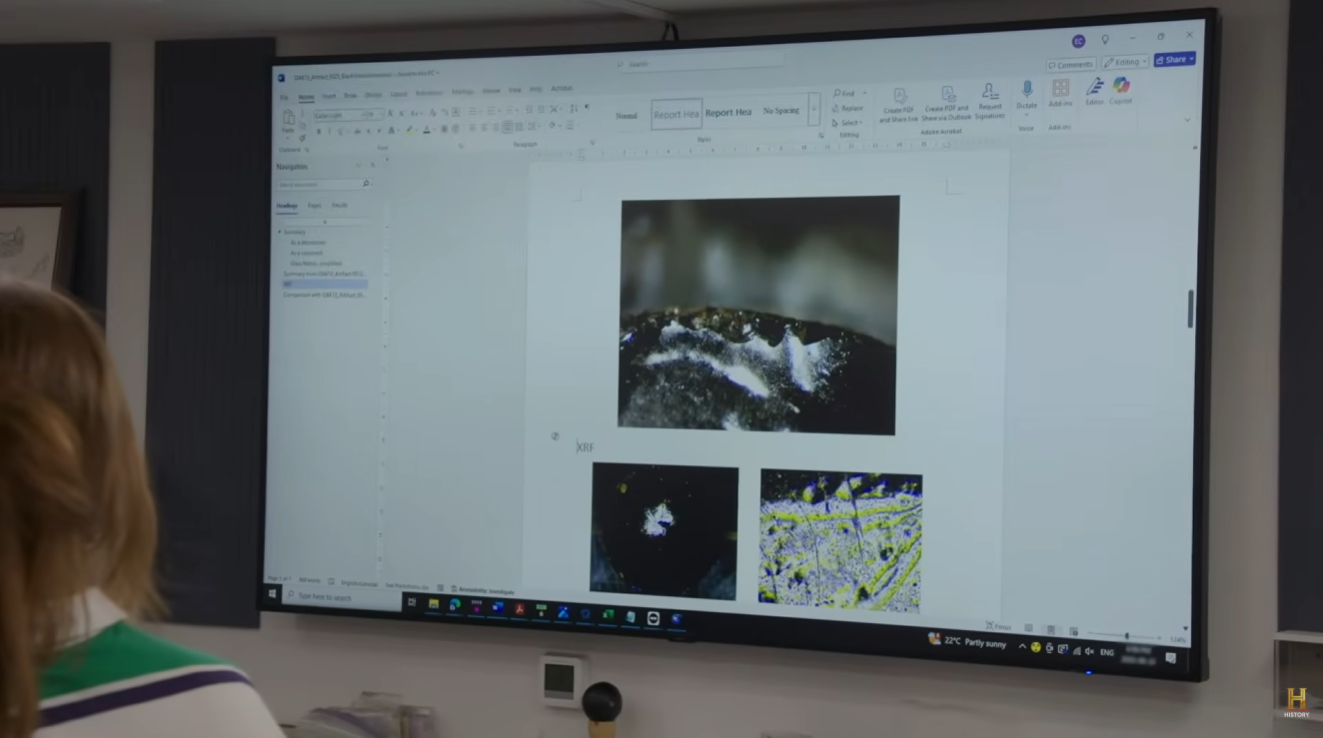
Emma Culligan, who has experience with similar finds in England, suggested it could be a talisman or good luck token. “I have found these type of finds in England, metal detecting, and they normally like talisman or good luck tokens that put out there sometimes to ward off evil or bad luck,” she explained. Historical records trace the practice of folding coins to around 1290 in England, where individuals would fold a coin and pray to a saint for a miracle.
The artifact’s composition—a copper alloy with zinc, arsenic, and lead—points to a post-medieval origin, likely from the late 1600s to mid-1800s, aligning with the Industrial Revolution era. “It’s definitively post-medieval in pre-mid-1800s,” Culligan noted, emphasizing the unusual triple folding. “The triple folding is quite unusual… It is a meaningful artifact.”
Coin expert Sandy Campbell, brought in to examine the piece, confirmed it as a coin and linked the folding ritual to early medieval times. “When they first started folding coins was early medieval times. It represents a ritual that thousands of years old,” Campbell said. He explained that folding was believed to “trap evil” inside the coin, a practice associated with Christianity, the Crusades, and even the Knights Templar. “It relates to Christianity, the Crusades, you know, even the Knights Templar,” he added.
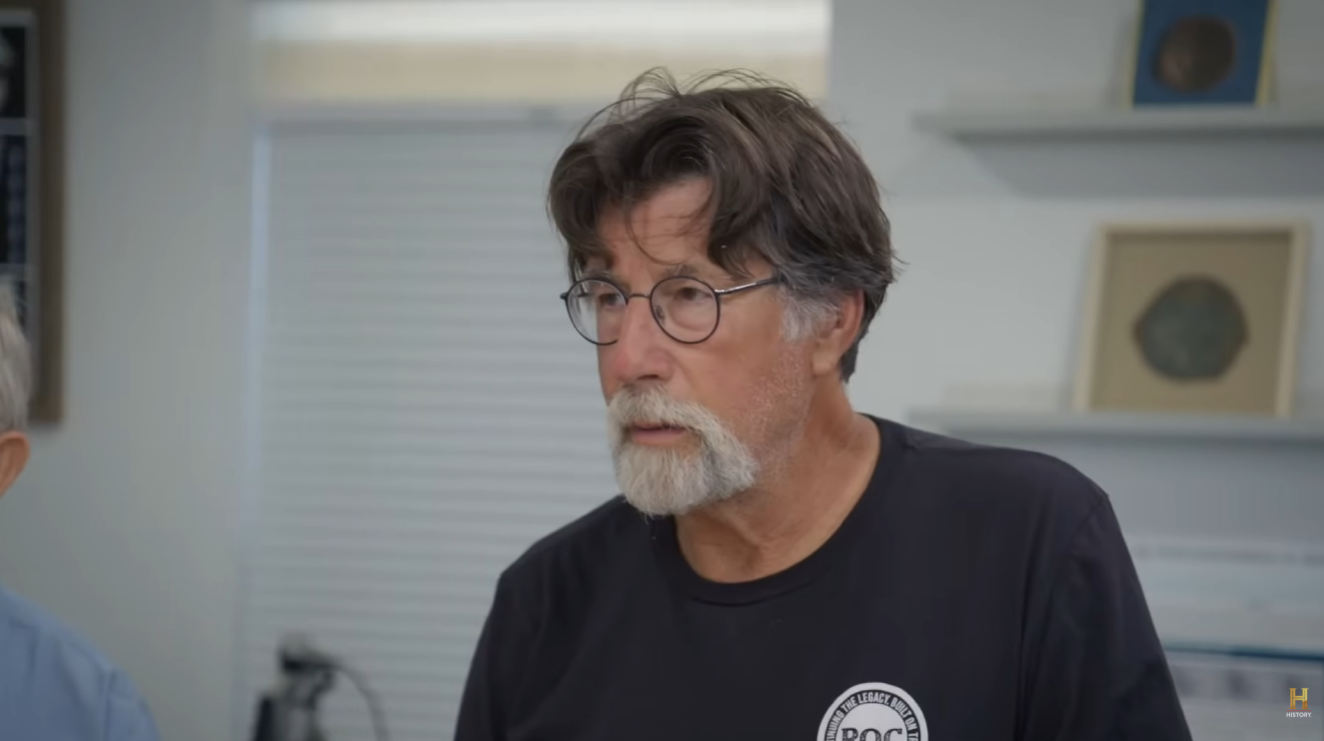
Campbell dated the coin to the 16th or 1700s, ruling out a medieval origin due to its size but affirming the ritual’s persistence. “Folding of coins was also a ritual to honor saints. The Knights Templar, they worshipped both St. George and St. Bernard,” he said, describing how folded coins were tossed away as homage.
The find’s potential symbolism has fueled theories connecting it to other Lot 5 artifacts, such as 1600s-era buttons and trade beads previously linked to the Knights of Malta. Lagina speculated on a seafaring connection: “Sailors came to the island. They were all superstitious, especially in the 17th or 1600s… Coming here from Europe, it was not an easy thing.”
Culligan highlighted the broader implications: “Given the enormity of finds that date to the 1600s… the dates you’re implying are highly suggestive of the connection to the Knights of Malta, their attempt to either create a colony here or to do something else.”

The team’s research also noted the east-west orientation of the Lot 5 feature, reminiscent of Templar-associated constructions in Europe. However, unfolding the coin physically is deemed risky—symbolically and practically. “If you unfold it, you’re on your own there,” Campbell joked, warning of releasing trapped “evil.”
This artifact adds to Oak Island’s storied puzzle, where legends of buried pirate treasure, religious relics, and even the Holy Grail have drawn seekers for centuries. As Lagina reflected, “It’s starting to build a body of evidence, but in order to fully understand what happened on Lot 5, there’s a lot more work to be done.”
With no prior folded coins found on the island, this “one-off” discovery could be a pivotal clue. Further excavations are planned, and experts like Campbell urge caution: “There’s more research to be done.”
As the Oak Island mystery endures, this folded copper token serves as a tantalizing reminder that history’s secrets may still lie just beneath the surface.