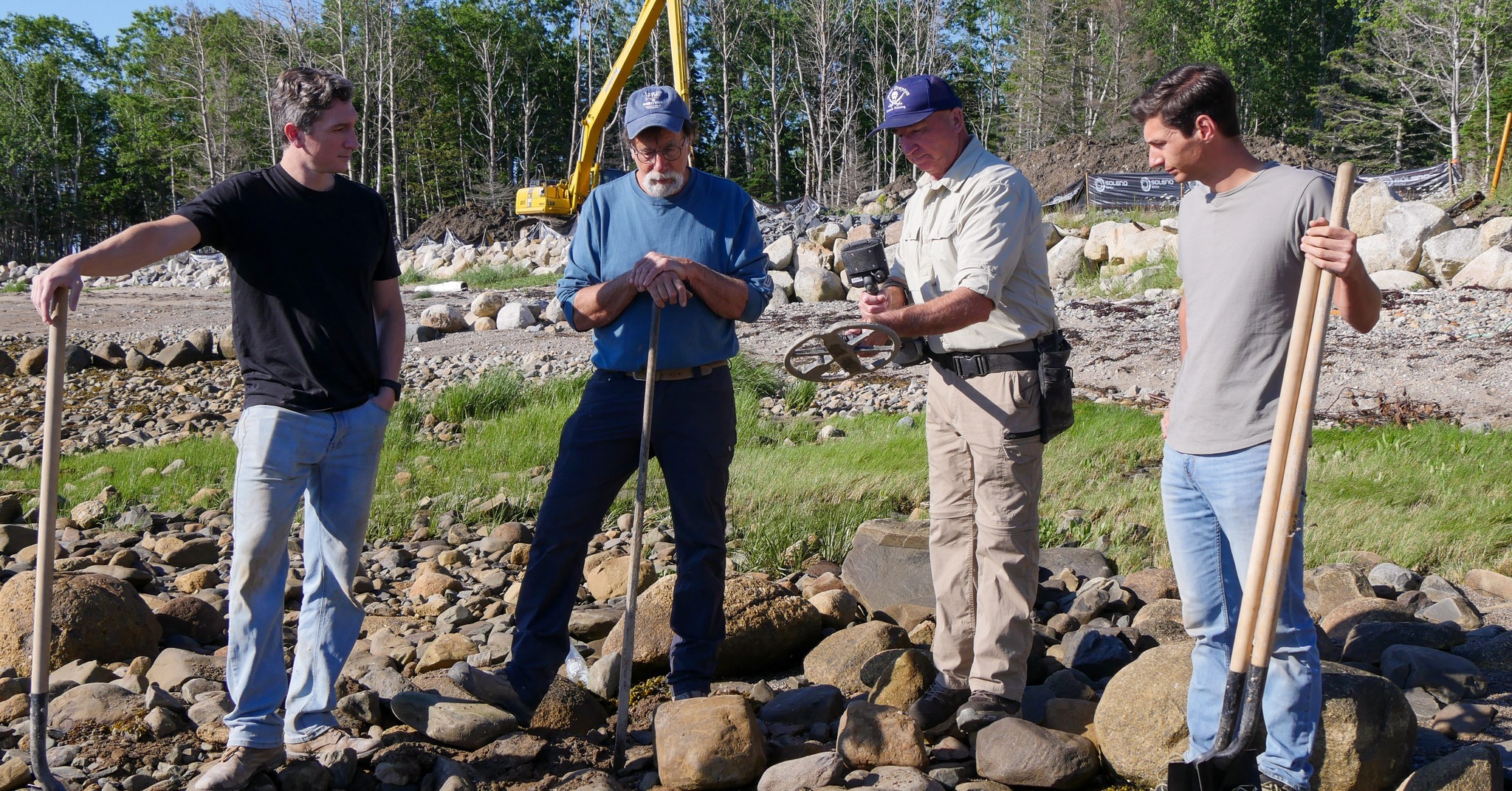
For more than a decade, The Curse of Oak Island has thrived on uncertainty. Each season promises progress, only to end with fresh questions. In recent weeks, however, a new wave of online speculation has gone further than ever before — claiming that the team may have uncovered and quietly sold a major artefact away from the cameras.
The claims centre on Rick Lagina and his brother Marty Lagina, suggesting that a high-value historical object was recovered during late-season drilling and disposed of privately. According to these accounts, the discovery was never shown on screen, and the show’s narrative of inconclusive results was allegedly designed to mask what really happened.
There is, however, no independent evidence to support these assertions.
Online stories describe an underground chamber in the Money Pit area containing chests and a gold navigational instrument supposedly linked to medieval Europe. None of this has been confirmed by the production company, the History Channel, or any recognised archaeological body. No verified documentation, export records, or museum statements exist to indicate that such an artefact has been authenticated, appraised, or transferred.

What has fuelled the speculation is a perceived tonal shift during recent episodes. Long-time viewers have noted moments of caution and restraint from the fellowship, contrasting with the more exuberant reactions of earlier seasons. For some fans, this has been interpreted as secrecy rather than fatigue — though television analysts point out that long-running series often evolve stylistically as expectations are managed and narratives mature.
Experts in heritage law are also sceptical of the rumours. Any discovery of significant historical importance in Nova Scotia would fall under strict provincial and federal regulations. Removing, selling, or exporting such an item without oversight would be legally complex and highly visible. “Objects of that magnitude do not simply disappear,” one Canadian heritage consultant told the BBC in a separate discussion about artefact governance.
The claims also extend to alleged financial windfalls for cast members, including metal-detection specialist Gary Drayton and long-time team member Jack Begley. Again, there is no public record, financial disclosure, or corroborated reporting to support the idea of undisclosed payouts. Participants in the programme continue to appear on screen and in interviews discussing the search in conventional terms.

What this episode highlights is less about Oak Island itself and more about modern fandom. In the absence of definitive answers, audiences increasingly fill gaps with elaborate theories, blending fragments of history, pop culture, and mistrust of institutions. Oak Island, with its centuries-old legends and unresolved questions, provides fertile ground for that impulse.
The series has never claimed to have found a definitive treasure. Its enduring appeal lies in investigation rather than conclusion — a slow accumulation of data, context, and possibility. While that approach can frustrate viewers hoping for closure, it also leaves space for speculation to flourish beyond the screen.
For now, the only confirmed reality is this: the Oak Island team continues to dig, analyse, and debate what lies beneath the ground, and the programme continues to document that process. Until credible evidence emerges, stories of secret sales and concealed discoveries remain exactly that — stories.
In the world of Oak Island, mystery is not just the subject of the show. It has become part of how the audience engages with it.
