Oak Island Team Uncovers Major Ship Clues as New Artifacts Deepen 225-Year Mystery


Oak Island’s long-running search for answers took a dramatic step forward this week as the team uncovered a series of discoveries that may represent the most compelling evidence yet of a buried ship connected to the island’s centuries-old mystery.
During extensive excavation along the border of the Oak Island swamp—an area long suspected of concealing a deliberately hidden vessel—Gary Drayton and David Fernetti unearthed a large iron ring bolt, heavily damaged and bent under extreme force. Ring bolts like this, some dating back to the 17th century, were commonly used aboard large sailing ships to secure cargo or rigging. The object’s severe deformation and traces of burning quickly captured the team’s attention.
After further analysis, materials expert Dr. Krista Taylor confirmed that the black residue covering the artifact was charcoal, indicating the object had endured intense fire. This revelation reinforced theories that a large wooden vessel may have been scorched or deliberately destroyed before sinking into the swamp.
A Possible Ship Railing Emerges From Deep Below
Only days later, excavator operator Billy Gerhardt uncovered a smoothed and finely finished wooden component several feet beneath the swamp floor. Its rounded contours and craftsmanship strongly resembled a ship’s railing—another potential link to maritime activity in the area hundreds of years ago.
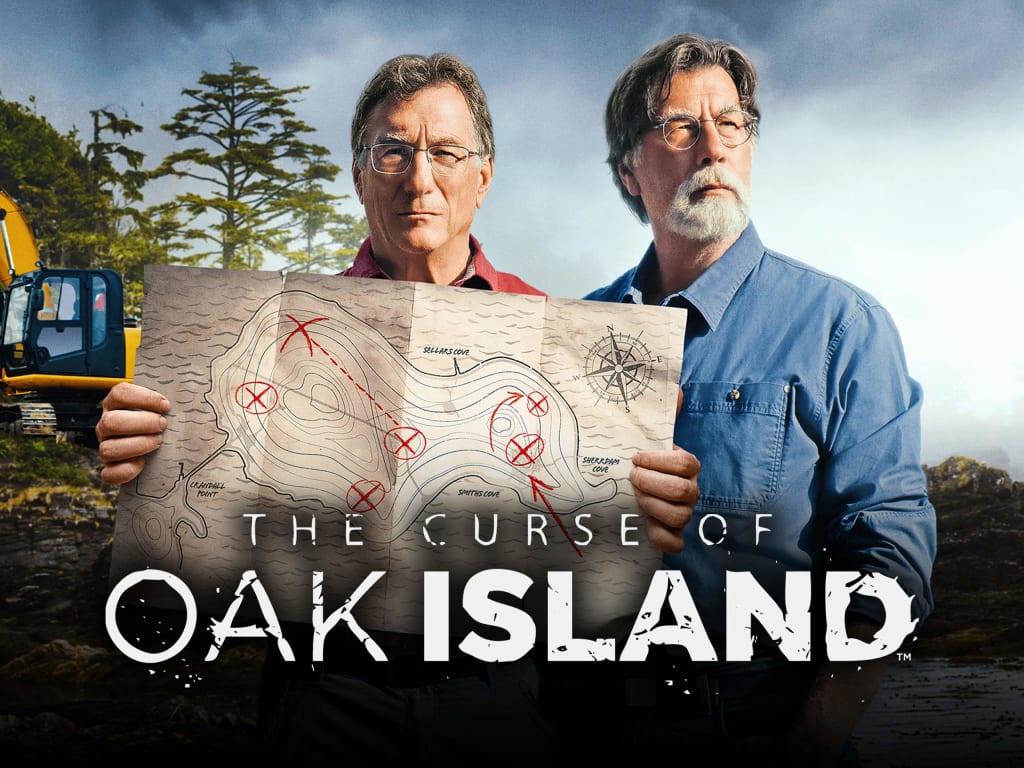
Multiple attempts to dig deeper were thwarted by a massive buried obstruction, preventing Gerhardt’s excavator from reaching bottom. The team now believes they are scraping directly against a large, continuous wooden or metallic structure below the swamp—possibly the hull of the long-theorised hidden ship.
The discovery aligns with seismic scans conducted two years ago that revealed a 200-foot-long anomaly beneath the swamp floor, closely matching the outline of a large sailing vessel.
Expert Review Suggests Evidence of an 18th-Century Ship
Other finds this week included an 18th-century ship spike with a rose-head design, identified by archaeologist Laird Niven as originating between 1710 and 1790. Its size and craftsmanship indicate that it likely came from a sizable vessel, not a small boat.
Later analysis by blacksmithing specialist Carmen Leg provided further confirmation. After examining the burned iron brace recovered from the swamp, Leg determined it was consistent with hardware from a major ship timber—an unmistakable maritime component. He concluded the burned remains likely belonged to a large sailing vessel dating from the early 18th century.
These discoveries, when combined, fueled speculation that a fully loaded treasure ship may have run aground, been intentionally burned, or was scuttled to conceal its contents before being buried beneath the swamp’s triangular basin.

Underwater Survey Strengthens Shipwreck Theory
Adding momentum to the investigation, Rick and Marty Lagina also commissioned CSR GeoSurveys to conduct magnetometer scans of the waters surrounding Oak Island. The data revealed several strong metallic anomalies near Lot 5 and Frog Island—potential signatures of buried shipwrecks.
Underwater archaeologist Dr. Lee Spence, a veteran explorer credited with discovering more than 100 shipwrecks worldwide, joined diver Tony Sampson to inspect the sites.
While thick silt and dense kelp prevented visual confirmation, Spence remains convinced a shipwreck is present near Frog Island. “If I had run this survey myself,” he told the team, “I would think we have one or two shipwrecks right here.”
However, Nova Scotia regulations prevent excavation without physical evidence visible on the seabed. The team now hopes winter storms may help expose part of the wreck, allowing them to apply for a recovery permit.
A Growing Body of Evidence
The combined findings—a burned iron brace, a possible ship’s railing, 18th-century ship spikes, and multiple submerged magnetometer hits—have created one of the most compelling weeks in the modern Oak Island investigation.
For the Lagina brothers, who have spent more than a decade unraveling clues beneath the island’s surface, the significance is unmistakable.

“It may not be the final answer,” Rick Lagina said, examining the railing fragment, “but it clearly played a role in what happened on Oak Island. And not just in a small sense.”
Marty Lagina echoed the sentiment, stating that the team is now more determined than ever to pursue the swamp. “This is our most promising lead. We need to see where it goes.”
On the Verge of Something Bigger?
As the team prepares to continue swamp excavation and expand underwater surveying in early spring, optimism is cautiously growing.
For many, the discoveries support long-standing theories that a treasure-laden ship was brought to Oak Island centuries ago—possibly grounded, dismantled, or destroyed to conceal valuable cargo, with the swamp engineered afterward to hide its remains.
Now, with physical artifacts emerging from both land and water, Oak Island’s 225-year-old mystery may be closer than ever to a breakthrough.
Could the answer—a treasure ship, its cargo, or the builders’ identity—finally be within reach?
For Rick, Marty, and their dedicated team, the coming season may determine whether Oak Island’s greatest secret is finally ready to surface.