Oak Island team uncovers possible “anchor stone” as new map theory narrows hunt for Money Pit


The search for the legendary Oak Island treasure has taken a fresh turn after the discovery of what researchers believe may be a second “anchor stone” along the island’s northern shoreline—an object some theorists say could form part of a centuries-old navigational map.
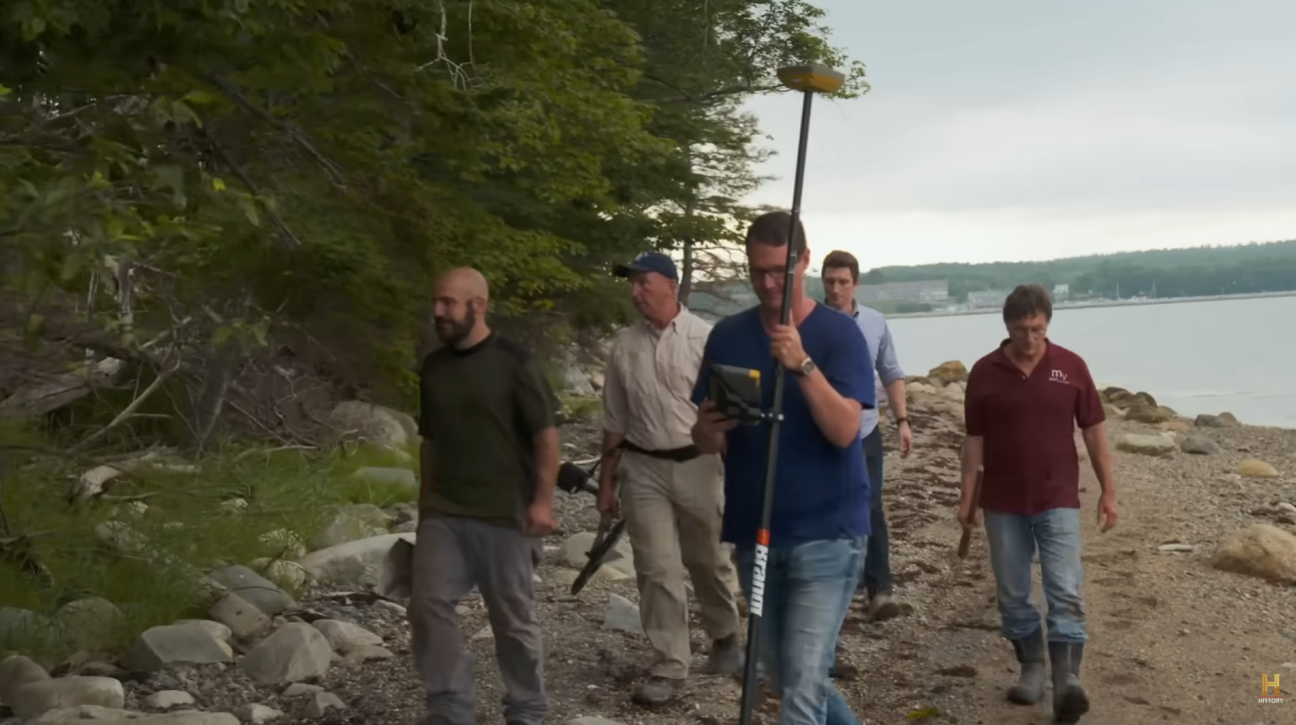
Members of the The Curse of Oak Island team, including Marty Lagina, his son Alex Lagina, Jack Begley, metal detection specialist Gary Drayton, and surveyor Steve Guptill, were following coordinates derived from historical analysis when they located the large boulder at the edge of what is known as Boulderless Beach.
The stone closely resembles a similar boulder previously identified near the swamp on the island’s southern side. According to Guptill, the two rocks appear nearly identical in size, shape and material, raising questions about whether they were deliberately placed rather than naturally deposited.
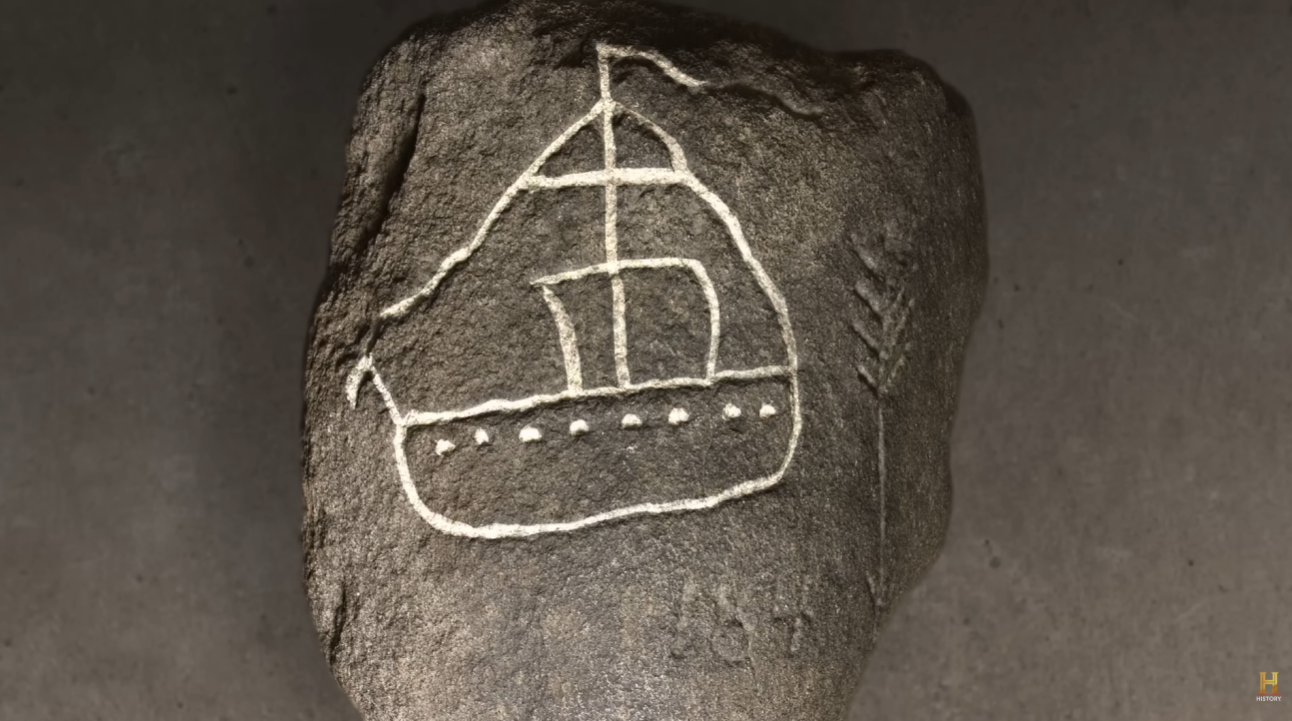
Adding intrigue is a faint marking near the top of the newly found stone, described as resembling either a “T” or a cross. While some team members suggested the feature could be natural, others noted its resemblance to carvings found on the so-called Boat Stone in Westford, Massachusetts—a boulder long associated with speculative theories of pre-Columbian European exploration in North America.
That comparison lies at the heart of a theory advanced by Oak Island researcher Erin Helton, who believes the stones may represent anchor points on a 14th-century map linked to medieval explorers. Helton argues that if multiple such anchors can be confirmed and accurately positioned, they could be used to triangulate the original location of the Money Pit—the legendary shaft said to conceal an immense treasure.
In the Oak Island war room, Helton presented a detailed overlay combining historical maps, LiDAR data, and a 1939 Popular Science map that marked several large boulders across the island. By drawing intersecting lines between three suspected anchor points, she identified a convergence that, she says, lies within just a few feet of the team’s existing drilling target.
Independent verification appeared to support her claim. When Helton compared her calculated centre point with the team’s preferred caisson location, the difference measured less than three feet—an alignment she described as striking.
The team’s interest in anchor stones is rooted in broader theories linking Oak Island to medieval European travellers, particularly the Scottish nobleman Henry Sinclair. Some researchers believe Sinclair reached Nova Scotia in the late 14th century and may have used Oak Island as a repository for valuable religious artefacts. These claims remain controversial and unproven, but they continue to influence research directions on the island.
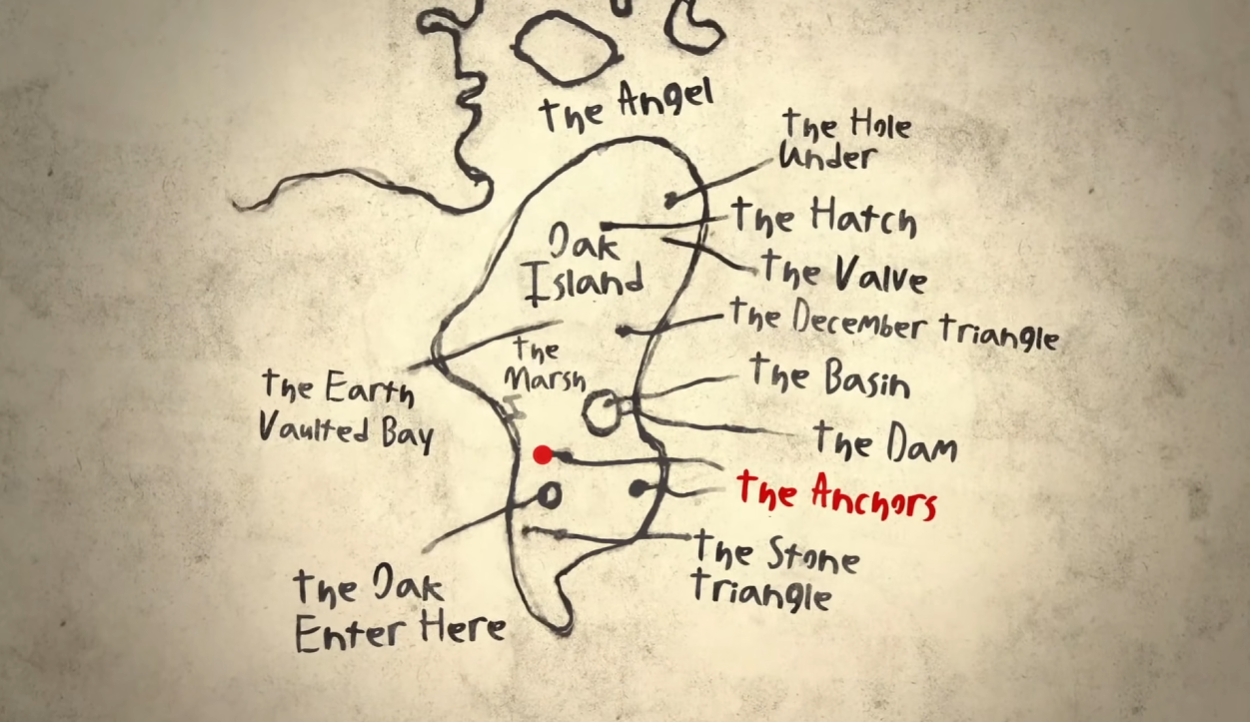
Further fuel was added by Knights Templar researcher Zena Halpern, who joined the team remotely to discuss two historical maps and a cipher she believes reference Oak Island. One hand-drawn French map appears to label features that closely match the island’s known geography, including the swamp, a dam-like structure, and a marked entry point near the Money Pit. It also refers to features called “anchors,” a “valve,” and a “hatch”—terms that do not appear in conventional records.
The mention of a hatch took on new significance when longtime Oak Island resident Dave Blankenship reported a strange depression on his property. Using satellite imagery and map overlays, Jack Begley demonstrated that the anomaly aligns closely with the location indicated on Halpern’s map.
When the team visited the site, they found a square-shaped opening filled with loose stones. Archaeologist Laird Niven, brought in to assess the find, said the feature did not appear natural and suggested that rocks had been intentionally removed. However, he cautioned that any excavation would require permits and formal disclosure to Canadian authorities.
Rick and Marty Lagina agreed to proceed cautiously, notifying the relevant government bodies before undertaking further work. While the decision may delay progress, the team has repeatedly stated its intention to treat Oak Island as a serious archaeological site rather than a free-for-all dig.
Whether the newly identified stone, the suspected hatch, or Helton’s triangulation theory will lead directly to the Money Pit remains uncertain. As with many discoveries on Oak Island, the line between history and hypothesis is finely drawn.
Yet for the team, the convergence of maps, physical markers and modern surveying techniques represents one of the most structured approaches yet to locating the island’s central mystery. For now, the hunt continues—guided by stones, stories and the hope that centuries-old clues may still point the way.