
An investigation beneath a large man-made boulder on Oak Island has opened up a significant new line of inquiry for the team behind The Curse of Oak Island, after scientific testing revealed clear signs of human activity below the surface.
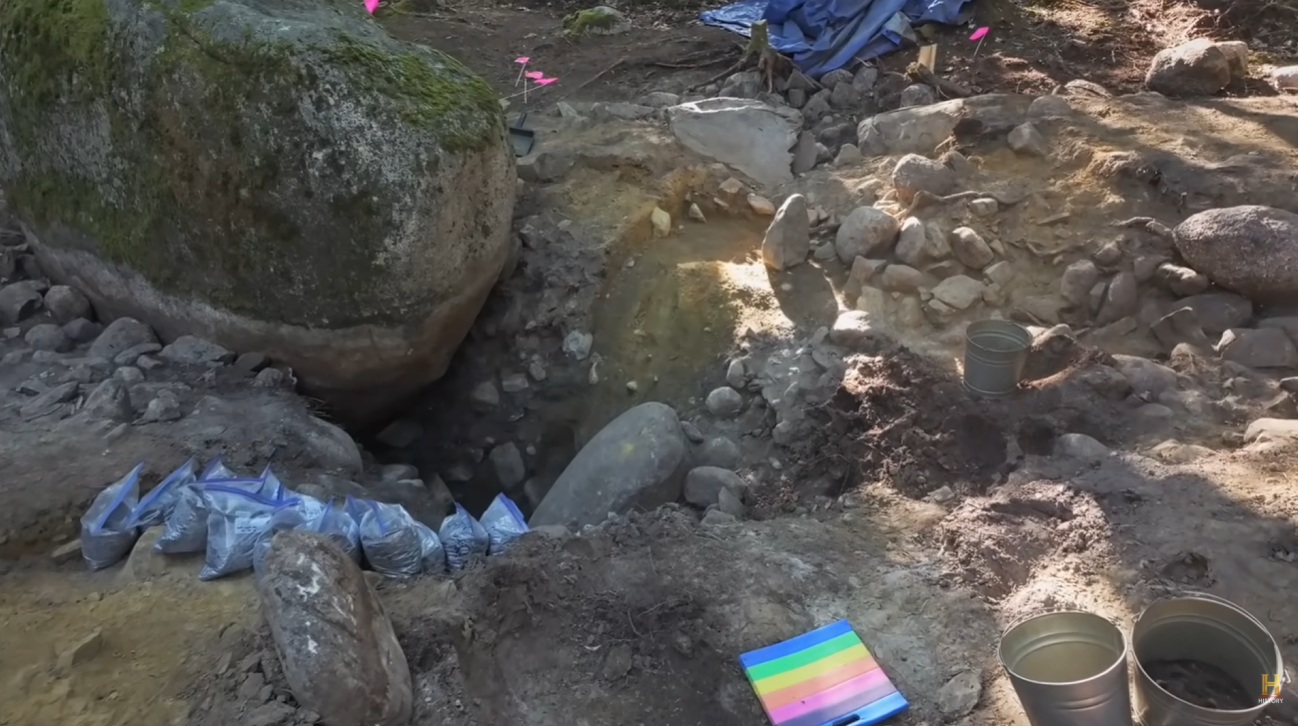
The discovery unfolded on Lot 8, where members of the archaeological team, joined by geoscientist Ian Spooner, examined a carefully positioned boulder surrounded by smaller, evenly spaced stones. The arrangement immediately suggested intentional placement rather than a natural formation.
After the surrounding rocks were moved, investigators noted disturbed soil beneath the boulder, an observation that raised further questions. A subsequent camera inspection revealed a backfilled void below the stone, with images showing what appeared to be an iron object and other unusual material.
To better understand the feature, Dr Spooner extracted soil cores from beneath the boulder and conducted laboratory analysis to determine both composition and possible age. The results proved unexpected.
According to Spooner, the organic matter beneath the boulder contained extremely elevated levels of lead, measuring as high as 140 parts per million. By comparison, soil samples taken elsewhere on the island typically showed levels closer to 12 parts per million.
“This is not something we would expect to see in normal forest soil,” Spooner explained during a meeting with the team. “It strongly suggests a localised source tied to activity rather than natural processes.”
The presence of lead may be linked to the historical use of fire in underground environments. In ancient and medieval mining practices, fires were sometimes lit to draw air through tunnels, improving ventilation for workers below ground. Such activity could account for the concentration of lead detected in the samples.
Further testing of nearby soils showed no similar elevation, reinforcing the idea that the anomaly was confined to the area beneath the boulder. For Rick Lagina, the findings pointed towards deliberate human intervention.
“It certainly implies that people were working underneath that boulder,” he said. “That changes how we think about what this feature represents.”
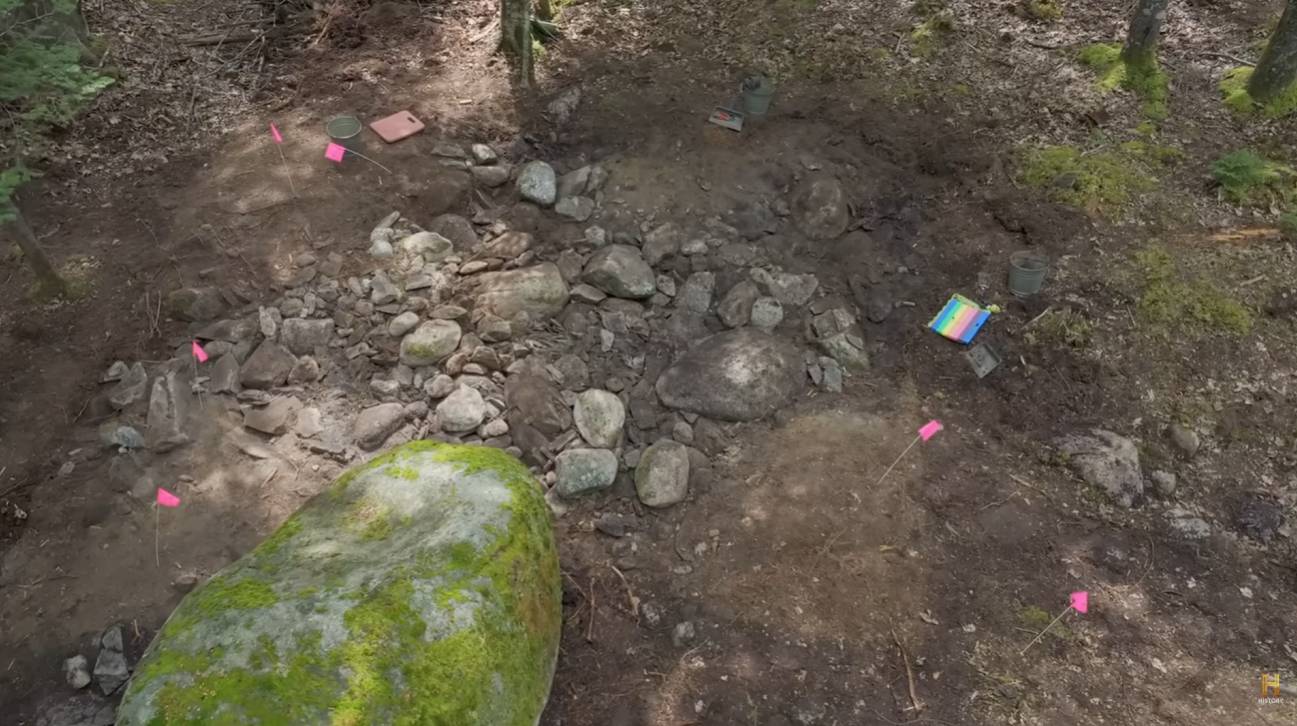
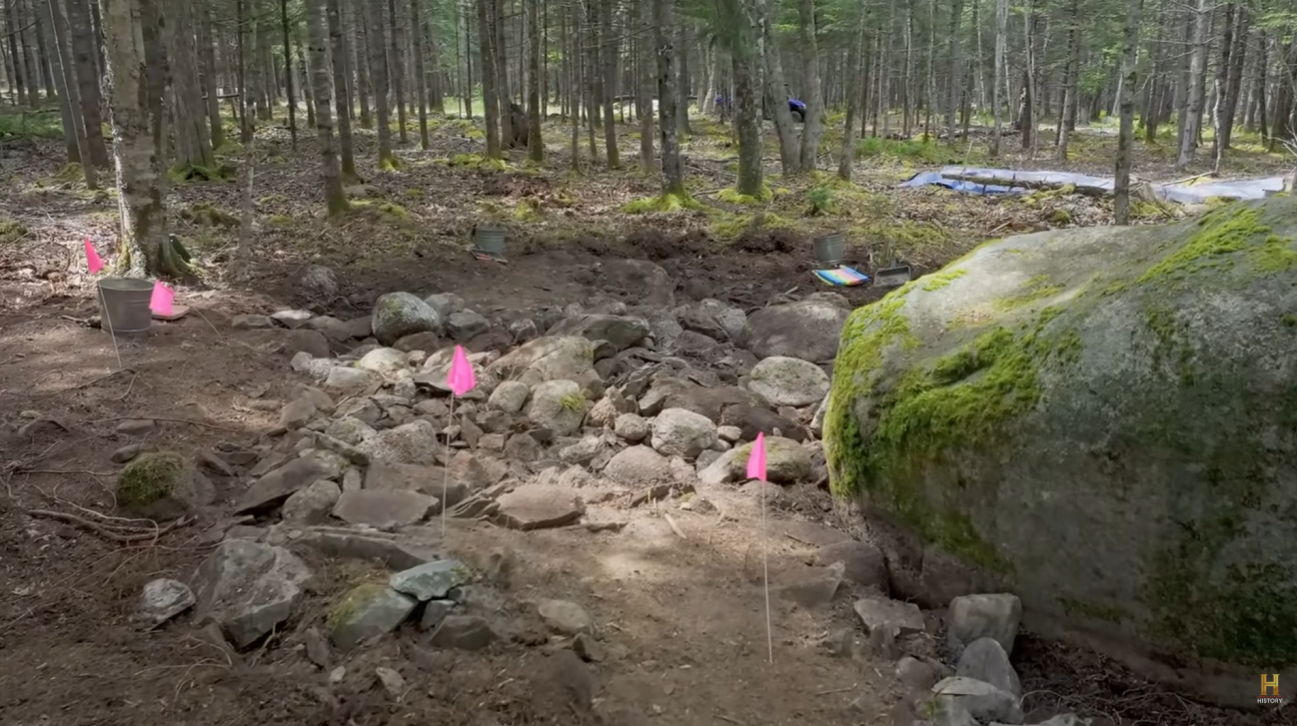
As excavations continued, archaeologists cleared additional material and reinserted a camera beneath the rock. The footage revealed an extensive network of voids, suggesting a carefully constructed subsurface space rather than a simple cavity.
What caught the team’s attention most, however, was the appearance of material showing yellow-gold colouring within rock-like formations beneath the boulder. While the nature of the material has not been confirmed, several team members noted that its appearance was inconsistent with ordinary subsoil.
“If this turns out to be something of value,” said Marty Lagina, “then this boulder could represent one of the most important developments we’ve seen on the island.”
The possibility that the boulder served as a marker or protective cover was also raised. Archaeologist Fiona Steele suggested that the stone may have been intentionally placed to conceal or safeguard whatever lies beneath.
With excavation under the boulder reaching its practical limits, the archaeological team agreed that enough information had been gathered to justify moving it. Plans are now in place to lift the several-ton structure using a crane, a task that will require careful coordination to ensure both safety and preservation.
While many questions remain unanswered, the findings beneath Lot 8 have added a new layer to the long-running investigation into Oak Island’s past. As Spooner noted, the evidence aligns with broader indications of early and organised activity on the island, potentially dating back centuries.
For now, attention turns to what may be revealed once the boulder is finally removed — a moment that could play a key role in reshaping the team’s understanding of the island’s history.