
The enduring mystery of Oak Island continues to captivate treasure hunters and historians alike, as the latest excavations by the Lagina brothers and their team unearth tantalizing clues that could rewrite the island’s storied past. In a series of dramatic digs featured on the hit series The Curse of Oak Island, the team has pushed deeper than ever before, discovering ancient tools and enigmatic objects that hint at centuries-old secrets buried beneath the infamous Money Pit.
Deep Dive into the Money Pit: A 500-Year-Old Pickax Emerges
The focal point of the recent efforts is the TOT-1 shaft, a bold excavation aimed at penetrating a suspected solution channel over 200 feet underground. Geologist Terry Matheson and engineer Jack Begley have been overseeing the operation, reporting steady progress amid a barrage of wooden debris from the historic Chappell Shaft – a 157-foot dig attempted in 1931 by Melbourne Chappell, his father William, and treasure hunter Frederick Blair.
“We’re chewing through the side of the Chappell Shaft,” Matheson noted during the dig. “There’s a ton of it, my friend.”
The real breakthrough came at a depth exceeding 160 feet, where metal detection expert Gary Drayton and team leader Marty Lagina spotted a heavily wrought iron fragment. Initial inspections revealed striations and a curved shape suggestive of a pickax tip.
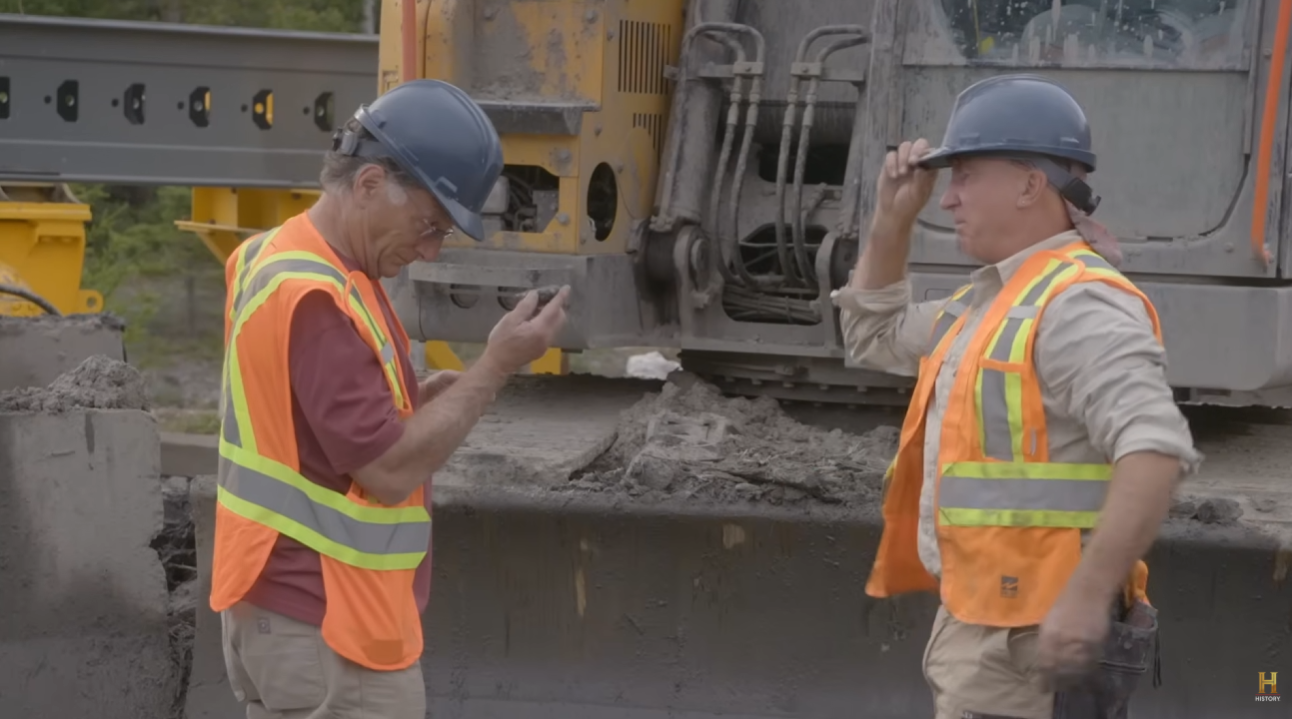
“That could be a really old tool, mate,” Drayton exclaimed. “I bet that’s like an old pickax.”
This find echoes a similar broken pickax recovered in 2019 from the nearby RF-1 shaft, and draws intriguing parallels to tools shown to the team during a recent visit to Malta. There, historian Matthew Balzan presented 16th-century tunneling implements used by the Knights of Malta – a Christian military order long speculated to have ties to Oak Island’s treasures.
Blacksmithing expert Carmen Legge examined the artifact in the Oak Island lab, concluding it dates to the 1500s or early 1600s. “It’s a digging tool… getting rid of rocks or smashing rocks up,” Legge said. “The only time I see primitive mining tools that were this shape and this size was from the 1500s.”
Archeometallurgist Emma Culligan’s elemental scan supported this timeline, detecting impurities like potassium, phosphorus, sulfur, and magnesium indicative of ironwork from the 1500s to 1700s. “Wow. So, it’s way before the story of the Money Pit,” Rick Lagina reflected, noting the Money Pit’s discovery in the 1790s.
The team views this as potential evidence of original depositors – possibly the Knights of Malta – laboring deep underground centuries ago. “This represents something very early,” Rick Lagina said. “It’s all possibly confirming that this location for the TOT-1 caisson is an area of original work.”
As digging paused at 171 feet for the night, optimism ran high. “Tomorrow could be the day,” Marty Lagina said. “Into the solution channel we go… into the void.”
Smith’s Cove Surprises: From Encrusted Mystery to Stove Door Revelation
Shifting focus to Smith’s Cove, where infamous flood tunnels are believed to booby-trap the Money Pit with seawater, Gary Drayton and Alex Lagina scoured the shoreline for artifacts dislodged by tides and time. Past finds here include 14th-century lead crosses potentially linked to the Knights Templar and pre-1795 ship spikes.
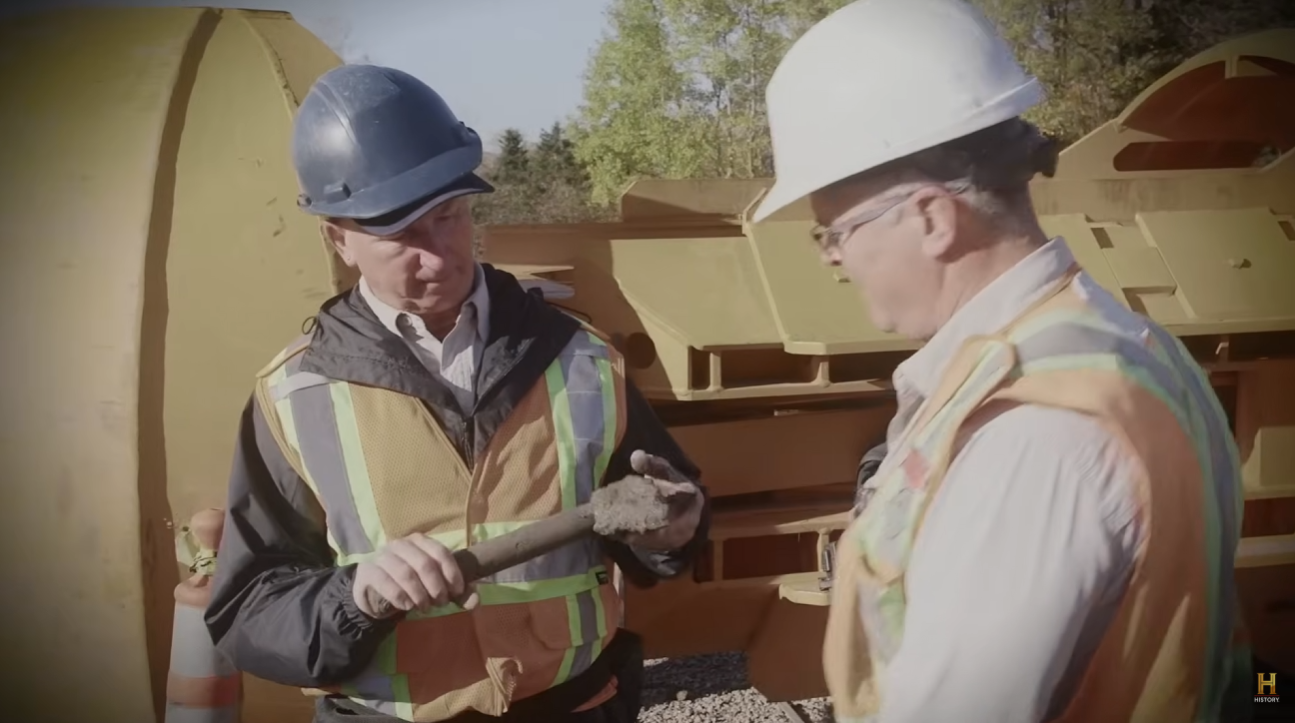
A strong metal detector signal led to a grueling dig beneath massive rocks, unearthing a large, encrusted iron object four feet underground. “We’re gonna need a bigger pouch,” Drayton joked as the team hauled it out.
Initial hopes of a shipwreck relic were tempered in the lab, where cleaning revealed a cast-iron stove door with a distinctive starburst design. This motif mirrors a medieval-style button found in 2023 on Lot 5, sparking questions of a deeper connection.
“It’s a beautiful design,” archeologist Laird Niven remarked. Culligan’s analysis dated it to the mid-1800s based on manganese content, though the team plans further research to identify the stove’s origin.
Chasing the Flood Tunnel: Clues from the Restall Era
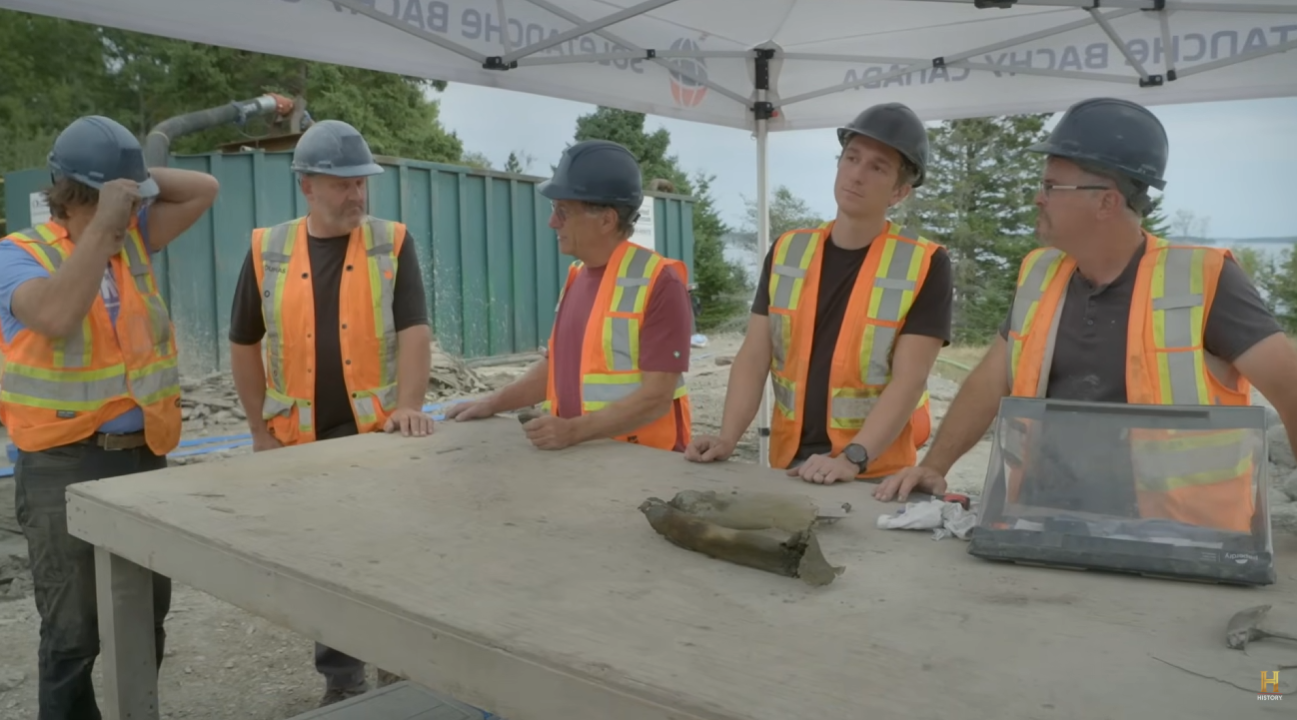
Nearby, excavations in search of a vertical shaft connected to the flood tunnel – first probed by the Restall family in 1961 – yielded modern nails and bolts, confirming proximity to their concrete-poured site. “These traces of the Restalls’ activity to me are saying that we’re getting close,” Craig Tester observed.
A broken spike of uncertain age was also recovered, slated for testing. “If you confirm the location of the vertical shaft, you can hopefully find the flood tunnel itself,” Rick Lagina emphasized. “Because it’s a direct connection to the treasure.”
A Puzzle Centuries in the Making
As the team presses on, these discoveries blend searcher history with hints of ancient origins, from Maltese knights to Templar echoes. “This story is complex, and it needs to be told,” Rick Lagina said. “Whether it be the searcher story or the original depositional story, it’s all important.”
With TOT-1 poised to breach 200 feet and Smith’s Cove digs intensifying, Oak Island’s enigma shows no signs of surrender. As Marty Lagina put it, “It makes you think we’re on the right track.” For treasure enthusiasts worldwide, the hunt continues – one shaft, one artifact at a time.
