Oak Island Unearths French Treasures: Clues to Lost Armada and Templar Secrets?


In a thrilling turn of events that could rewrite the enigmatic history of Oak Island, treasure hunters have uncovered artifacts on Lot 5 that point to 18th-century French nobility, military expeditions, and even whispers of Knights Templar intrigue. The discoveries, including simulated gemstones, a delicate cuff button, and a mysteriously folded coin, suggest the island may have been a secret haven for high-status visitors centuries ago—possibly guarding treasures far beyond mere gold.
The breakthrough began when archaeologist Isabelle Whittier dug into the rounded stone foundation on Lot 5, revealing what initially appeared to be costume jewelry. Closer examination by lab expert Emma Culligan confirmed these as “paste jewelry gems,” artificial stones crafted in France during the 1740s. Invented by jeweler Georges Frédéric Strass, these simulated gems—made from glass powder mixed with elements like bismuth, thallium, and lead—mimicked the sparkle of real diamonds and were favored by the French royal family.
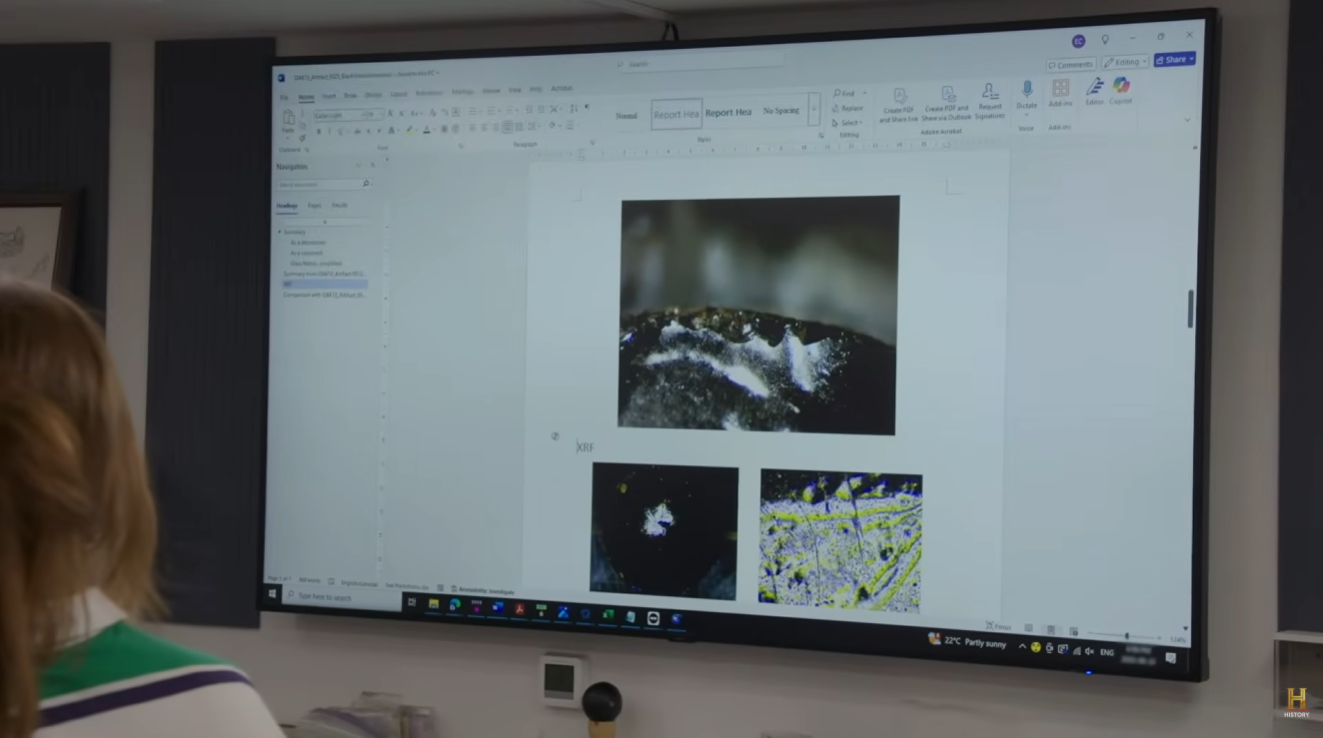
One gem, found a year prior, was clear and brilliant, resembling a diamond. The latest, a dark black variant, owes its color to added manganese and calcium, with less lead reducing its shine. “It’s not as shiny or sparkly,” Culligan explained in her analysis. “They’re called Diamontes—the official term.” Traces of tin around the edges match the earlier find, dating both to the early to mid-1700s in France. “This was a higher class of people,” Culligan noted, suggesting the black paste might have adorned military uniforms.
The timeline aligns intriguingly with the ill-fated 1746 expedition led by Jean-Baptiste Louis Frédéric de La Rochefoucauld de Roye, the Duke d’Anville. Tasked by France to reclaim Nova Scotia from British control, the armada—plagued by storms and disease—ultimately failed. Historical records, including a 2017 discovery by researcher Doug Croll of an 18th-century ship’s log in provincial archives, claim one of d’Anville’s ships carried a “large cache of treasure” to a wooded island near Oak Island, where the crew buried it in a deep pit.
The d’Anville family boasts connections to the Knights Templar dating back to the 12th century, fueling speculation that Oak Island’s infamous Money Pit might conceal not just wealth, but relics of profound historical or religious significance. “If there was some incredible treasure out of history that made its way here to North America, it could have been done as part of the Duke d’Anville’s expedition,” one team member mused.

Adding to the mystery, metal detectorist Gary Drayton and team leader Rick Lagina sifted through spoils from the site, unearthing a tiny cuff button with a loop shank—possibly linked to the gemstones—and a folded copper coin. Drayton, drawing from his European metal-detecting experience, identified the coin as a talisman. “Normally when you find something made of copper, silver, or gold, and it’s completely folded over, I believe this is a talisman to ward off bad things,” he said. Such rituals, prevalent in Europe from the 12th to 18th centuries, involved burying folded metal to invoke protection or good luck.
Dating the coin to the 1600s or 1700s, Drayton emphasized its intentional placement: “You just don’t throw money away. That’s intentional.” Lagina reflected on the broader implications: “I have always believed… that the work that was done on Oak Island was meant to protect something outside of temporal wealth. I think what was put here was meant to advance something—an idea, a belief, a concept, something of either significant historical value, a religious value.”

These finds raise tantalizing questions: Were French nobles or Templar descendants using Lot 5 as a staging ground? Could the artifacts tie into the buried treasure from d’Anville’s fleet? “The dots are very far apart right now, but we’re accumulating them,” Lagina acknowledged.
As excavations continue, Oak Island—resistant to treasure seekers for over 230 years—remains a beacon for historians and adventurers alike. With each artifact, the island’s curse seems less about doom and more about unveiling long-lost secrets. Stay tuned as the team delves deeper; who knows what other relics await beneath the soil?