Oak Island’s 90-Foot Stone Keeps the Money Pit Mystery Alive After Centuries of Searching

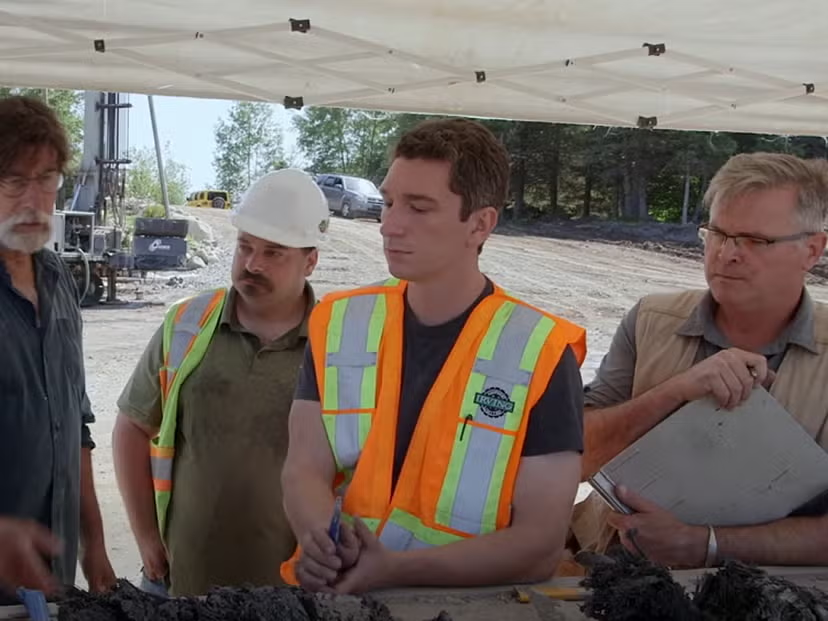
Oak Island has always been more than a treasure story. It is a place where every discovery seems to create a deeper question, every explanation opens another path, and every generation of searchers leaves behind more uncertainty than answers.
For more than two centuries, the small island off Nova Scotia has drawn explorers, investors, historians and television viewers into one of the world’s most enduring treasure hunts. At the centre of that fascination is the Money Pit, a mysterious shaft first linked to buried treasure in the late 18th century. But among all the clues associated with Oak Island, few have caused as much debate as the so-called 90-foot stone.
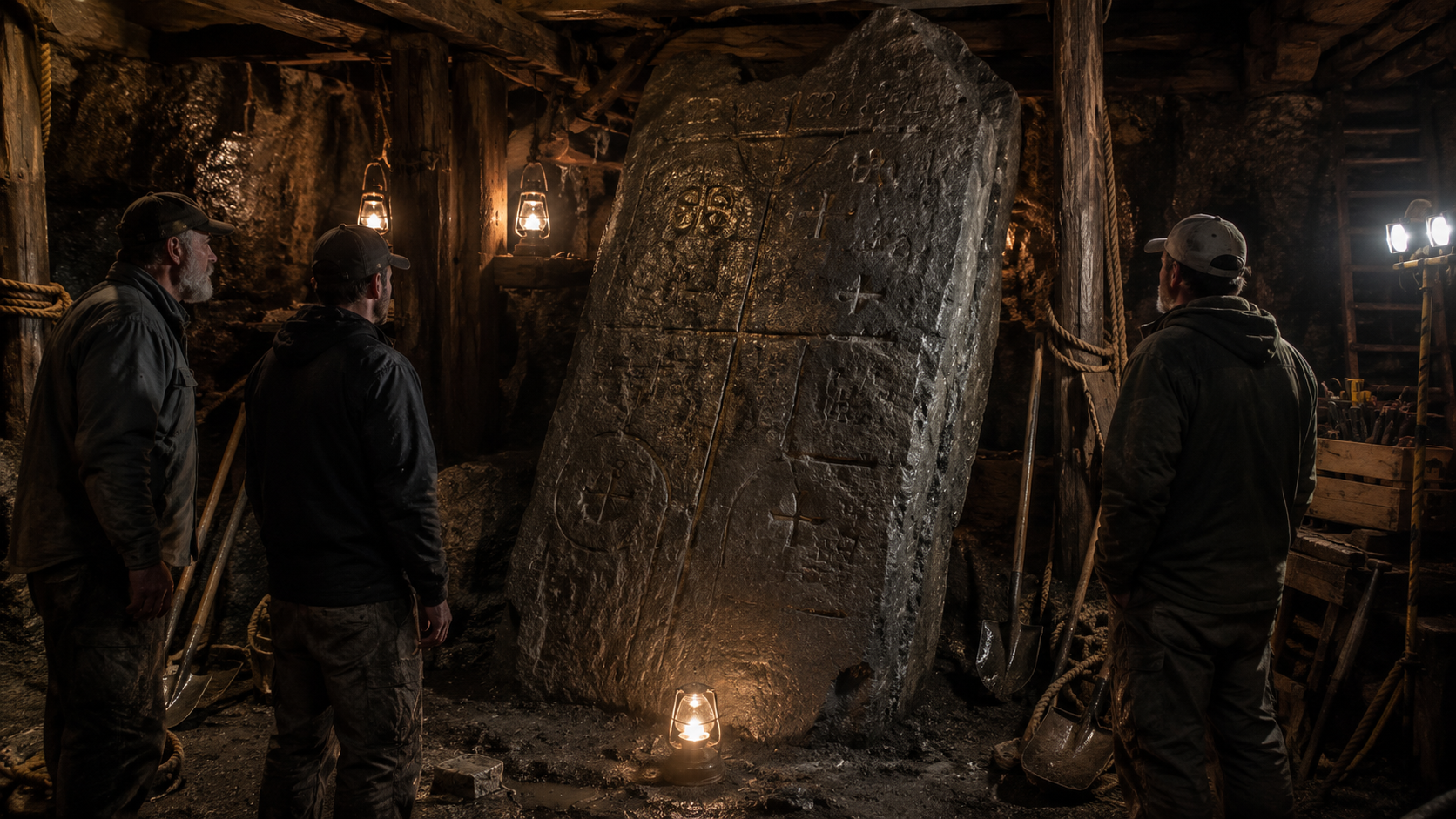
According to long-repeated accounts, the stone was discovered deep inside the Money Pit and appeared to carry strange markings. Some believed the symbols were a deliberate message. Others dismissed them as scratches or damage. What makes the story harder to settle is that the stone itself eventually vanished, leaving researchers with conflicting reports, second-hand descriptions and a mystery that has only grown with time.
The traditional version of the Oak Island story begins in 1795, when Daniel McInnis and two companions reportedly found an unusual circular depression in the ground. Believing it might mark the location of buried pirate treasure, they began digging. As the story goes, they uncovered layers of logs, stones and wooden platforms at regular intervals, suggesting the shaft had been constructed with planning and effort.
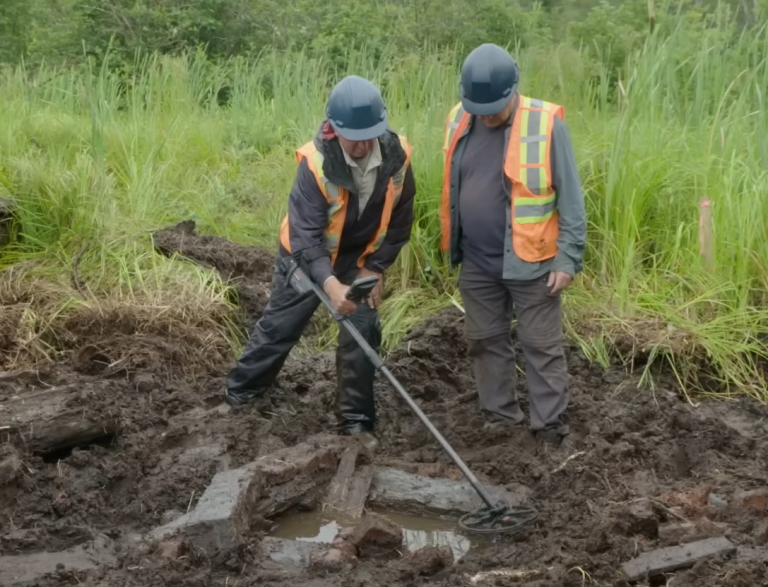
Later excavations added to the legend. Searchers reported flooding at depths of around 80 to 90 feet, leading many to believe the pit had been protected by an engineered flood system connected to the shore. Coconut fibres reportedly found at Smith’s Cove became a key part of that theory, because the material was not native to the region. To believers, it pointed toward a deliberate trap designed to stop anyone from reaching whatever lay below.
But Oak Island has always resisted simple answers. Later scientific studies suggested that the flooding might not require hidden flood tunnels at all. Natural tidal pressure, underground freshwater systems, limestone formations and water-filled cavities could explain why the pit repeatedly refilled. Some structures once thought to be artificial drains have also been reinterpreted as possible remains of early industrial activity, including salt production.
That divide between legend and geology is what keeps Oak Island alive. The evidence is suggestive, but rarely conclusive. Theories rise, collapse and return in new forms.

The 90-foot stone is a perfect example. One of the most famous claims linked to it says the inscription translated to a message suggesting treasure was buried below. The wording has changed in different tellings, but the idea of a coded warning or clue became one of the most powerful pieces of Oak Island folklore.
Yet the historical trail is far from clean. Accounts differ over when the stone was removed, who handled it, whether its markings were still visible, and whether any translation was ever reliable. Some reports say the stone was taken to Halifax. Others say it was displayed in private homes or used in ordinary work until the markings were worn away. By the time later writers tried to reconstruct the story, the physical object had disappeared from public view.
That absence has not weakened the legend. In fact, it may have made it stronger. A missing artifact invites imagination. A lost inscription invites decoding. A stone that cannot be re-examined becomes both evidence and myth at once.
Oak Island’s appeal has also been strengthened by the surprising list of prominent people drawn to the search. Franklin D. Roosevelt followed the mystery long before he became president and remained interested in it throughout his life. Other names associated with support or investment include Errol Flynn, John Wayne, William Vincent Astor and Rear Admiral Richard E. Byrd Jr. Their involvement helped turn Oak Island from a local treasure tale into a story with international reach.
Over the years, theories have multiplied. Some believe the Money Pit was a natural sinkhole mistaken for a man-made shaft. Others have suggested it was connected to tar production, illegal salt-making, pirate treasure, Spanish gold, British military plunder, French military engineering, Freemasonry, the Knights Templar, the Holy Grail, the Ark of the Covenant or hidden manuscripts linked to Francis Bacon and Shakespeare.
For sceptics, this long list proves the weakness of the mystery. If so many explanations are possible, perhaps none are convincing. For believers, the range of theories proves the opposite. They argue that Oak Island contains signs of unusual planning, hidden structures and historical connections that cannot be ignored.
The truth may lie somewhere between those positions. Oak Island may not hold the single legendary vault imagined by treasure hunters. But it clearly holds a powerful historical puzzle shaped by real excavation, real artifacts, real failures and real obsession.
What makes the island so compelling is not just the possibility of treasure. It is the persistence of uncertainty. The 90-foot stone, whether authentic clue, misunderstood object or lost relic, represents the heart of the Oak Island story. It is close enough to history to be taken seriously, but distant enough to remain unresolved.
After centuries of digging, drilling, flooding, collapse and renewed investigation, Oak Island still refuses to give up a final answer. That may be why people keep returning to it. The island does not simply hide its secrets. It reveals just enough to make every generation believe it may be the one to finally understand them.