A new phase in the Oak Island investigation has begun after the project’s leadership reviewed a comprehensive artifact heat map that appears to broaden the scope of the centuries-old mystery. During a strategy meeting in the so-called war room, Rick and Marty Lagina joined Craig Tester and senior researchers to examine a colour-coded analysis designed to assess where and when key discoveries across the island may have originated.
The heat map, prepared by Steve Guptill in collaboration with Emma Culligan and Jillian McDonald, plots every major artifact recovered over years of exploration and categorises them by estimated age. Items likely linked to early 18th-century or older activity—considered more consistent with original “depositors” rather than later treasure hunters—were highlighted in pink and orange, while blue markers represented materials from the 19th century onward, generally associated with searcher activity.
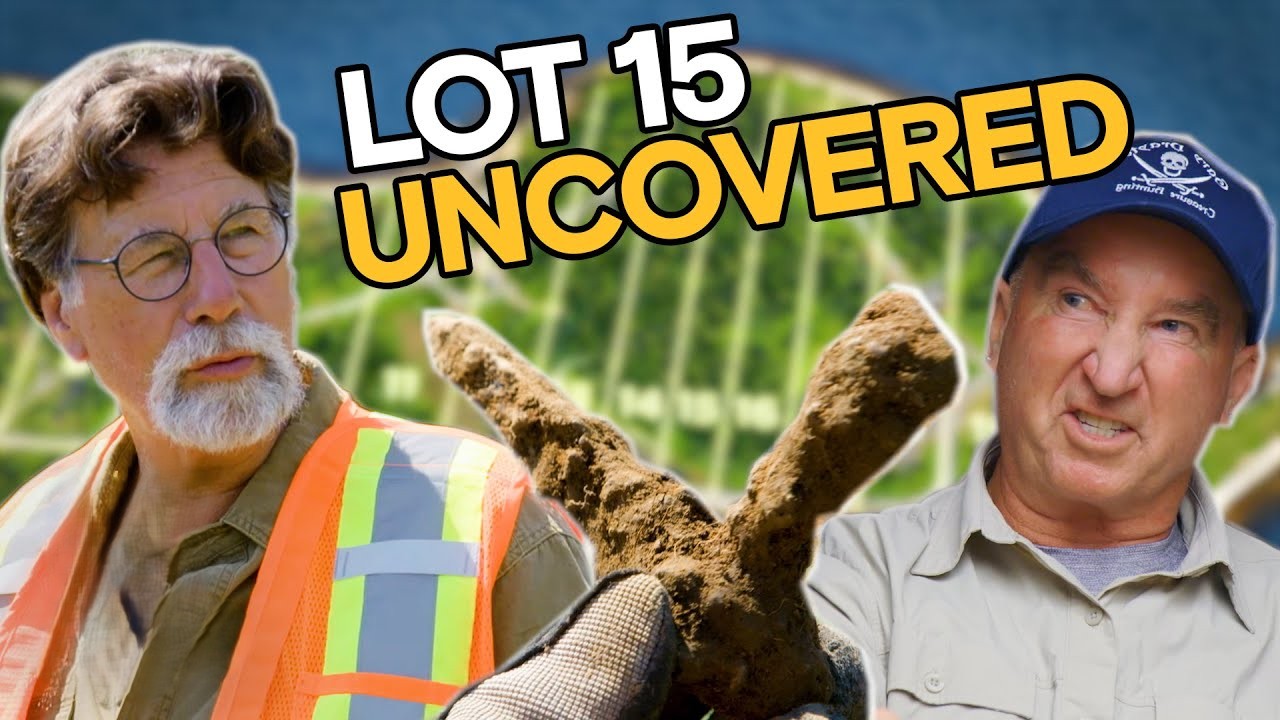
While the Money Pit and nearby Lot 5 once again emerged as expected hotspots, the analysis revealed a striking cluster of older artifacts on Lot 15, approximately 200 yards northwest of the Money Pit area. Even artifacts dated to the mid-1700s or earlier appeared repeatedly in this zone, prompting renewed discussion about whether the island’s central mystery may be far more widespread than previously believed.

Craig Tester noted that even the orange-coded items on Lot 15 suggested activity consistent with the depositor timeframe, while Rick Lagina argued that the density and age of the finds warranted a serious expansion of fieldwork. Marty Lagina agreed, concluding that Lot 15 merited immediate attention and metal-detection efforts.
Lot 15 has already produced several of the team’s more enigmatic discoveries in earlier seasons, including burned charcoal potentially dating to the 14th century, a Chinese coin believed to be over 1,000 years old, and a piece of pre-17th-century cannon stone shot traced to the Azores Islands of Portugal. Viewed together on the heat map, these finds strengthened the case that Lot 15 may have played a meaningful role in historical activity on the island.
Following the meeting, Rick Lagina, Gary Drayton and Steve Guptill moved quickly to begin a targeted search. Ahead of their arrival, heavy equipment operator Billy Gerhardt used a tractor and plough to turn over the soil, a technique borrowed from agricultural metal-detecting practices in England. The method aims to bring deeper artifacts closer to the surface, increasing the chances of recovery without invasive digging.

The approach paid dividends almost immediately. Among the first discoveries was a fragment of coal found near the surface—an unusual material in that location. The team noted similarities to coal previously recovered near the stone road in the swamp, raising questions about a possible connection between the swamp features and Lot 15.
Further metal-detecting uncovered a hand-forged rosehead spike, a type of iron fastener commonly used in Europe from the 16th through the early 18th centuries. Similar spikes have previously been recovered both near the surface and more than 150 feet deep in the Money Pit area, all dated to before 1750. The find suggested a potential structural or logistical link between Lot 15 and earlier underground features.
Another notable recovery was a metal pintle, a fitting historically used as a hinge for gates or doors, but also sometimes repurposed for hanging lanterns or equipment in mining environments. The team noted that such an object could plausibly relate to shaft construction or support activities connected to earlier digging efforts.
Each artifact was carefully documented, bagged and flagged for inclusion on the evolving heat map, which team members described as a living tool that will continue to guide strategy decisions. Gary Drayton remarked that repeated discoveries of similar items across different areas could point to a broader network of activity rather than isolated events.
As the search on Lot 15 continues, the team has increasingly embraced the idea that Oak Island’s mystery may not centre on a single pit or tunnel system. Instead, the emerging evidence suggests island-wide planning, movement and construction over an extended period—an interpretation that could reshape future excavation priorities.
For now, Lot 15 stands as the latest focus of renewed hope, with the heat map providing a clearer framework for where the team believes the most meaningful answers may still lie buried.
