Ox Shoes and Old Pathways: New Finds Rekindle Questions About Oak Island’s Early Activity


By carefully grid-mapping fields and uplands, the team behind The Curse of Oak Island believe they may be closing in on evidence of organised activity on the island long before the famous Money Pit was recorded in 1795. Recent metal-detecting work across Lots 26 and 15 has uncovered a cluster of ox shoes and iron fittings that suggest a structured route linking the swamp, uplands, and the central search area.
Metal-detection specialist Gary Drayton, working alongside Michael John, focused first on land once owned by Samuel Ball, a 19th-century farmer whose unexplained wealth has long attracted attention. Using a large-coil detector capable of reaching depths of more than six feet, Drayton targeted areas cleared of surface debris, searching for deeper, older signals.
Among the early discoveries was a notably small ox shoe—described by the team as a “baby” example when compared with larger specimens previously found near the swamp. While modest in size, its condition and depth suggested age rather than modern farming residue. For Drayton, the implication was immediate: oxen were almost certainly being used in this area, raising questions about what heavy loads might have been moved across the island.

The investigation then shifted to Lot 15, where Drayton joined Rick Lagina. This ground had already yielded a cart or wagon component on nearby Lot 17, hinting at a possible transport route between the swamp and the Money Pit. Under new heritage regulations, every metal target now has to be flagged and approved before excavation—a process Lagina acknowledges slows progress but ensures archaeological oversight.
Despite the constraints, results followed. Another ox shoe emerged from beneath layers of modern debris, reinforcing the idea that this was no isolated find. “Where you find ox shoes, you may be on a trail,” Drayton noted, suggesting a corridor of movement rather than scattered loss.
To better understand the significance of the artifacts, Alex Lagina and Jack Begley took several examples to blacksmithing specialist Carmen Legge in Centreville, Nova Scotia. Legge’s assessment proved striking: some of the ox shoes could date back to the early 1700s, with variations indicating use across different seasons. That detail, he said, pointed to prolonged and organised activity rather than short-term farming.
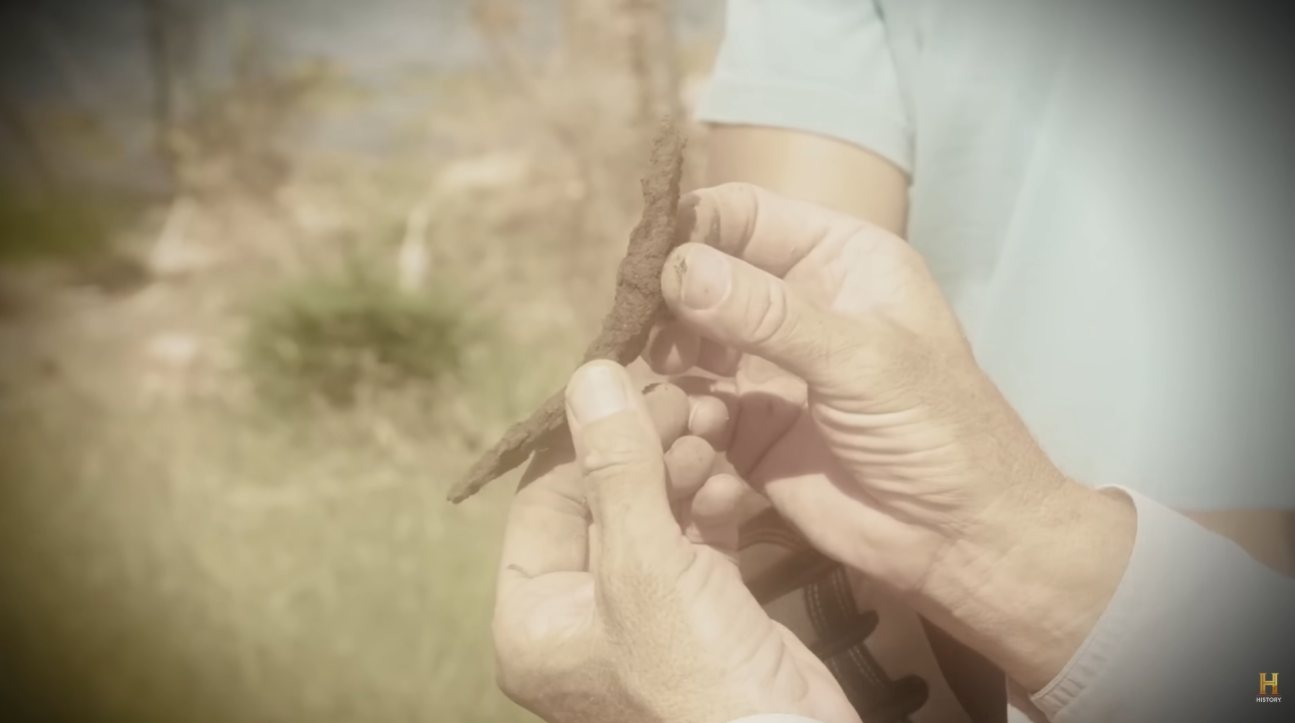
Legge also noted that shoes of differing sizes implied multiple animals working the same route. Combined with their alignment across Lot 15, the evidence suggested oxen hauling cargo along a defined path—possibly linking the swamp to inland structures such as the pine tar kiln previously identified in the area.
Back on the island, further detecting by Drayton and Begley revealed yet more ox shoes and a heavy iron fitting resembling a harness component. Found closer to the swamp, these items appeared to line up geographically with the stone-paved feature uncovered there in earlier seasons. The pattern has led the team to speculate about a purpose-built track, forced through rough ground to move materials efficiently.
For the Laginas, the emerging picture is less about any single artifact and more about context. The repeated presence of ox shoes along a consistent line strengthens the argument that Oak Island once supported a coordinated operation—industrial, military, or otherwise—requiring transport infrastructure well before recorded treasure hunts began.
While definitive answers remain elusive, the discoveries have shifted the focus from isolated curiosities to broader patterns of land use. As Rick Lagina put it, understanding who worked the island, and how, may ultimately prove just as important as uncovering what they were working on.