The Curse of Oak Island Season 13: Medieval Leather and a Possible Key Ignite New Templar Theory in the Swamp


Oak Island’s northern swamp has once again become the focal point of an investigation that may push the island’s timeline back centuries earlier than many believed.
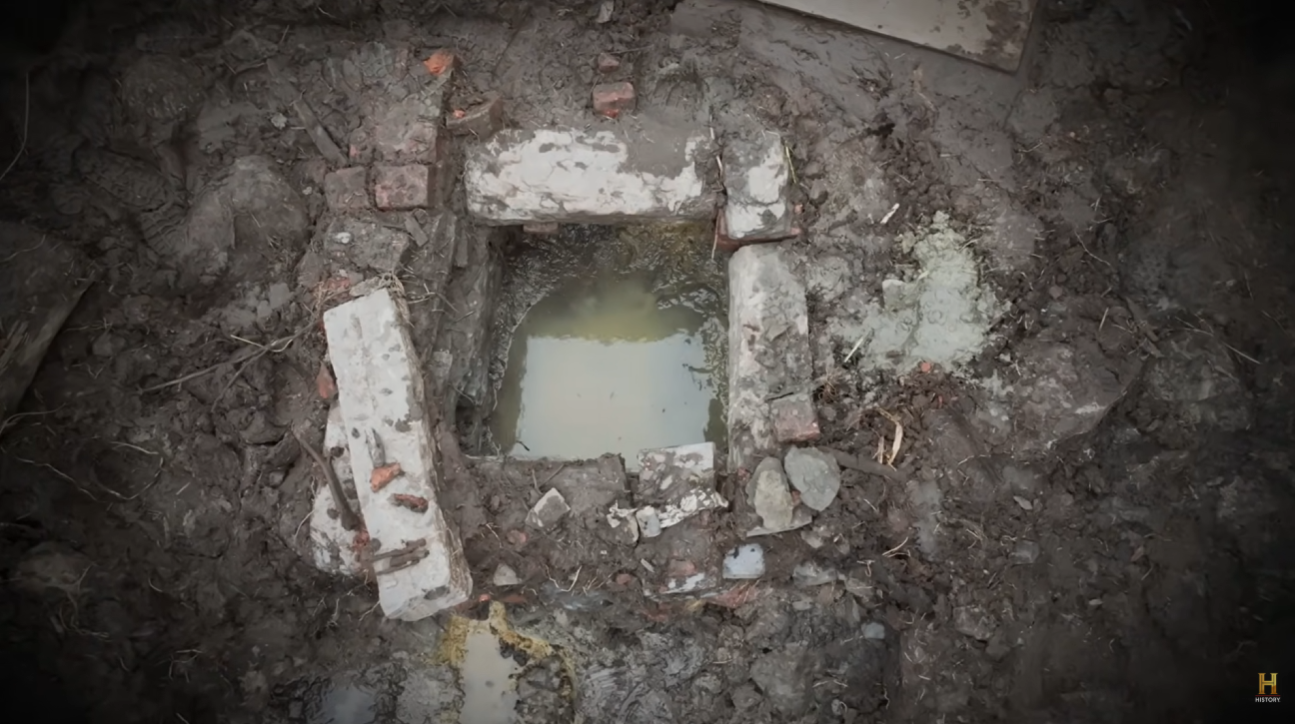
In the latest developments, Rick Lagina, alongside Gary Drayton and members of the team, uncovered fragments of leather footwear while tracing a cobblestone pathway lined with eight-sided wooden survey stakes. The path had previously led to a mysterious brick-and-slate vault discovered one year earlier — a structure that, while empty, raised major questions about who engineered it and why.
This time, the clues may be far more consequential.
Medieval Leather Beneath the Bog
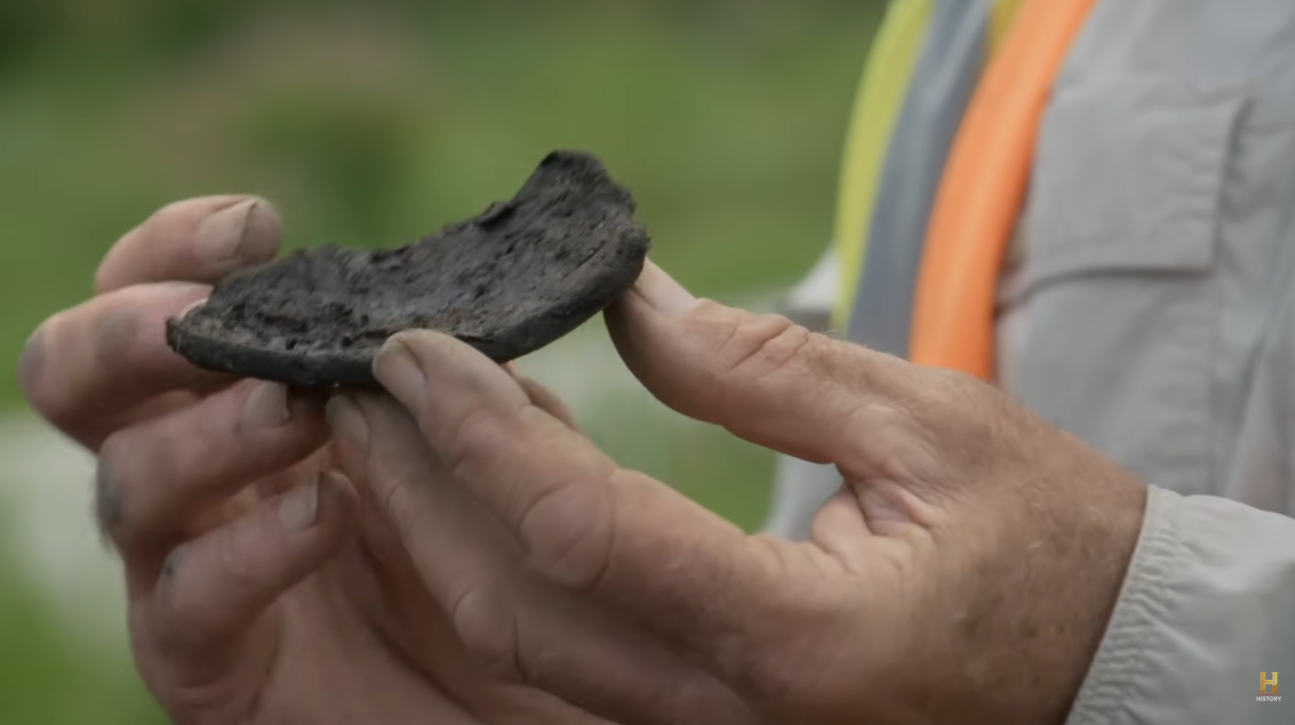
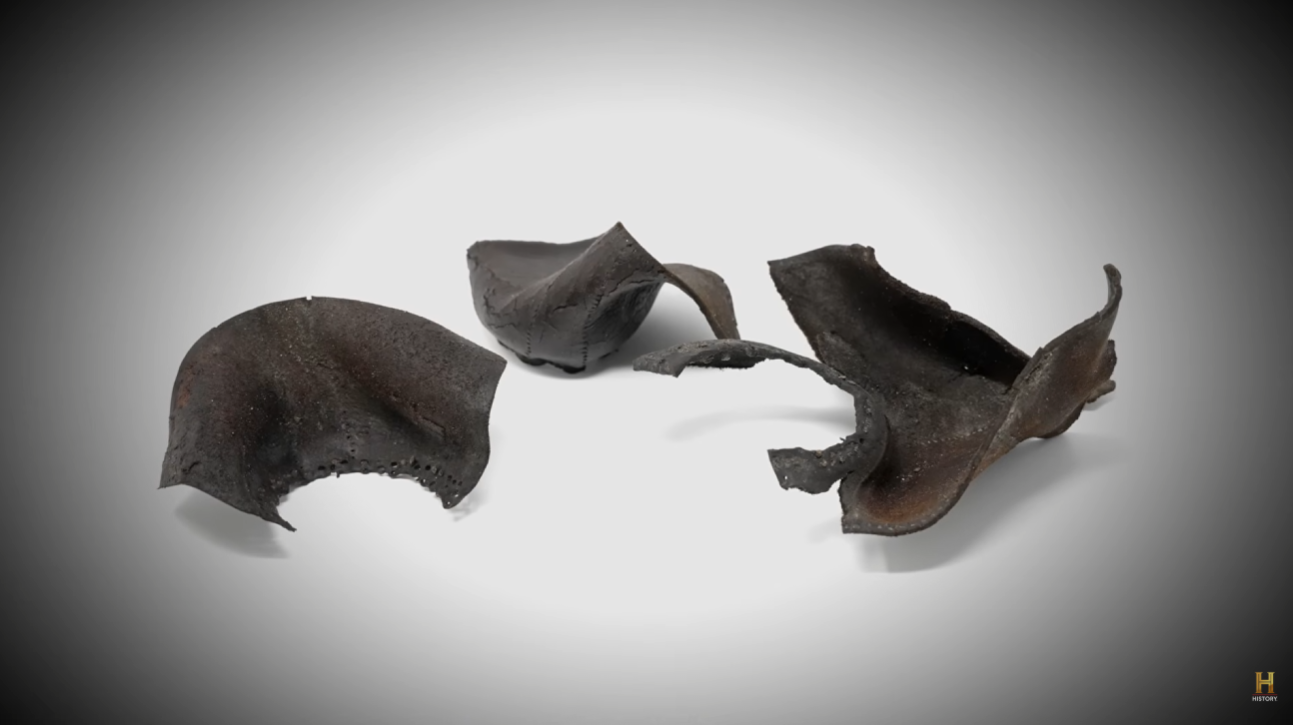
The leather fragments, identified as part of a hobnailed boot sole, immediately drew attention. The visible nail holes — consistent with early hobnail construction rather than modern stitching — suggested significant age. The discovery echoes a 2023 find in the swamp’s southeast corner, where a European-style boot fragment was recovered and later associated with 17th-century origins.
However, preliminary carbon-14 testing on the newly recovered leather suggests something far older.
According to initial lab results presented in the war room, the material dates between 1148 and 1216, with some calibrated ranges potentially extending as far back as the mid-11th century.
If confirmed, this places human activity in the swamp squarely within the medieval period — centuries before the commonly accepted timeline of European settlement in the region.
The reaction from the team was immediate. The dating aligns closely with earlier research presented by Italian archeoastronomer Adriano Gaspani, who argued that the megalithic formation known as Nolan’s Cross could date to the early 13th century and may have been constructed by members of the Knights Templar.
While such theories remain controversial, the leather discovery adds tangible archaeological weight to speculation that significant activity occurred on Oak Island during the High Middle Ages.
Old Wood, Possible Structure, and a Curious Artifact
The leather was not the only compelling find.
Excavation in the same area produced thick wooden planks, over an inch wide, fastened with what appeared to be hand-forged nails. The wood’s age and construction method suggest it may have formed part of a structure — possibly even a chest.
Speculation quickly turned to whether this wood could be related to the previously discovered vault or to another concealed structure yet to be uncovered.
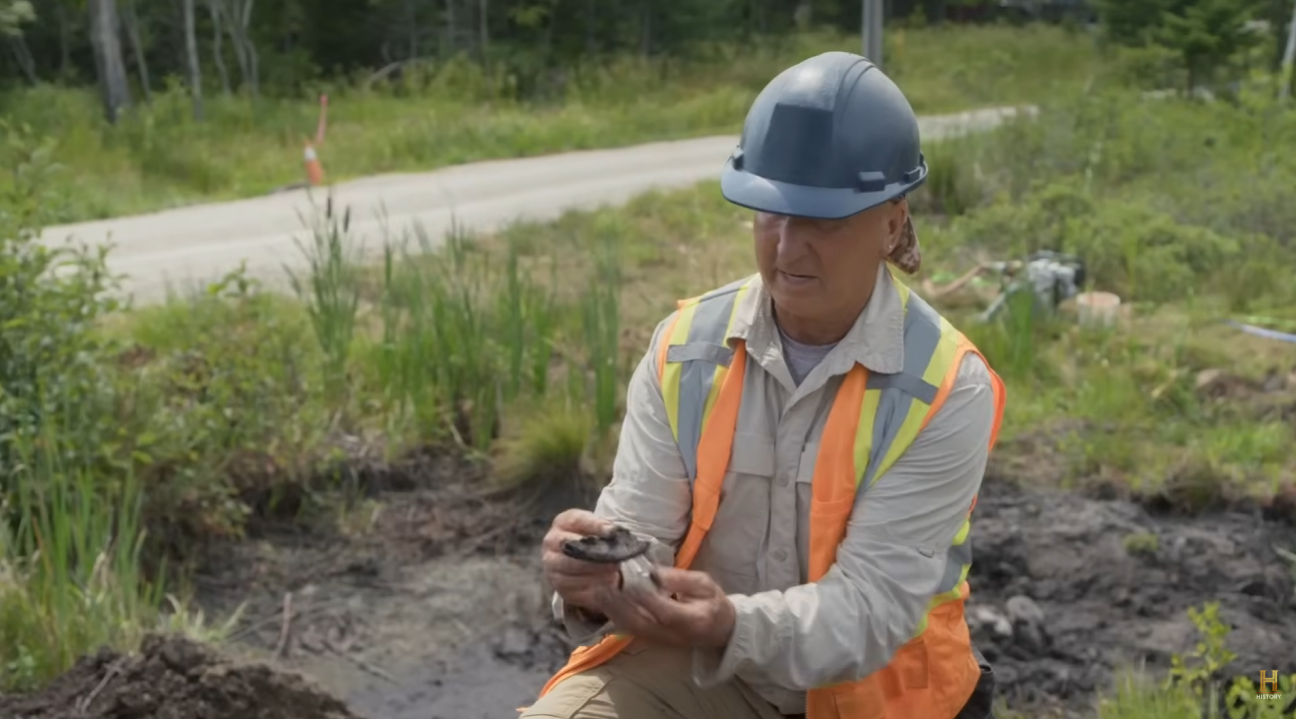
Moments later, a metal detector signal led to the recovery of a heavy iron object shaped strikingly like an old-fashioned key. Deeply buried and heavily corroded, the artifact features what appears to be a spade-like bit typical of early iron keys.
The object has been sent for CT scanning to determine its true form beneath layers of rust. If confirmed as a key, the implication would be clear: somewhere nearby, there may be — or may have been — a lock.
Accumulating Dates in the Swamp
The swamp has long been regarded as one of Oak Island’s most promising yet enigmatic zones. Previous discoveries include a paved stone area and remnants of constructed pathways — evidence that the bog was not always the waterlogged expanse seen today.
Now, with medieval-era dating attached to leather artifacts, the team believes they may be accumulating a consistent chronological framework.
Rick Lagina summarized the moment succinctly: if these dates hold, they support the possibility that large-scale construction occurred in the swamp during the 1200s — the same general era proposed for Nolan’s Cross.
That alignment, whether coincidental or meaningful, is fueling renewed determination to expand excavation efforts in the swamp.
A Strategic Pivot Back to the Swamp
With machinery available and the season progressing, the team has committed to intensifying operations in the northern swamp. The logic is straightforward: material evidence, datable artifacts, and structural remains are converging in one location.
While the Money Pit remains a central objective, the swamp is increasingly yielding hard archaeological data rather than speculation.
Whether the leather belonged to workers constructing pathways, survey markers, or vault structures remains unknown. What is certain is that the find pushes the Oak Island narrative into a deeper historical context.
If medieval activity can be conclusively demonstrated, it would significantly reshape the island’s accepted timeline and potentially validate long-standing theories of early transatlantic contact.
For now, the excavation continues. The leather, the planks, and the possible key represent not definitive answers — but measurable progress.
And as Rick Lagina often reminds his team: a treasure will never find itself.