
NOVA SCOTIA — As Rick and Marty Lagina return for the highly anticipated Season 12 of The Curse of Oak Island, fans and skeptics alike are being drawn back to the mysterious shores of Oak Island, where centuries of lore are colliding with modern science and boots-on-the-ground grit.
Now, after years of searching, the team believes they may be closer than ever to solving the island’s 228-year-old mystery. This season’s focus? Three man-made structures that are unlike anything previously discovered on the island—each pointing to an ancient, possibly Templar-linked origin.
#3: The Well on Lot 26 – A Templar Time Capsule?
What appeared at first glance to be an ordinary, crudely made well has proven anything but. Located just steps from a 16th-century stone wall, the well on Lot 26 shocked the team after water testing by Dr. Ian Spooner revealed traces of silver—a rare hit outside the Money Pit area.
Even more astonishing, radiocarbon dating of organic material from its depths pegged the construction to as early as 1028 A.D.—possibly making it the oldest structure ever found on Oak Island.
“This date blew me away,” Spooner admitted, adding that the implications of such an early construction “makes you think Templars were here or something.” The tantalizing evidence raises age-old questions: Who dug this well—and why?
#2: The Mysterious Stone Circle on Lot 5 – A Mirror of the Money Pit?
On the western edge of the island, a circular stone depression on Lot 5—discovered on land formerly owned by the late treasure hunter Robert Young—has sent shockwaves through the team.
Measuring 13 feet in diameter, the exact dimension described in 1795 accounts of the original Money Pit, the structure is surrounded by paving stones and artifact layers dating back to the 1750s.
Could this be a decoy, an earlier dig site, or even the legendary “Hatch” mentioned on the controversial 14th-century map provided by late researcher Zena Halpern?
“The round feature on Lot 5 could be very meaningful,” Marty Lagina noted. “It’s so odd—and it’s not found elsewhere on Nova Scotia or the island.”
#1: The Garden Shaft – Gold in the Depths?
Once a tribute to the women involved in the Oak Island search, the 82-foot Garden Shaft has become the island’s most active dig site after multiple scientific tests pointed to traces of gold—both in the water and in the wooden lining itself.
Carbon dating of the wood, again, predated the 1795 discovery of the Money Pit, prompting the Laginas to hire Dumas Contracting Ltd. to rebuild the shaft for deeper exploration.
Archaeometallurgist Emma Culligan later confirmed that a piece of wood retrieved from 50 feet down tested positive for gold. Additional scans detected a nearby tunnel, 95 feet deep, exhibiting the strongest gold trace ever found on the island.
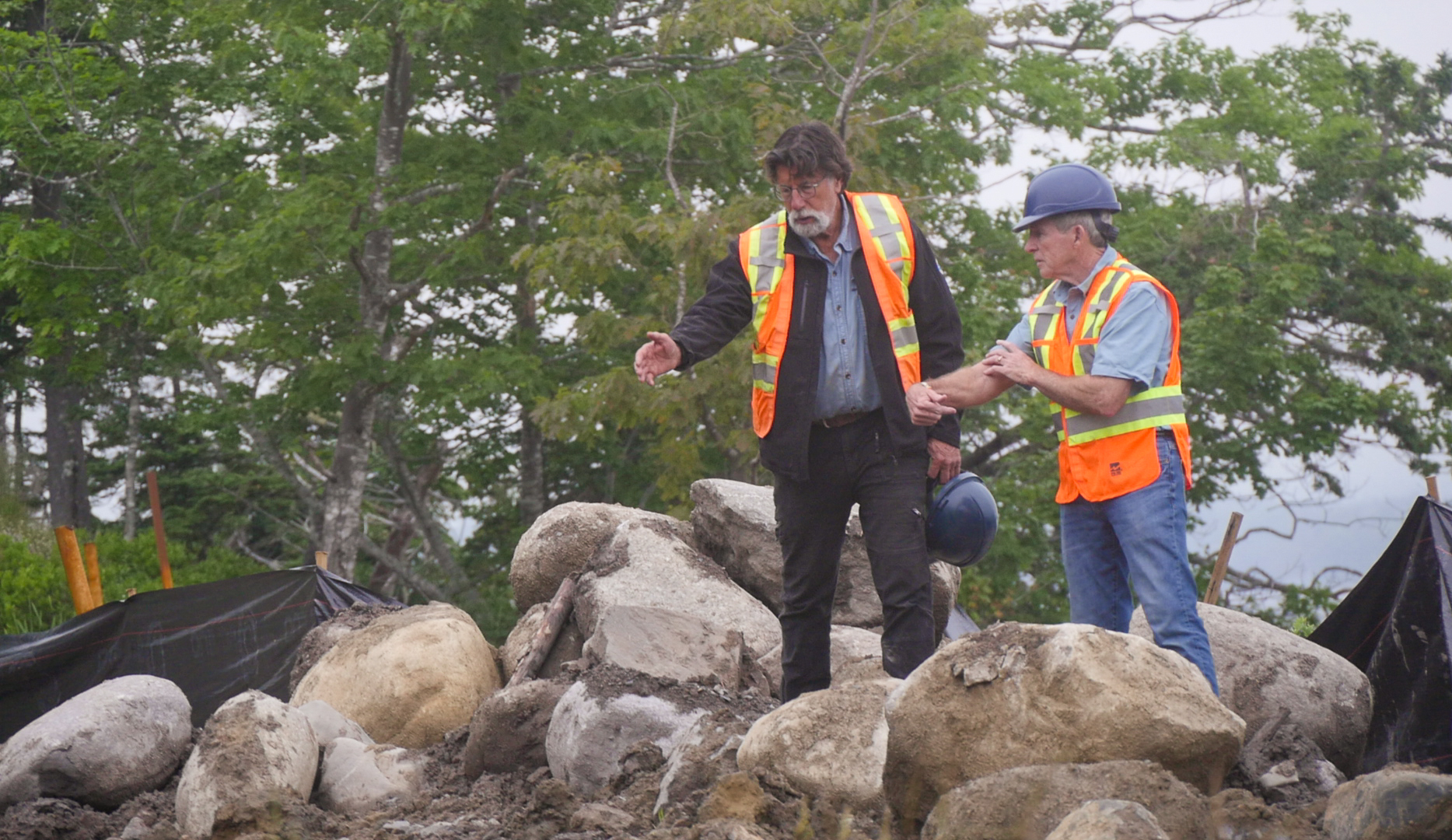
“This could change everything,” Rick Lagina said. “We might have boxed it in.”
What Comes Next?
As the team resumes operations with metal detector Gary Drayton scanning beneath the Garden Shaft, a large non-ferrous signal—a “screaming large hit,” as Rick called it—has given renewed hope.
Whether it’s silver-laced water, ancient Roman coins, or stone structures that mirror historical blueprints, Oak Island is once again proving itself a nexus of mystery, history, and persistence.
Will the Fellowship of the Dig finally break through the island’s final layer of secrecy?
One thing is certain: This season, the island is talking louder than ever.
Tune in weekly as the Laginas dig deeper than ever in The Curse of Oak Island, Season 12, only on the History Channel.
🪙 “Where there’s muck, there’s treasure, mate.” — Gary Drayton
