Water Crisis, Sonar Scans and Rare Artifacts: Oak Island Team Presses On Despite Setbacks

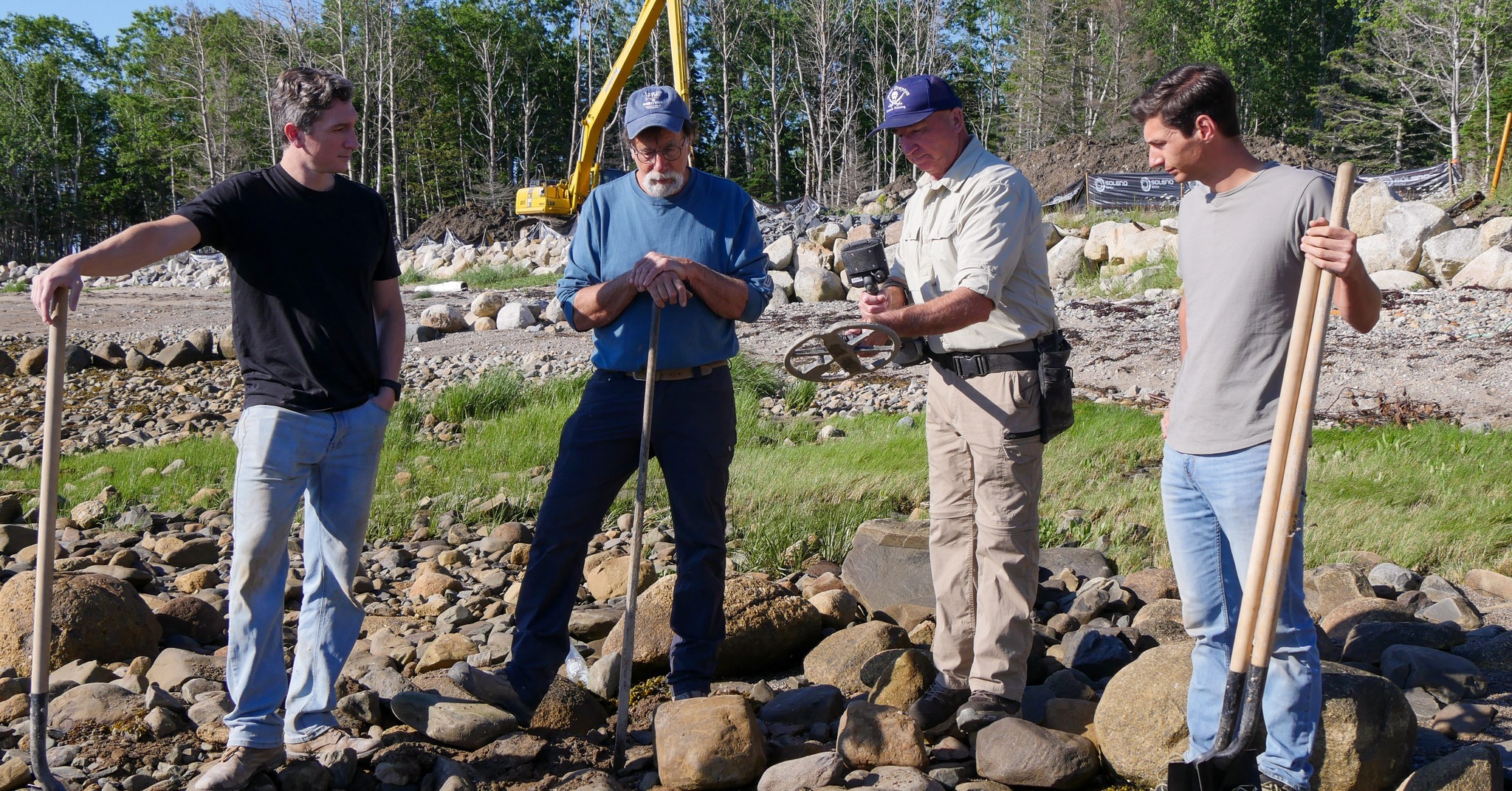
A surge of water at the Money Pit has once again disrupted efforts by Rick Lagina, Marty Lagina and their team on The Curse of Oak Island, forcing a temporary halt to excavation at the Garden Shaft and renewing debate over the island’s long-theorised flood system.
Flooding Halts Progress at the Garden Shaft
Heavy rainfall across southern Nova Scotia compounded an already troubling development: approximately 700 gallons of water per hour seeping into the 66-foot-deep shaft. The team had intended to extend the shaft toward a suspected tunnel believed to run west toward an area known as the “Baby Blob,” where prior testing revealed traces of gold and silver between 80 and 120 feet underground.
The unexpected volume of water raised fresh speculation about whether the team may have intersected part of the legendary flood tunnel network said to protect the Money Pit for more than two centuries.
To counter the intrusion, contractors injected expanding polyurethane into exploratory boreholes to seal exterior gaps. Only once stability is confirmed will excavation resume toward the targeted 100-foot depth.
“We’re not quitting,” Rick insisted during discussions about scaling back certain remote sensing operations. “We’re a team.”

Sonar Exploration of “Aladdin’s Cave”
While shaft work paused, attention shifted offshore to a cavernous void dubbed “Aladdin’s Cave,” located roughly 60 feet southwest of the Garden Shaft. Earlier core drilling had identified a substantial underground cavity approximately 150 feet below ground level.
Using a high-resolution sonar system, the team generated three-dimensional imaging of the space. The scans revealed straight edges and angular formations inconsistent with natural erosion, intensifying suspicions of human construction.
Water samples from the cavity previously contained traces of wood and metallic elements. A camera probe lowered into the murky void later confirmed the presence of structural features, including apparent walls and sloped surfaces.
Engineers and historians now debate whether the cavern could represent a storage chamber or access corridor linked to historical activity at the Money Pit.
Lot 5 Yields 17th-Century Clues
Meanwhile, archaeological efforts on Lot 5 have uncovered artifacts that may connect surface activity to the island’s deeper mysteries.
Excavations around a circular stone foundation near the shoreline revealed a metal band and fastener consistent with a 17th-century chest. Metallurgical analysis by archaeometallurgist Emma Culligan and blacksmithing expert Carmen Legge suggested construction techniques dating from the 1600s to early 1700s.

A separate discovery — a fragment of high-lead “flint glass” bearing an etched star pattern — further heightened interest. Experts believe the material likely originated in France and may have belonged to a high-status individual.
Soil analysis from Lot 5 reportedly matches samples taken from depths near the Money Pit, strengthening theories that the area could have served as a staging or preparation site for whatever activity created the subterranean structures.
Swamp Discovery Adds New Layer
In the island’s swamp, team members recovered a shaped wooden object buried roughly three feet below the surface. Its deliberate construction suggests it may have been part of a larger engineered system, though its precise purpose remains undetermined.
Additional findings in the swamp — including structural timber and masonry fragments — have fueled speculation that the area may once have functioned as an access point or harbor.
Technology Drives New Phase
Ground-penetrating radar, magnetometry and chemical artifact analysis continue to refine the team’s understanding of Oak Island’s underground network. Recent scans indicate interconnected voids beneath previously identified tunnels, suggesting a more extensive labyrinth than earlier believed.
One stone slab uncovered during excavation bore faint markings that some experts argue resemble historical symbols, though no definitive interpretation has been confirmed.
A Mystery That Endures
Despite water setbacks and logistical challenges, the Lagina brothers remain committed to a methodical approach. Each borehole, sonar sweep and artifact analysis adds incremental clarity to a puzzle that has captivated explorers for over 200 years.
Whether the island ultimately reveals treasure, historical documentation or simply evidence of elaborate past engineering, the current findings underscore one point: Oak Island’s story continues to evolve — shaped as much by scientific scrutiny as by legend.
For now, excavation proceeds cautiously, guided by technology and tempered by patience, as the team moves one step closer to understanding what truly lies beneath the island’s surface.