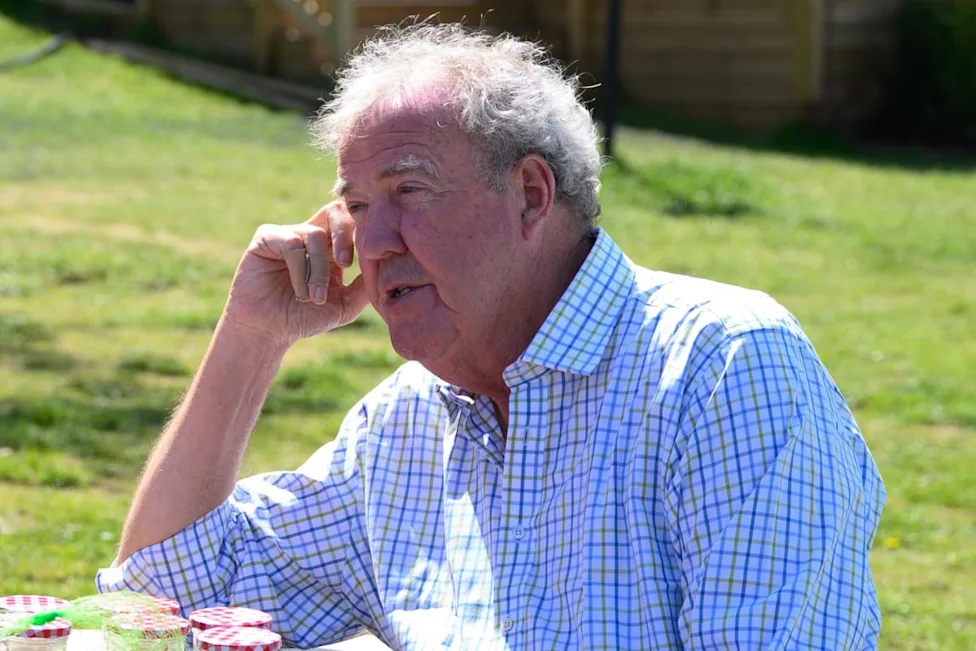
Jeremy Clarkson was left visibly embarrassed after recalling an awkward incident that took place during a visit to a crematorium for a funeral, an experience he described as “very upsetting” in his latest Sunday Times column.
The 66-year-old broadcaster, best known for his roles on Top Gear, The Grand Tour, and more recently Clarkson’s Farm, reflected on the moment while reviewing the new Porsche 911 GT3 Touring, a high-performance sports car priced at around £204,000. The powerful vehicle, which features a six-speed manual gearbox, earned high praise from Clarkson, who described it as “the best sports car I’ve ever driven.”
However, it was the car’s demanding driving characteristics that led him to recount a moment of unexpected discomfort.
Clarkson explained that the Porsche, while exceptional in performance, requires careful throttle control, particularly when pulling away from a standstill. Without sufficient revs, it can easily stall—a trait he said became particularly problematic in an emotionally sensitive setting.
He revealed that the incident occurred while attempting to reverse-park the vehicle at a crematorium car park during a funeral service. The setting, already marked by grief and solemnity, only intensified the situation.

According to Clarkson, the combination of low-speed manoeuvring and the car’s manual gearbox led to repeated stalling and loud engine revs, creating what he later described as an “embarrassing” scene. The sound of the sports exhaust, he noted, contrasted sharply with the quiet, respectful atmosphere expected at such an occasion.
He went on to describe the discomfort of being surrounded by mourners arriving to pay their respects, while he struggled with the vehicle in full view. The moment, he admitted, made him feel out of place, as the car’s aggressive mechanical response and his own driving difficulties drew unintended attention.
Despite the awkwardness of the situation, Clarkson maintained his admiration for the Porsche 911 GT3 Touring, praising its engineering and driving experience. Yet he conceded that in certain environments—particularly sensitive or quiet public settings—the car’s temperament can become less than ideal.
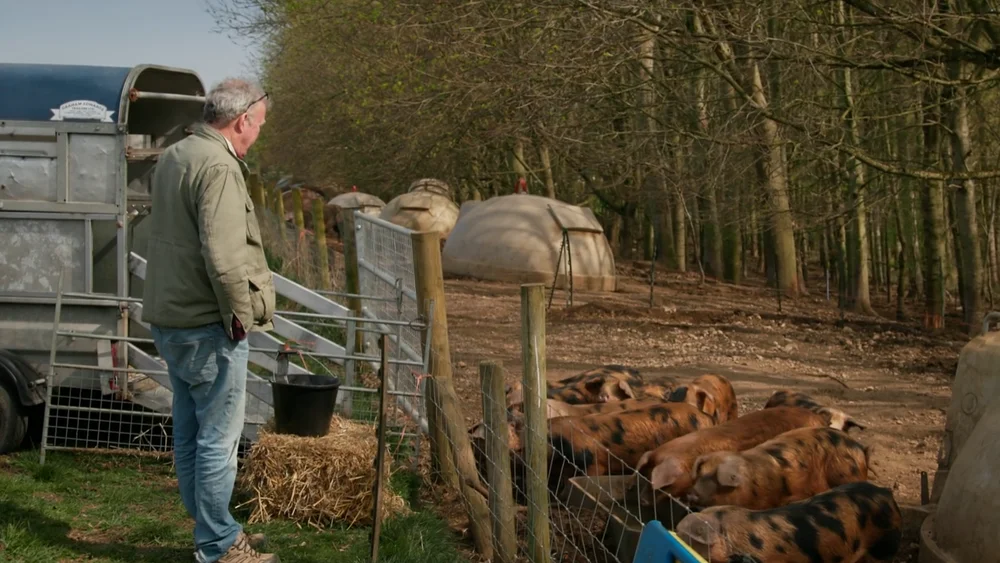
The anecdote adds another chapter to Clarkson’s long-running habit of blending automotive commentary with personal storytelling, often highlighting the humorous or uncomfortable realities behind high-performance driving in everyday life.
While the moment at the crematorium left him feeling “embarrassed,” it also underscored the contrast between the world of elite sports cars and the more grounded, emotional moments of real life—a juxtaposition Clarkson has frequently explored in his writing and television work.
The incident, as he recounted it, serves less as a critique of the vehicle and more as a reflection on timing, context, and the unpredictability of everyday situations—even for someone long accustomed to being in the public eye.
