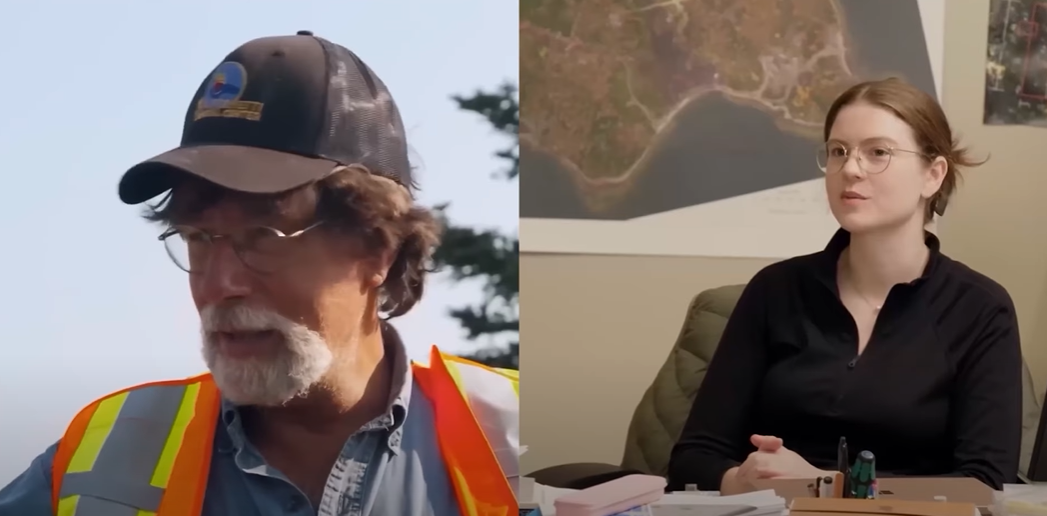
Oak Island’s relentless quest for treasure has entered an electrifying new chapter. Rick Lagina, Craig Tester, and their team of archaeologists, historians, and scientists may be on the brink of solving a 230-year-old mystery that has haunted generations: the location of the Money Pit and its alleged treasure.
Their latest effort focuses on the elusive flood tunnel system believed to channel seawater into the Money Pit to deter would-be looters. Excavations near Smith’s Cove have revealed a massive wooden beam at the waterline, and early analysis suggests it is not natural. With researcher Emma Culligan on-site to analyze materials, the team is hopeful the wooden structures and stone linings may date back centuries.
“We’re looking for something out of place,” said Rick Lagina. “And I think we’re finally finding it.”
The discovery of a concrete slab—verified via X-ray diffraction to be part of the Portland cement family—has added yet another piece to the puzzle. Notably, Portlandite traces suggest the mix likely originated from either Quebec or British Columbia, and historical records show hydraulic mining began in these areas in the 1920s, potentially connecting the slab to prior searchers, possibly the Restalls.
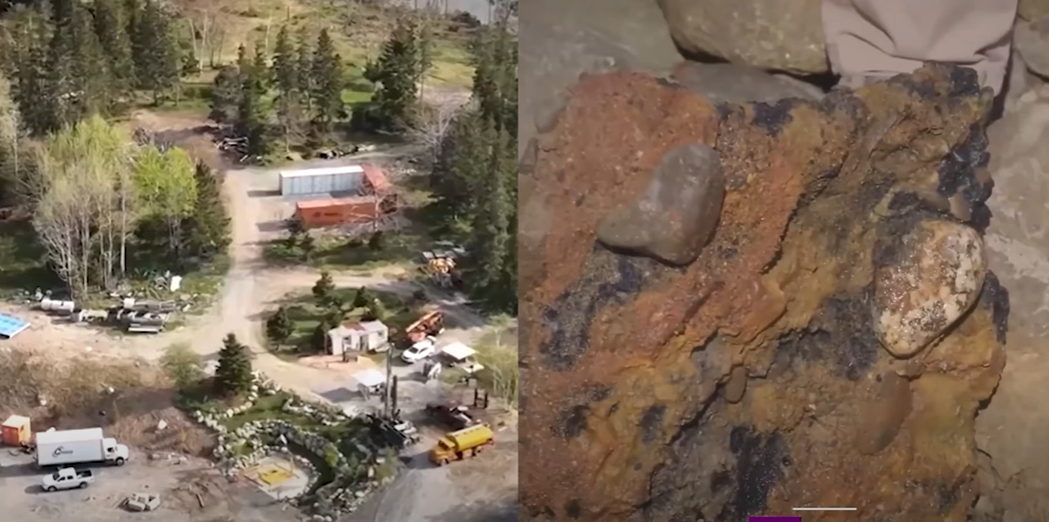
Craig Tester noted the peculiar arrangement of boulders, tightly packed and uniform. “This doesn’t look like nature’s work,” he said. “It looks like someone built it.”
Lot 5 Offers Shocking Clues
Meanwhile, across the island on Lot 5, Gary Drayton and Peter Fornetti have uncovered artifacts that may date back to the 17th century. Among the finds are Venetian trade beads, a copper belt plate, and iron tools potentially linked to Sir William Phips, the famed English treasure hunter believed to have recovered silver from the Spanish treasure galleon Concepción in 1687.
Culligan’s analysis of the copper plate—done with a CT scanner and XRF spectrometer—revealed a complex alloy of copper, zinc, iron, lead, and arsenic. Blacksmithing expert Carmen Legge confirmed the metallurgy was consistent with objects from before the 18th century, bolstering the Phips theory.
Could Phips, or one of his Masonic associates like Captain Andrew Belcher, have relocated part of the Spanish silver hoard to Oak Island?
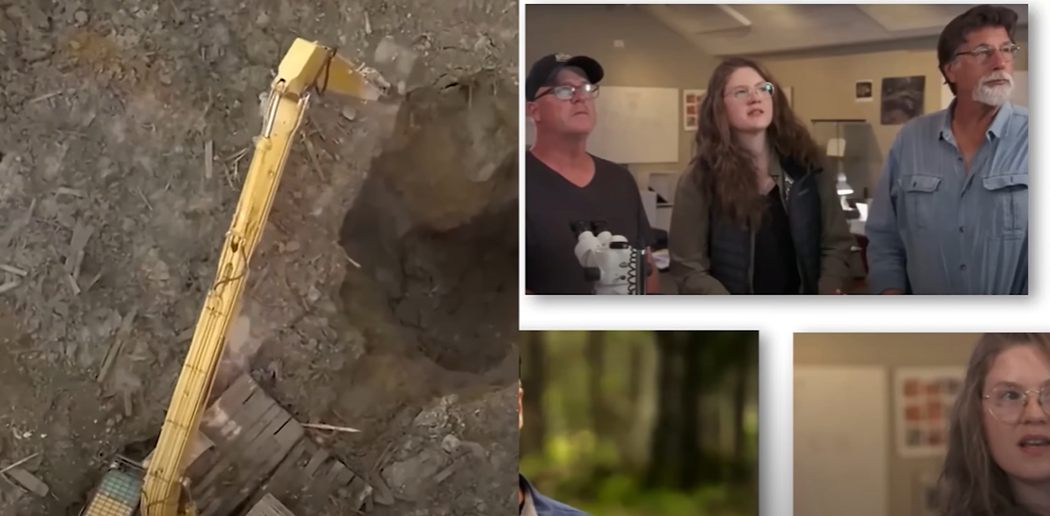
A Strange Formation and Blue Clay Stir Further Theories
At the enigmatic “Quadrilateral” feature on Lot 13, the team has identified an unexpected deposit of blue clay, the same rare substance found during the first recorded excavation of the Money Pit in 1804. Historian and geoscientist Dr. Ian Spooner confirmed the clay is out of place geologically and may have been deliberately deposited to seal off an underground structure—possibly a vault.
Also uncovered was a hand-forged iron staple, reminiscent of fasteners used in medieval construction. This, combined with burnt wood, multicolored clay, and metal striations, suggests deliberate engineering.
“The layering is not random,” said Spooner. “Someone planned this.”
What Lies Beneath the Swamp?
In another breakthrough, evidence now points to the Eye of the Swamp being artificially constructed—possibly as a marker or access point. Theories swirl around Freemason symbolism, with 32° Mason Scott Clarke suggesting the swamp’s geometric design could be a “calling card” left by those who buried the treasure.
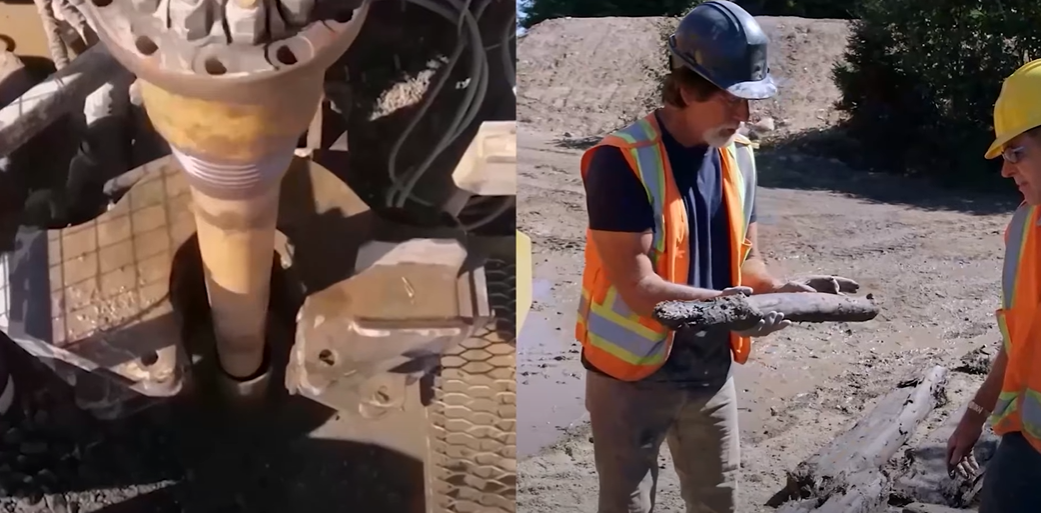
The convergence of ancient materials, medieval symbols, and 17th-century artifacts paints a tantalizing picture of hidden vaults, secret operations, and buried riches.
Is the Mystery Nearing Its End?
Decades of speculation, hoaxes, and heartbreak have plagued Oak Island treasure seekers. But with concrete analysis, metallurgy studies, and historical corroboration from figures like William Phips, this season has delivered compelling data.
Backed by a fusion of cutting-edge science and historical sleuthing, the Oak Island team may be closer than ever to validating centuries of legend.
“If blue clay, manmade beams, and Phips’ tools are all found in proximity,” said Marty Lagina, “then we might not just be chasing shadows anymore.”
🧭 Stay tuned to The Oak Island Chronicle for exclusive updates as excavation resumes at the Quadrilateral and beneath Smith’s Cove. History may finally be ready to give up its secrets.
