When viewers tune into Gold Rush, the spotlight is almost always fixed on one thing—gold. Each season follows miners like Parker Schnabel, Tony Beets, and Rick Ness as they push machinery, manpower, and endurance to the limit in pursuit of massive seasonal totals.
From drilling test holes to stripping overburden and running massive wash plants around the clock, the scale of operations is enormous. Season 16 continued that tradition, ending with record-breaking gold hauls and reaffirming the series’ reputation as one of the most intense portrayals of modern mining.
But once the final weigh-in is complete and the celebrations fade, a very different story begins—one that rarely makes it to television.
WHAT HAPPENS AFTER THE CAMERAS STOP
After the mining season ends, many fans are left wondering what becomes of the land itself. The answer reveals a side of mining that is far less glamorous but critically important: land reclamation.
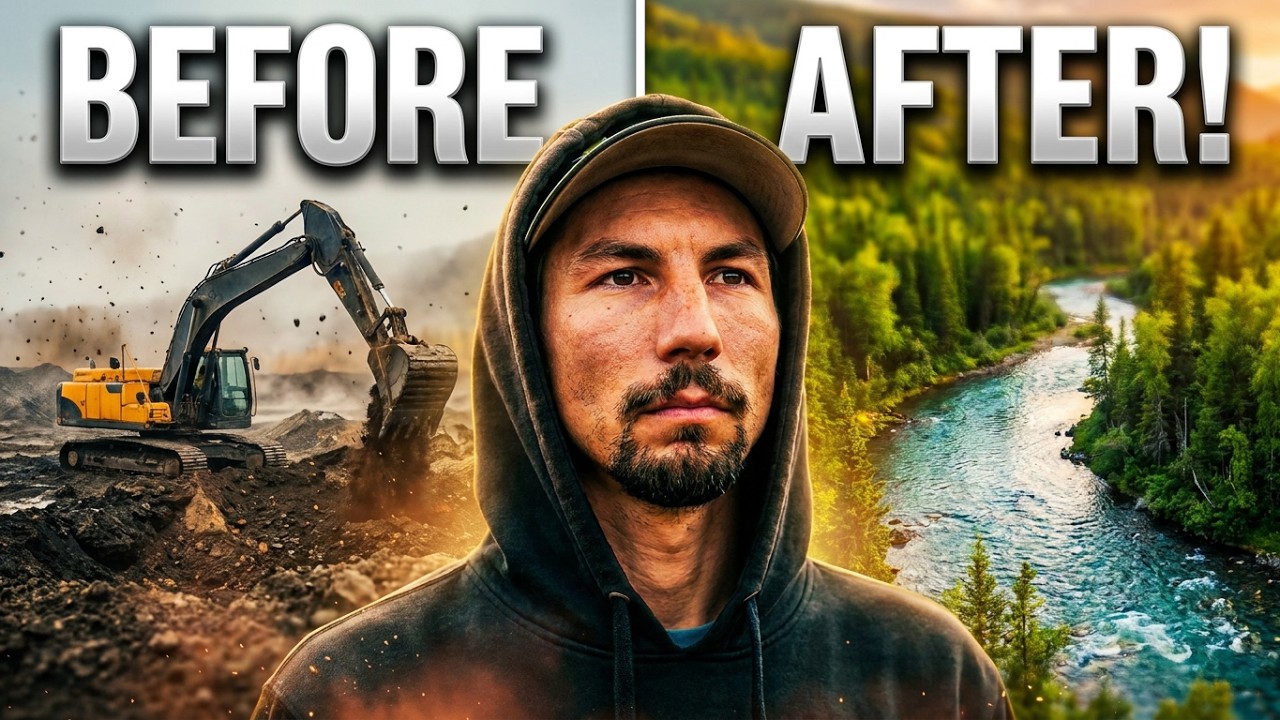
By the time crews leave, the landscape has often been dramatically transformed. Forests are cleared, soil layers removed, and large excavated pits remain where pay dirt once sat. To the untrained eye, it can look like permanent environmental damage.
However, according to industry practice, this is only temporary.

Before mining even begins, operators must obtain strict permits from government authorities. Those permits come with environmental obligations—most importantly, the requirement to restore the land once extraction is complete.
RECLAMATION: THE INDUSTRY’S HIDDEN RESPONSIBILITY
Reclamation is not optional. It is a legal and operational requirement enforced by regulators. Mining companies must reshape terrain, replace topsoil, restore drainage systems, and replant vegetation such as grasses, shrubs, and trees.
The goal is simple: return the land as close as possible to its original ecological condition or create a stable environment capable of supporting wildlife and future use.
But in practice, the process is complex, costly, and time-consuming. Heavy machinery leaves behind heavily altered ground, and restoration often continues long after filming has stopped and crews have moved on.
As highlighted in industry reporting, reclamation is a core part of modern mining responsibility, ensuring that the environmental footprint of gold extraction is not permanent.
PARKER SCHNABEL AND THE FUTURE OF RESPONSIBLE MINING
Among the show’s cast, Parker Schnabel has become one of the strongest advocates for responsible reclamation. Raised within the mining industry, he has repeatedly emphasized that future mining operations depend on maintaining environmental standards and regulatory trust.

His work in land restoration at the Little Flake Mine earned recognition from the Yukon government, including an environmental stewardship award acknowledging his efforts to restore mined land.
Despite his success, Schnabel has also voiced concern about increasing regulatory uncertainty in the industry. While he continues to invest in compliance and reclamation, he has noted that changing rules and permitting challenges make long-term planning more difficult for mining operators.
DIFFERENT APPROACHES, SAME REQUIREMENT
Not all miners have faced the same level of scrutiny. Figures such as Tony Beets have encountered environmental violations and fines in the past, underscoring the strict enforcement environment surrounding mining operations.
Even so, reclamation remains a universal requirement. Whether operations are large-scale or small crews, restoring the land is essential for maintaining permits and continuing future mining activity.
THE FINAL CHAPTER OF EVERY SEASON
While viewers focus on gold totals, machinery breakdowns, and high-pressure decisions, the final phase of every mining season is far less visible but equally important.
After the gold is extracted, crews remain behind to reshape terrain, rebuild soil layers, and restore ecosystems. Vegetation is replanted, wildlife gradually returns, and disturbed land begins a slow transformation back toward balance.
This process may not deliver dramatic television moments, but it determines the long-term future of mining itself.
In the end, the story of Gold Rush is not only about how much gold is pulled from the earth—it is also about what is left behind once the digging stops.
