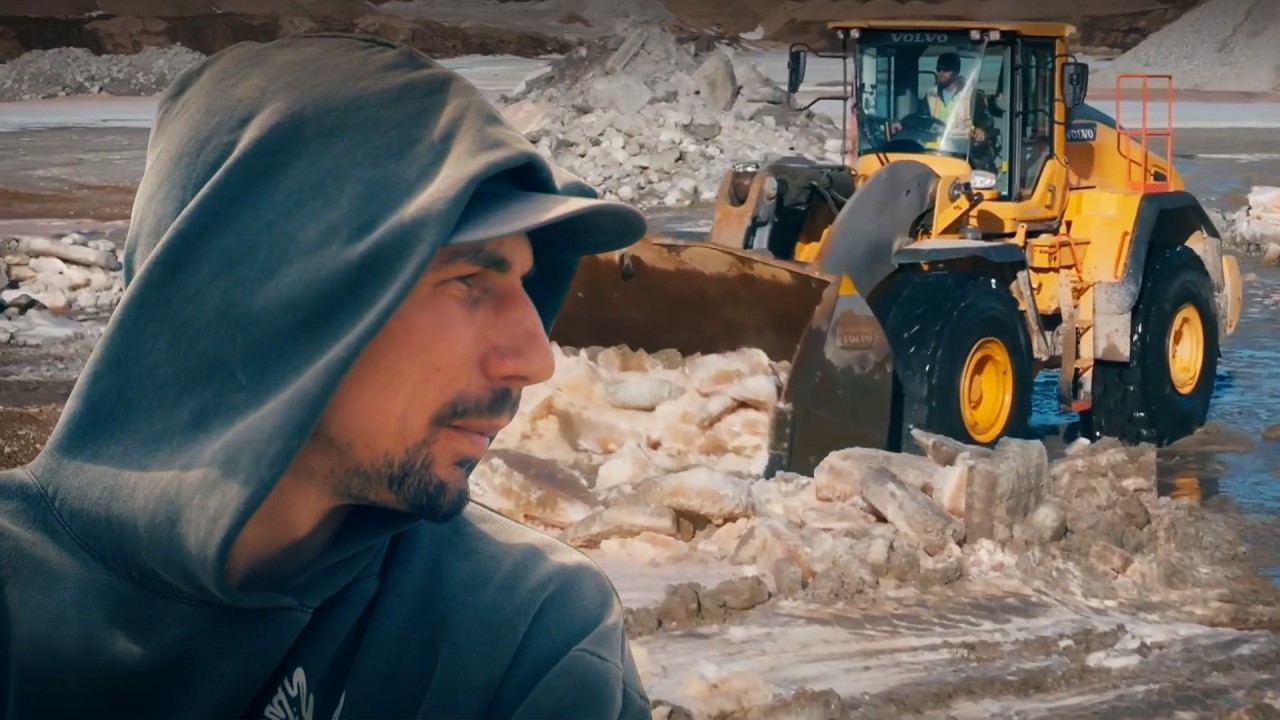
The new mining season has opened with heavy pressure already building across the Yukon, as Parker Schnabel’s operation battles a costly ice problem and Rick Ness finds himself unable to mine despite sitting on what could be more than $1 million in gold-bearing ground.
At Parker’s Dominion Creek ground, the message from the top has been unmistakable. Everyone is expected to do more, and there is no room for mistakes. That burden is falling especially hard on Tyson, who has stepped into a much bigger leadership role this season.
After overseeing one plant last year, Tyson is now responsible for three, a major jump in responsibility at a time when every early decision could shape the rest of Parker’s season. His first major task is to get gold flowing from the Bridge Cut at Dominion, a section of ground that Parker’s team has mined for two years with uneven results. This time, however, the stakes are much higher. Parker is counting on the cut to deliver in a big way.
There is just one problem: before the crew can even reach the pay dirt, they have to deal with a huge mass of frozen ground left behind by winter.
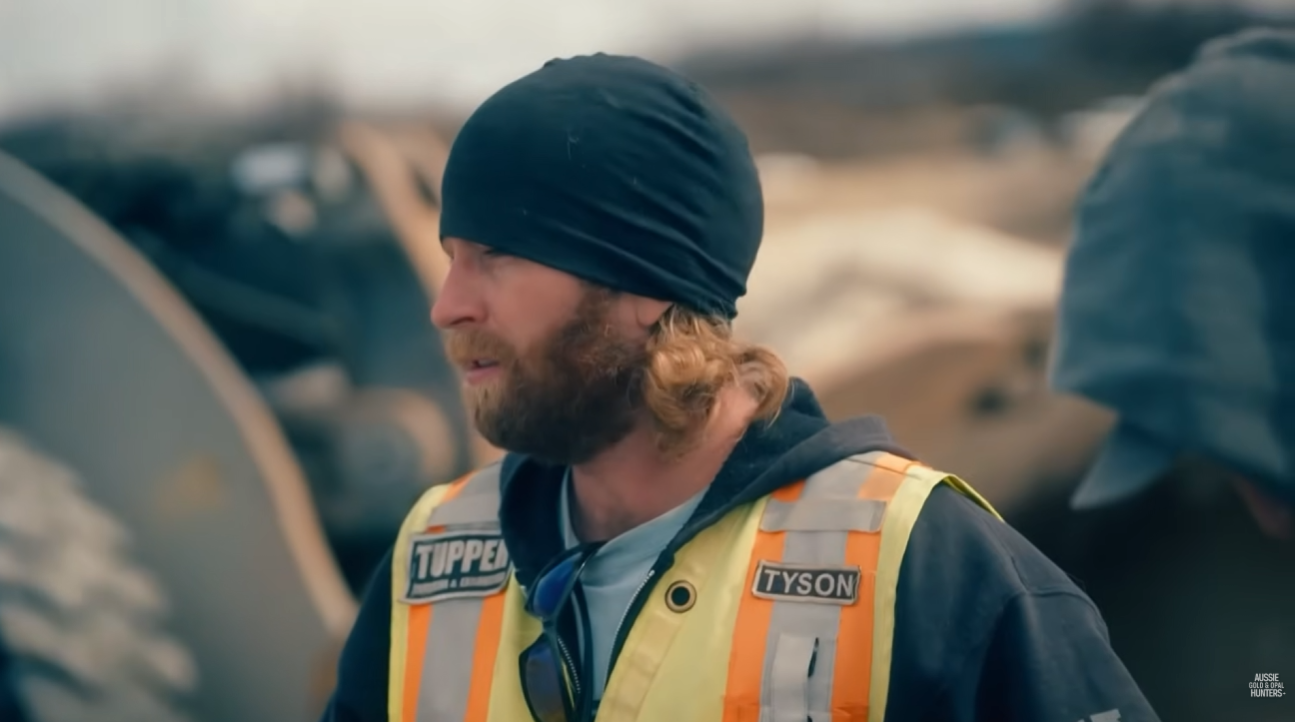
The Bridge Cut is buried under roughly a metre of solid ice, forcing Tyson’s team into an expensive and time-consuming cleanup before mining can properly begin. Instead of feeding dirt into the plant and building momentum, the crew is stuck hauling away truckloads of frozen material. By Tyson’s estimate, around 25,000 tons of ice must be moved before they can reach the gold underneath.
That kind of delay is not what he wanted at the start of the season.
Tyson had hoped to prepare the wash plant and get it running immediately, but the reality on the ground has pushed that goal further away. Speaking from the cut, he made clear how serious the situation is. If the ice is not gone and the plant is not operating by the end of the week, he will feel he has failed right at the beginning of the season.
The issue is not just time. It is money.
Tyson admitted he did not want to spend heavily on trucking out the ice, but with the frozen ground proving thicker than expected, he is running out of options. The extra cost may be painful, but so is the alternative. If the plant stays idle, the entire season could start slipping before it has truly begun. For Parker’s crew, that makes the decision simple, even if it is not ideal: spend now, get the ice out, and start mining as quickly as possible.

The pressure reflects the broader reality of working for Parker Schnabel. His operations are large, fast-moving and built around high expectations. For many miners, joining Parker’s team is a dream because of the scale of the machinery and the intensity of the work. But that opportunity comes with relentless demands, especially for someone like Tyson, who now has far more responsibility than before.
While Parker’s crew is fighting to get started, Rick Ness is facing a very different kind of problem at Duncan Creek.
Rick appears to be sitting on a potentially rich stockpile of pay dirt, one he believes could contain around 12 kilograms of gold worth more than $1 million. Under normal circumstances, that kind of material would offer a major early boost and a strong reason for optimism. Yet none of it can be touched.
The reason is frustratingly simple: Rick still does not have the water licence needed to mine.
Without that essential permit, his wash plant cannot run and the promising ground at Duncan Creek remains locked in place. The gold may be there, ready to be processed, but until the paperwork comes through, it is effectively out of reach. For a mine boss desperate to get moving, that kind of delay can be infuriating.
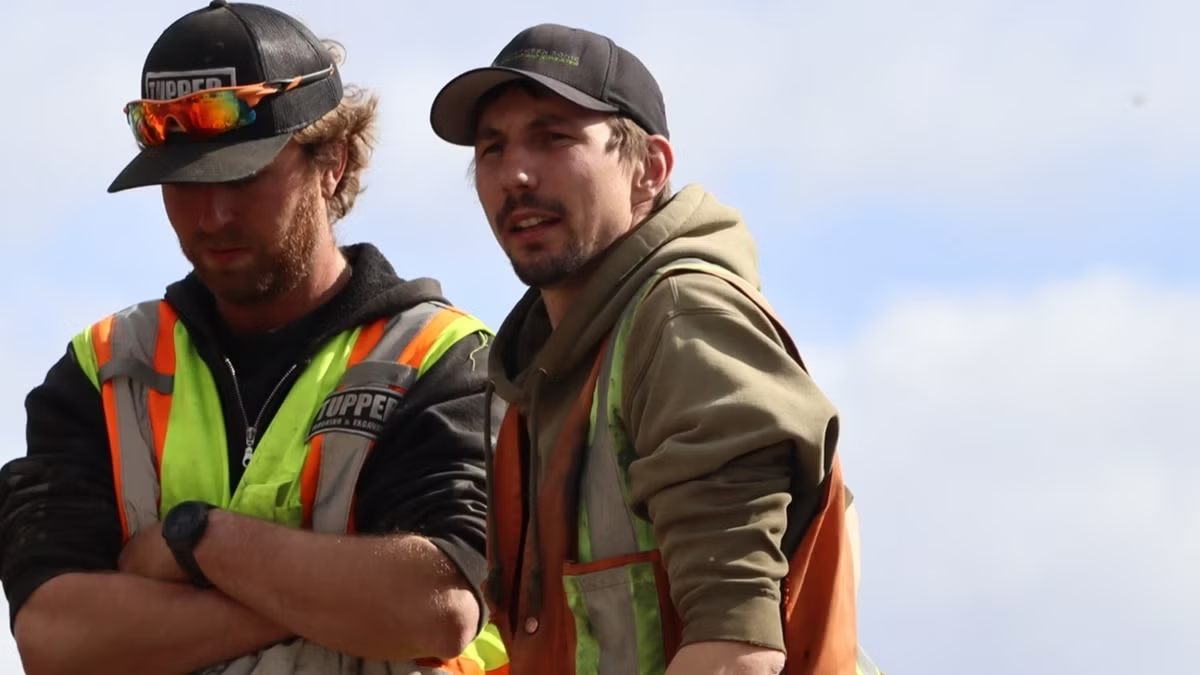
Rick made no attempt to hide that frustration. He described the situation as unbelievable, explaining that trying to distract himself from the delay had only made him angrier. It is easy to understand why. In mining, timing matters almost as much as the ground itself. A delayed start can compress the season, raise costs and leave less room to recover from setbacks later on.
That is what makes this stage of the year so important for both men.
At Dominion, Tyson is under pressure to prove he can handle a bigger role and deliver results for Parker despite the punishing ice problem. At Duncan Creek, Rick is in a holding pattern, forced to watch a potentially valuable opportunity sit idle while he waits for regulators to give the green light.
In both cases, the season is being shaped before the gold even starts pouring.
For Parker’s team, the challenge is physical and financial: move the ice, absorb the cost and get the plant running before the delay grows worse. For Rick, the challenge is administrative but no less damaging. He cannot mine his way out of the problem. He can only wait and hope the licence arrives in time for Duncan Creek to become the lifeline he needs.
It is still early in the season, but the pressure already feels intense. One crew is racing against frozen ground. The other is stalled by paperwork. And in the gold fields, both kinds of delay can be just as dangerous to a season’s success.
