“Breaking the Seal”: The 40,000-Pound Boulder on Lot 8 May Be Oak Island’s Most Significant Discovery Yet

For over a decade, Rick and Marty Lagina have chased one of history’s most enduring treasure mysteries on a small island off the coast of Nova Scotia, Canada. Season 13 of The Curse of Oak Island has delivered some of the most jaw-dropping moments yet — and at the center of it all sits a single, ancient stone that may have just changed everything.
Months of Work, One Massive Stone
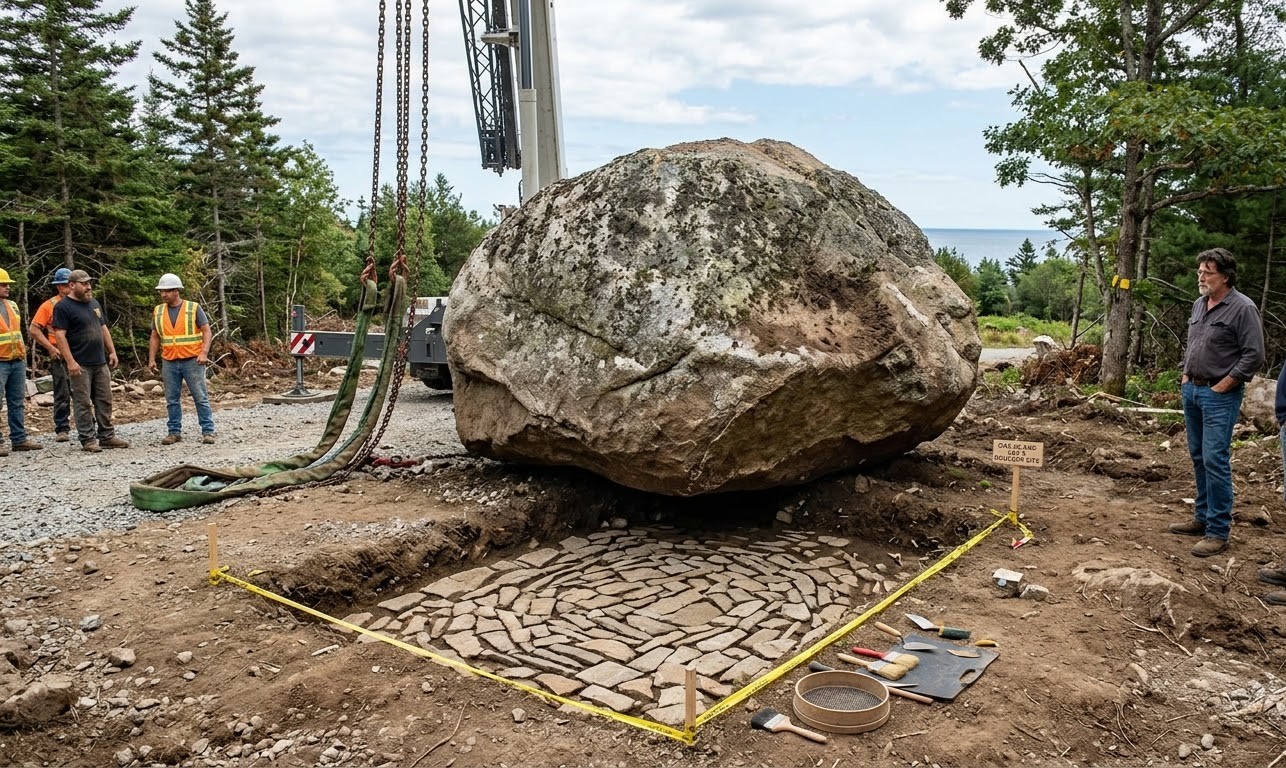
The story of the Lot 8 boulder did not begin overnight. After months of excavation, the team discovered evenly spaced stones supporting the boulder and a backfilled void beneath it — a configuration that strongly suggested the massive rock had not simply been placed there by nature. The suspicion grew: this boulder was deliberately positioned, and something significant lay underneath.
Excavation beneath the formation revealed large voids, a wool textile fragment with red dye dated to the medieval period, and a 700-year-old English bag seal bearing the Leeds sheepskin symbol. Meanwhile, artifacts recovered from the surrounding soil included a hand-forged iron chopping knife dated to the mid-1700s and a hand-forged iron pintle of a type dating as far back as 2000 BC.
The Snake Camera Reveals Something Extraordinary
Before committing to the full lift, the team inserted a snake camera beneath the boulder — and what they saw stopped everyone in their tracks. The camera captured images of a possible iron stake, what appeared to be a pearl, and at greater depth, lumps with golden, yellowy veins that the team observed had the color and luster of gold. Rick called it potentially the most substantial discovery ever made on the island.
Dr. Ian Spooner’s soil analysis showed lead levels of 140 parts per million beneath the boulder compared to just 12 elsewhere on the island — a tenfold difference that pointed strongly to human activity concentrated in that exact spot over a very long period of time.
The Lift: A 130-Ton Crane and a Centuries-Old Secret
Archaeologist Laird Niven approved the next phase: the use of heavy machinery to lift the stone — a decision that signaled a dramatic shift from cautious documentation to decisive action. The team prepared to lift the boulder using a 130-ton crane.
What they found after the lift was staggering. After raising the 40,000-pound boulder from Lot 8, the team was astonished to find a man-made feature that may be hiding a shaft or tunnel. Archaeologist Fiona Steele excavated directly beneath the boulder’s former position, uncovering a tightly packed mosaic-like layer of flat stones unlike anything previously seen on the island.
A Rosehead Spike and a Link to the Original Depositors
The discoveries did not stop at the stone mosaic. Metallurgists and blacksmithing experts, including Carmen Legge and Emma Culligan, analyzed a rosehead spike found at the site and concluded it was made from cold-short iron, a material commonly used before modern forging techniques emerged in the mid-18th century. The spike’s age placed it squarely in the era of Oak Island’s original mystery makers — and its function was telling. Its use as a fastener in large vaults or boxes built to protect valuables strengthened the team’s theory that they had found an ancient piece of hardware linked directly to the original depositors of the treasure.
A Possible Second Money Pit — and a Knights Templar Connection
Perhaps most remarkably, the Lot 8 findings have opened an entirely new line of inquiry. While investigating under the massive boulder, the Laginas and the team found evidence of a possible second Money Pit — a discovery that reframes the island’s entire underground architecture.
Further investigation revealed that churches along a key geographic axis bore a symbol associated with the Templars — a four-dot cross — which matches carvings found on the HO stone discovered on Oak Island in 1921. This connection, combined with the construction on Lot 8 and the high-value artifacts found, strengthens the theory that the island’s treasure is linked to an organized, transatlantic effort by the Knights Templar.
Silver in the Soil, Gold in the Depths
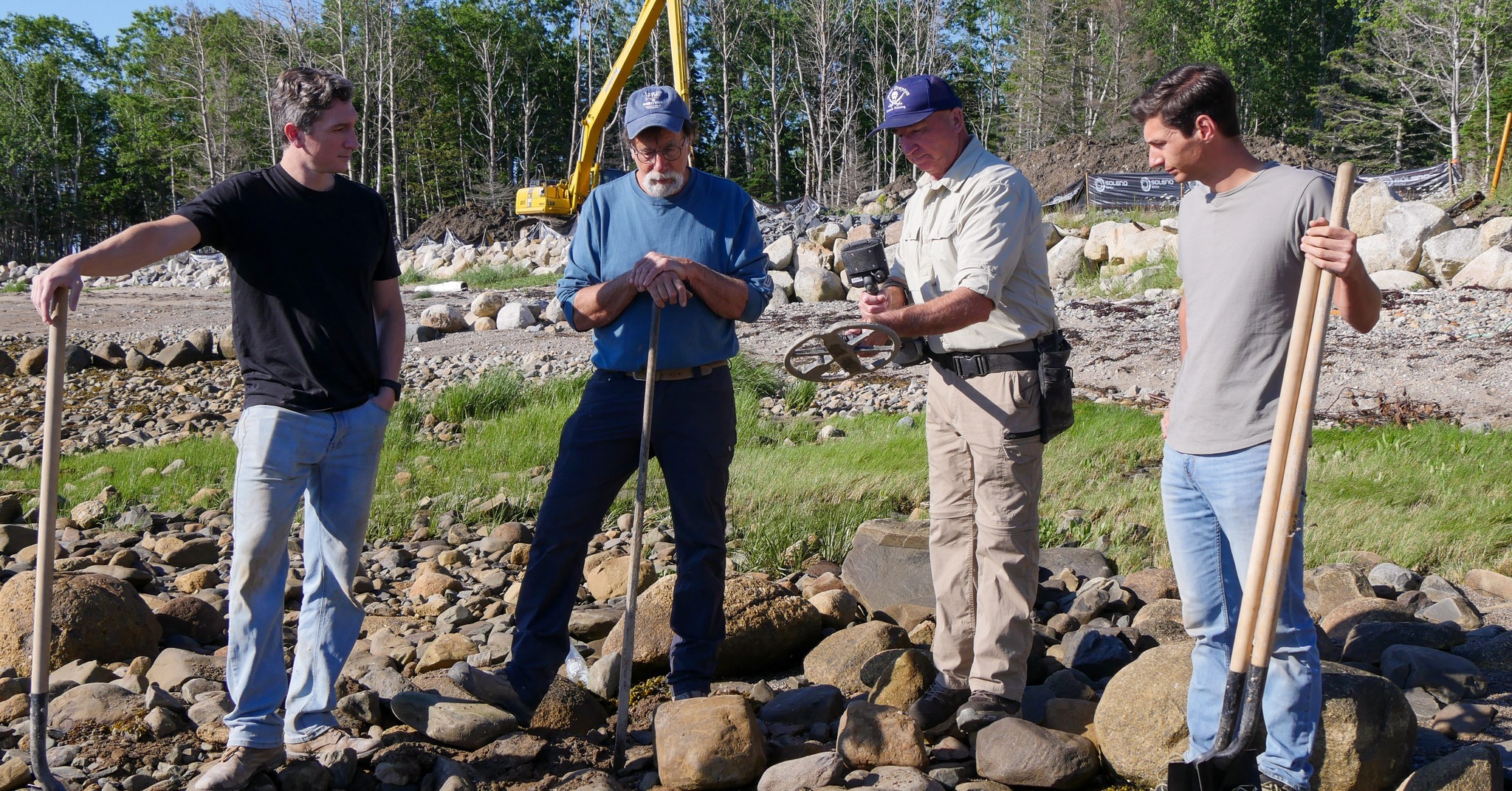
Dr. Ian Spooner arrived with an XRF spectrometer to scan the soil beneath the boulder. The results revealed traces of silver and copper, which Dr. Spooner confirmed could be linked to a historical cache. Theories quickly formed among the team: the silver found in the soil could have seeped up from a treasure cache deeper below the surface, and if the boulder’s removal confirmed the existence of a tunnel or shaft, this could point to even more significant discoveries.
Setbacks Beneath the Surface
Not everything went smoothly. The new shaft, dubbed the TPF (Top Pocket Find), faced a catastrophic collapse at 105 feet, halting progress and risking millions in equipment. The ground surrounding the shaft remains unstable, with flooding, collapsed tunnels, and glacial till posing constant threats to the team’s safety and operations.
What Comes Next
With Episode 19 — titled “Axis of Medieval” — set to air on March 24, the Knights Templar connection is expected to deepen further. After 13 seasons and countless near-breakthroughs, the Lagina brothers may finally be standing at the threshold of the answer that Oak Island has guarded for centuries. The boulder is gone. The seal is broken. What lies beneath may rewrite history.