Gary Drayton’s Oak Island Revelations Point to Royal Treasure, Ancient Traps and a Mystery That Refuses to Die

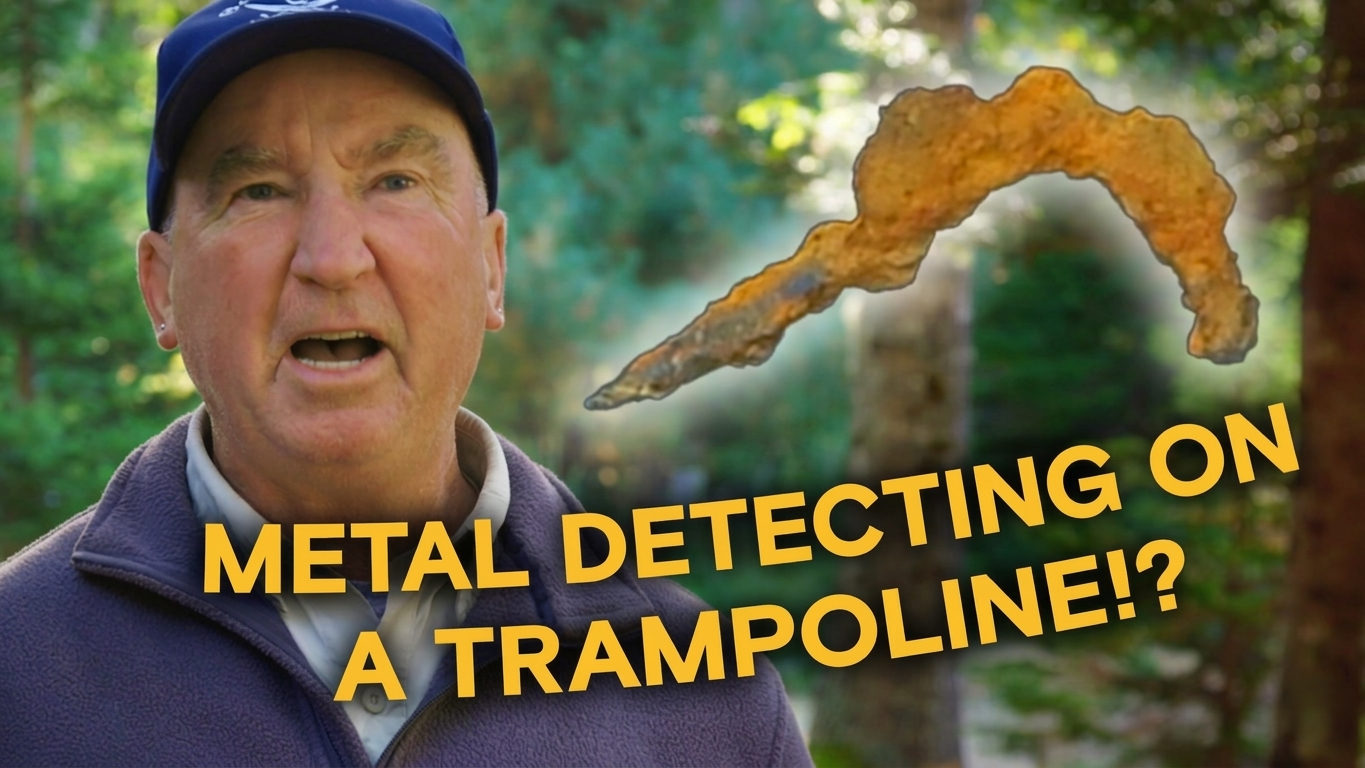
Oak Island has never been just another treasure hunt. For more than two centuries, the island has pulled explorers, historians and dreamers into a mystery built on strange artifacts, hidden chambers, flood tunnels and rumors of treasure linked to powerful figures from the past.
Now, Gary Drayton is once again at the center of the search, with new finds that have reignited speculation about what may still be buried beneath the island.
The latest investigation focuses heavily on the swamp, one of the most mysterious areas on Oak Island. Rick and Marty Lagina, along with their team, believe this part of the island could hold clues that connect the treasure story to the 17th century and possibly even to royal history.
Gary Drayton’s metal detecting work near the swamp shoreline produces one of the first major clues: what appears to be a coin connected to the era of King Charles II. Its markings are worn, but the potential timeline immediately raises questions. Was it dropped by someone passing through, or was it part of something deliberately hidden?
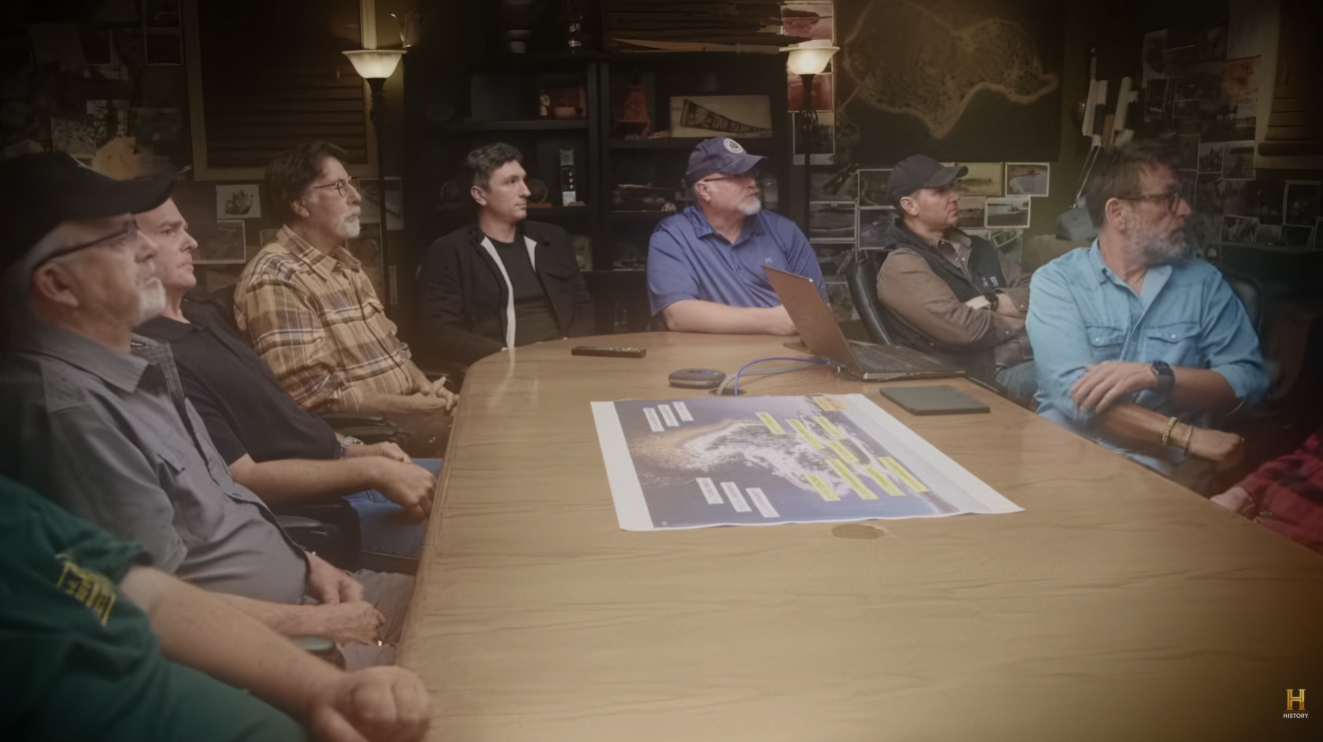
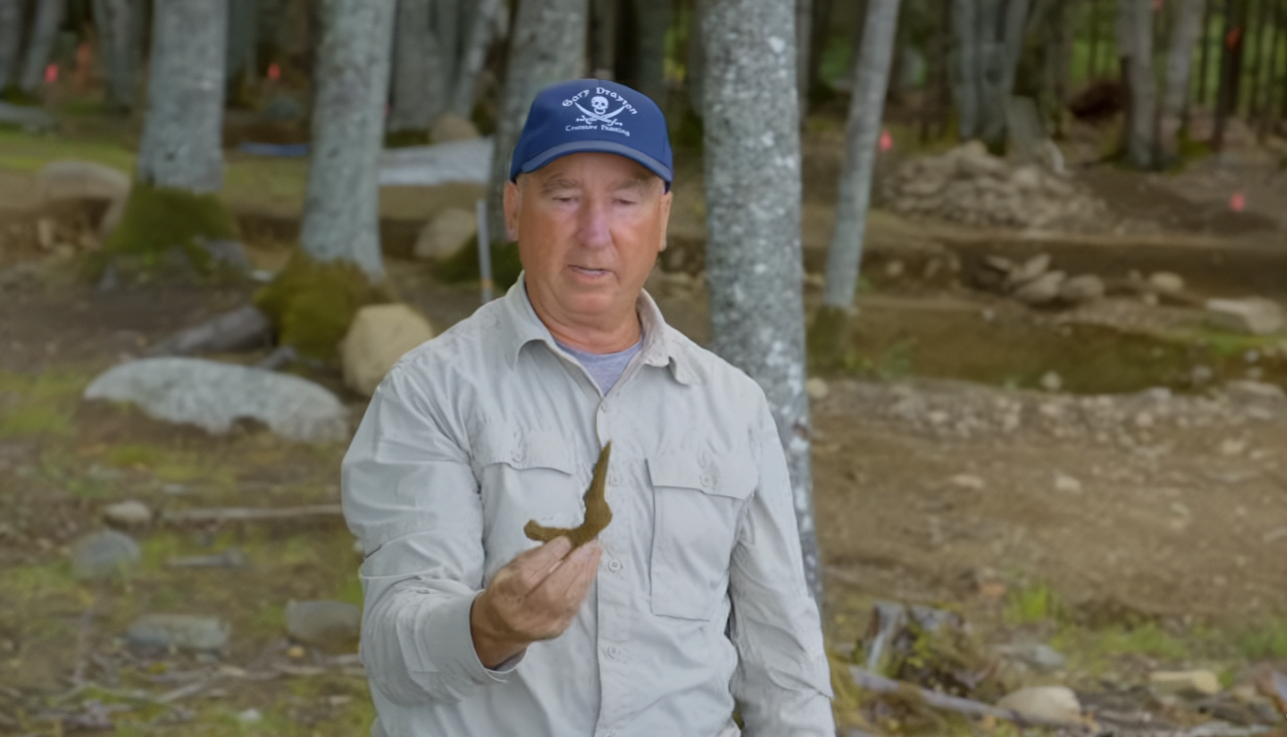
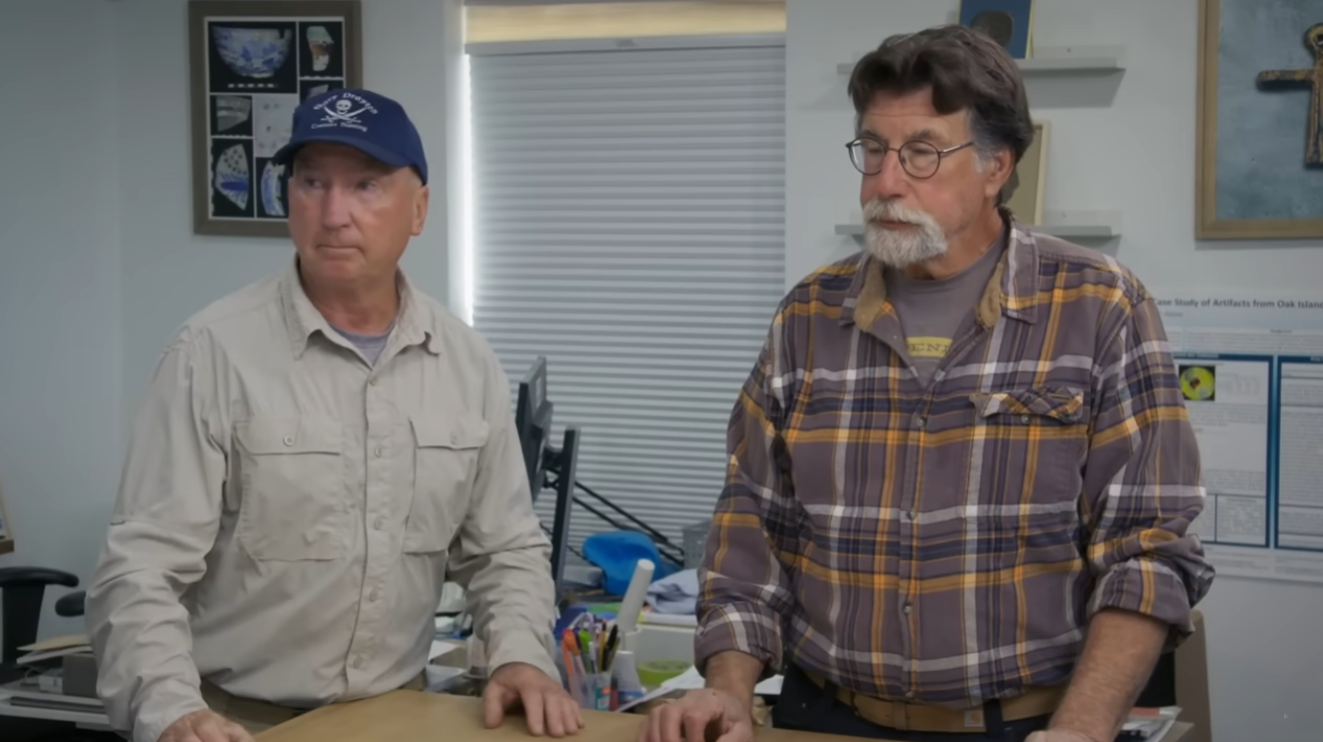
The discovery becomes even more intriguing when the team uncovers what appears to be part of an old chest hinge near a stone pathway. Blacksmith expert Carmen Legge examines the object and suggests it may have belonged to a chest that could have held valuables, documents or other important items. If the dating is correct, the hinge may fit the same general period as the coin.
For the Lagina team, the combination of a coin, a possible chest fragment and the swamp’s unusual history is difficult to ignore.
The swamp also continues to produce one of Oak Island’s most debated materials: coconut fiber. Because coconut fiber does not naturally belong in Nova Scotia, its presence has long fueled theories that someone transported it to the island for a specific purpose. Some believe it may have been used as part of a filtration or drainage system, possibly linked to protecting something buried underground.
Then comes another major clue. During excavation at the swamp’s edge, the team hits a buried wooden plank deep in the mud. Its position suggests it may be part of a larger structure, perhaps even an entrance or support system connected to an underground feature. However, unstable conditions prevent the crew from pushing forward immediately.
That is typical of Oak Island. Every discovery seems to open a door, only for the island to place another obstacle in the way.
The search then shifts back to the legendary Money Pit, the site that has defined Oak Island for generations. The team revisits a shaft connected to earlier promising results, hoping it may lead them closer to the original treasure zone. But progress is slowed when the crew reaches a hard rock layer around 30 feet down.
Rather than giving up, the team turns to soil testing and underground scanning. Traces of precious metals in the area keep hopes alive, while sonar equipment detects what may be a large man-made cavity below the surface. The possibility of a hidden chamber immediately captures the team’s attention.
Yet, as often happens on Oak Island, water becomes the enemy. Flooding forces the crew to pause, reminding everyone of the island’s long history of underground traps and engineering puzzles.
These flood systems have always been central to the Oak Island legend. Some believe they were deliberately designed to protect whatever was hidden in the Money Pit. Others argue they may be natural or the result of older excavation efforts. Either way, they continue to make progress slow, dangerous and expensive.
Beyond the swamp and the Money Pit, the team also examines artifacts that seem to point to a much wider story. Items such as old spikes, military-style buttons, unusual coins, metal traces and stone pathways suggest the island may have seen activity from different groups across different time periods.
One of the most puzzling elements is the suggestion of international connections. Past discoveries have raised theories involving Europe, the Middle East, British forces, Spanish silver and early maritime activity. While none of these clues alone proves the existence of a single buried treasure, together they create a picture of an island with a far more complicated history than once believed.
For Rick and Marty Lagina, that is what keeps the search alive. The treasure may be gold, silver, documents or something historically significant. But the deeper they dig, the more it seems Oak Island’s real value may be the story it has preserved beneath the surface.
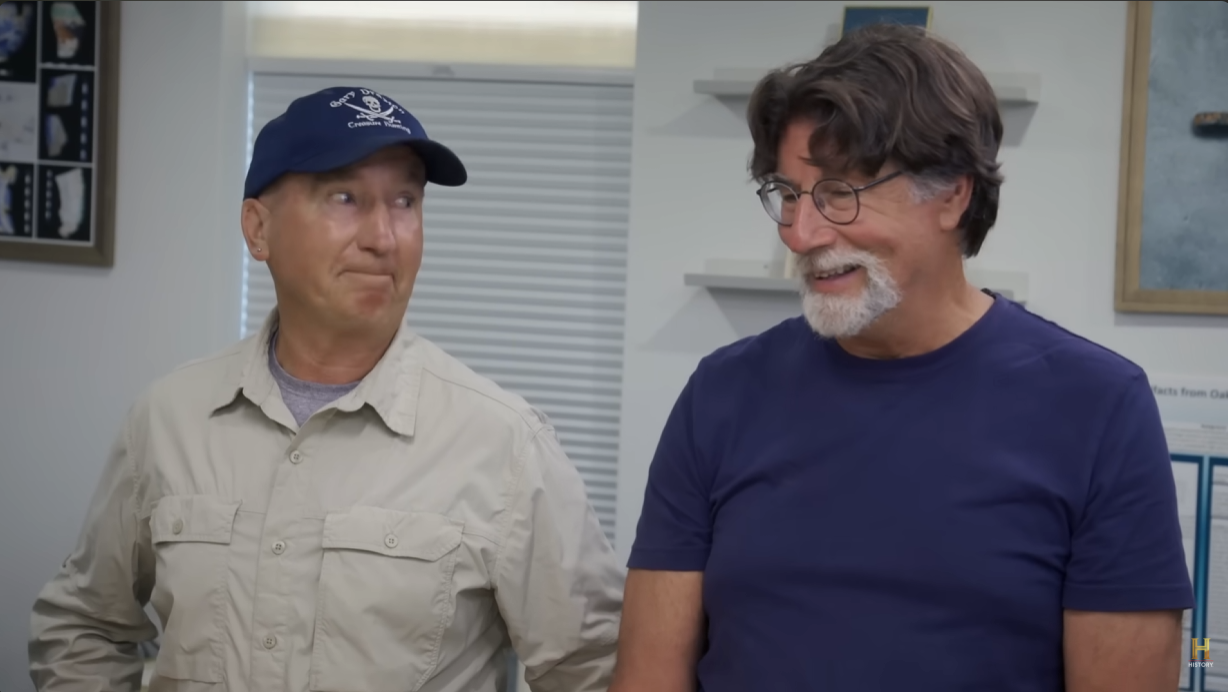
The brothers have invested years of work and significant resources into solving the mystery. Rick has always been driven by childhood fascination, while Marty has balanced belief with skepticism and practical thinking. Together, they have pushed the investigation further than many before them.
Gary Drayton’s latest finds do not solve the Oak Island mystery. But they do strengthen the sense that the island still has secrets left to reveal.
A possible royal-era coin, a chest hinge, coconut fibers, buried wood, underground voids and strange artifacts all point toward one conclusion: Oak Island is not finished with the Lagina team yet.
Whether the final answer is royal treasure, lost history or another layer of mystery, the search continues — and every new discovery makes it harder to walk away.