Oak Island Search Shifts Dramatically as Swamp Vault and Deep Cave Findings Raise New Questions

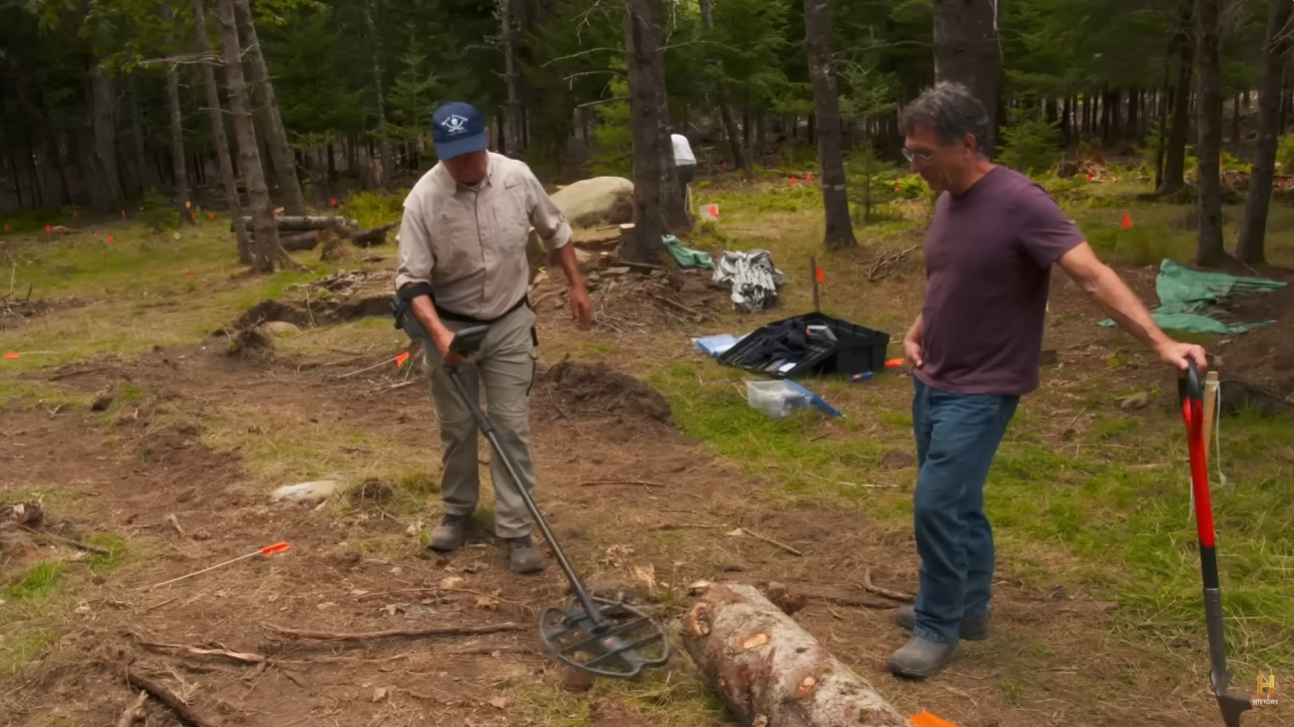
For more than two centuries, the search on Oak Island has revolved around the Money Pit. But a new chain of discoveries suggests the island’s most important secrets may not lie in the place treasure hunters have focused on for generations. Instead, attention is now turning to two other locations: the northern swamp and a deep underground void known as Aladdin’s Cave.
The most immediate excitement comes from the swamp, where the team has uncovered what appears to be a submerged stone-walled vault hidden beneath the northern edge of the wetland. The structure is described as square, tightly built and too precise to be dismissed as a natural formation. For a site that has long sat at the edge of the investigation, the discovery marks a notable shift.
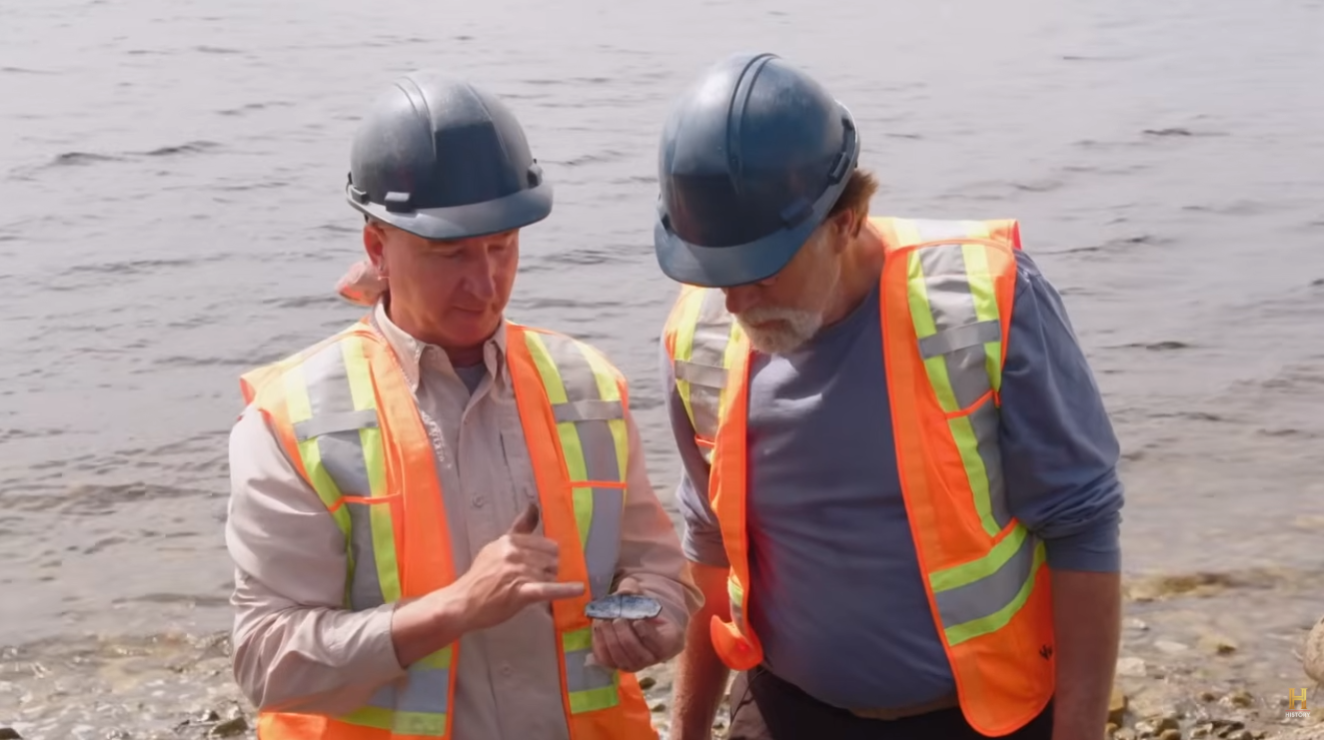
The find became more significant as artifacts began emerging from inside and around the structure. Among them were a wrought-iron crank handle, a pipe and additional iron hardware that appeared to be connected to a chest or storage mechanism. At first glance, the items looked like another collection of old fragments. But laboratory analysis pushed them into far more important territory.

According to the material, archaeometallurgist Emma Culligan examined the objects and found that the crank handle and pipe likely dated to the late 1700s, while one hook-shaped iron piece aligned more closely with early- to mid-1800s metalwork. That distinction matters. Anthony Graves, the 19th century landowner often linked to stories of Spanish silver coins on Oak Island, did not acquire the land until decades later. If the dating is correct, then the vault was already there before Graves ever arrived.
That possibility changes the role Graves may have played in the story. Rather than building the structure himself, he may have discovered and used something that had already been hidden in the swamp by an earlier, unknown group. In that reading, the vault becomes not a personal hiding place built by Graves, but a concealed storage site from a deeper chapter of Oak Island’s history.
The crank handle is especially intriguing because it appears to have been made for a practical mechanical purpose. The square opening at its centre suggests it was designed to fit onto a shaft and turn something, perhaps a lock, hatch or internal mechanism. In other words, it may not simply be an isolated artifact. It may be part of a system that still has not been fully uncovered.

The swamp itself is also taking on new significance. A hand-shaped wooden stake found in the mud is said to match the type of survey markers once identified by Fred Nolan, who long believed the swamp concealed a deliberately engineered landscape. Earlier carbon dating of similar stakes reportedly pointed to around 1575, strengthening the argument that the swamp was not a natural feature but a constructed barrier meant to hide activity beneath it. If so, the vault may have been placed within a landscape that was intentionally altered to keep it hidden.
At the same time, another part of the island is producing equally provocative results. Roughly 140 feet below the Money Pit area, the team has been investigating a subterranean void known as Aladdin’s Cave. Using a camera and sonar mapping, they found a cavern that appears larger and more complex than expected. More strikingly, the scan is said to show two distinct gaps in the wall and a linear feature that does not appear entirely natural.
That has raised the possibility that while the cave itself may be natural, access to it may not be. The interpretation now being explored is that someone may have broken into an existing cavern and adapted it for use, effectively turning a natural underground space into a hidden chamber. Because the slope of the cave floor still blocks part of the view, the team believes another borehole will be needed to see the blind spot clearly.
Taken separately, the swamp vault and the deep cave would each represent major developments. Taken together, they suggest something even bigger: that Oak Island may contain not one isolated mystery, but a connected system of engineered concealment. A late-1700s crank handle, chest-related ironwork, survey stakes with much earlier origins and a cavern with possible human modification all point toward organised activity spanning more than one period.
That does not prove treasure is waiting at the end of the trail. Oak Island has produced many compelling clues before. But what makes these findings stand out is the way they reinforce one another. The swamp is no longer just a side story. The deep void is no longer just another underground anomaly. Both are now being treated as central to the island’s unresolved history.
For a search defined by false starts and fragmented evidence, that may be the most important development of all. Oak Island’s mystery may not be narrowing to one point. It may finally be expanding into a fuller map of how the island was used, and hidden, in the first place.