Oak Island Season 13: Medieval Symbols, Templar Connections, and a 260-Year-Old Map

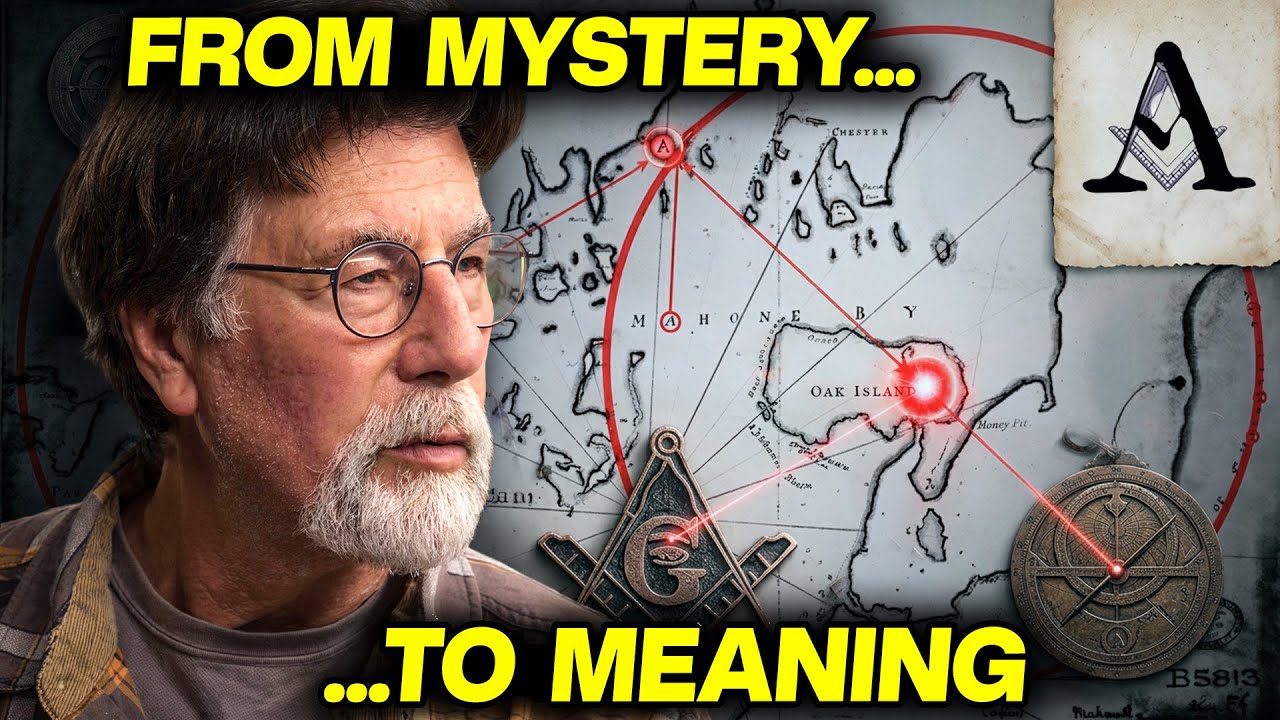
Nova Scotia, Canada – A mysterious symbol on a 260-year-old colonial map may rewrite what researchers thought they knew about Oak Island. The discovery, presented in season 13, links the island to medieval Europe through a chain of evidence spanning maps, Roman relics, Portuguese Templar sites, and carbon-dated artifacts. While not conclusive proof of a Templar presence, the findings provide one of the strongest circumstantial cases yet for sophisticated medieval activity on the island.
The story begins with Scott Clark, a 32nd-degree Mason and author of Oak Island Odyssey, who identified a stylized “A” with a V-shaped crossbar on Charles Morris’s 1762 survey of Mahon Bay. Extending the directional line implied by the symbol, Clark found it pointed directly at Oak Island. He then traced similar markings on the titilus cruis, a Roman relic housed in Rome, and on carvings at Portugal’s Convent of Christ in Tomar—historic headquarters of the Order of Christ, the successor organization to the Portuguese Templars. Clark suggested that a fragment of the True Cross could have been transported across the Atlantic and hidden on Oak Island, sparking both intrigue and debate.

Supporting Clark’s claims, season 13 investigators revealed a remarkable convergence of evidence. Professor Adriano Gaspani used archaeoastronomy to show that stone structures and wooden stakes on the island aligned with specific stars, a practice consistent with medieval European traditions and matching patterns found at confirmed Templar sites in Italy and France. Meanwhile, carbon dating of leather shoes recovered from the swamp yielded a range from 1148 to 1216 AD, predating known European settlement in Nova Scotia by centuries. Additional analyses included stone cannonballs traced to the Azores, medieval mortar beneath Lot 8 boulders, and CT scans revealing peck marks indicative of deliberate stonemasonry.
Taken together, the evidence suggests that Oak Island was not merely visited by explorers or settlers but was actively developed in the medieval period. Four independent disciplines—archaeology, geochemistry, carbon dating, and archaeoastronomy—converged on the same 12th to 15th-century timeframe, creating a compelling temporal and cultural window. The sacred symbol on the Morris map adds a cardographic vector connecting the island to the broader European Templar network, complementing the physical and astronomical data collected throughout the season.

While the Templar theory remains speculative, season 13 has strengthened the argument that Oak Island holds secrets far older and more complex than previously believed. From the Morris map and Roman relics to medieval cannonballs and precisely aligned stone formations, the combined findings suggest that sophisticated knowledge, international connections, and perhaps sacred artifacts were involved in the island’s medieval history. The sacred symbol may not prove the presence of the True Cross, but it reinforces a season-long pattern connecting Oak Island to Europe in the Middle Ages—a connection that historians and treasure hunters alike are now examining more closely than ever.