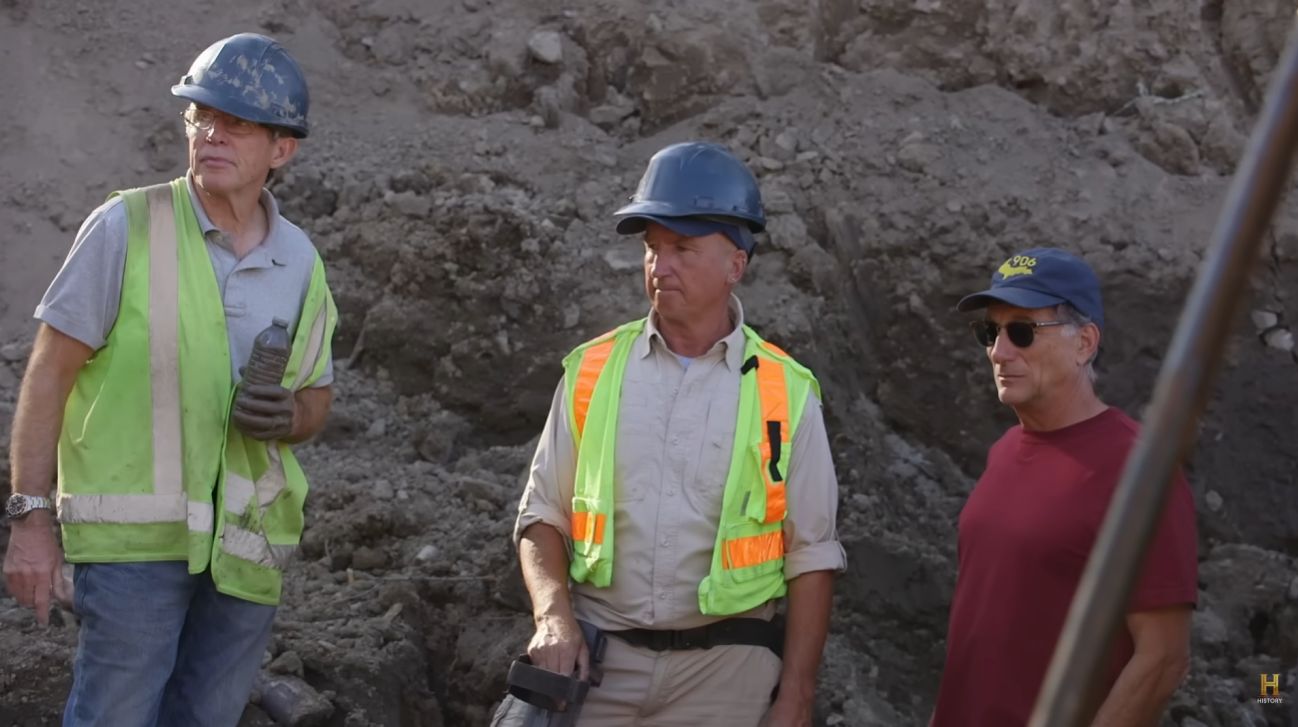
Oak Island’s search for answers took another dramatic turn when the team confronted two familiar enemies at once: flooding in the Garden Shaft and a growing number of discoveries that seemed to point toward something far older, deeper and more deliberate than a simple treasure legend. What began as an effort to control water seepage soon opened the door to fresh clues involving ancient timber, metal artifacts, possible chest hardware and renewed attention on the mysterious underground space known as Aladdin’s Cave.
In the Money Pit area, recent rain had made conditions even more difficult, forcing Rick Lagina, Alex Lagina and the rest of the team to focus first on stabilising the site. Their response involved using urethane to help seal off the water intrusion in the Garden Shaft, a necessary step if they were to continue pushing deeper into one of the most important areas of the island. Yet even while dealing with the flooding, the team kept uncovering details that suggested human activity at remarkable depths. Evidence of old structures, unusual sand deposits and what appeared to be signs of earlier excavation all added fresh weight to the idea that Oak Island’s underground story is far more complex than a natural geological puzzle.
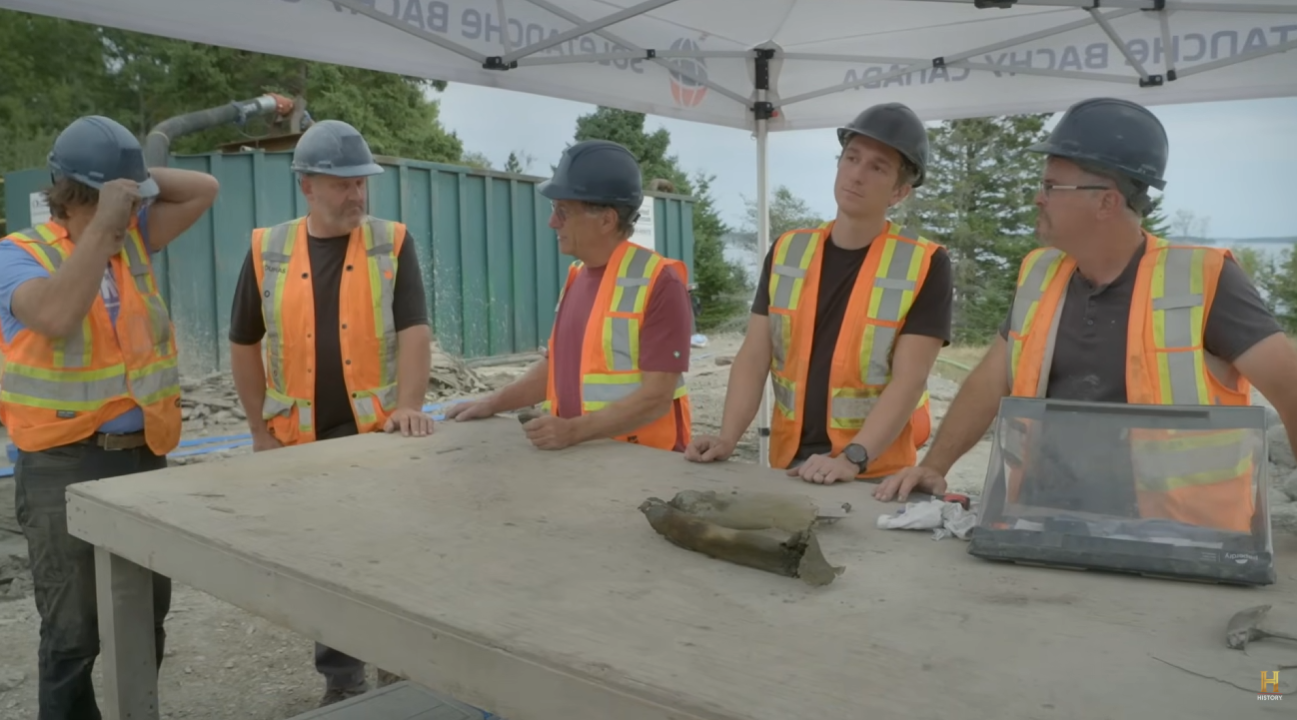
At the same time, Lot 5 continued to produce some of the most intriguing artifacts of the season. Archaeologists and researchers examining finds from the site turned to blacksmith expert Carmen Legge, who identified one piece as a clasp from a small chest that may date back to the 17th century. Another simple nail, though less striking at first glance, appeared to support the idea that significant historical activity had taken place in the area. The team also uncovered a barrel strap with a green tint suggesting copper, along with what Rick Lagina described as the top of a keg. Together, those items fed a growing theory that Lot 5 may once have served as a staging area connected to work around the Money Pit.
That theory fits into a much larger pattern emerging across the island. Borehole work near the Money Pit revealed a cavern around 141 feet deep, while additional efforts in the Garden Shaft area led to the discovery of a 65-foot-deep hole containing wooden fragments. Rather than viewing these as isolated anomalies, the team began treating them as possible pieces of an interconnected underground system. In that context, Aladdin’s Cave has become one of the most important targets in the entire search.
When the team reached Aladdin’s Cave, they deployed a low-light 360-degree camera to inspect the space more closely. According to the account, the images suggested traces of gold, silver and organic materials inside the chamber. Even more tantalising was the possibility of a hallway or tunnel-like feature, raising hopes that the cave could be linked to the so-called offset chamber and perhaps even to the long-rumoured treasure itself. Sonar was then used to map the space more precisely, underlining just how central Aladdin’s Cave has become to the current investigation.
Beyond the cave, the season’s discoveries continued to widen the historical frame of the mystery. In the swamp, the team found what may have been part of a small boat from the 1680s, along with ship-related materials that renewed speculation about maritime activity on the island. A piece of copper sheathing and other nautical artifacts added support to the idea that Oak Island may once have played a role in cargo handling, concealment or seafaring operations tied to earlier centuries. Carmen Legge even suggested that one copper fragment could have been part of a treasure chest dating back much earlier than expected, feeding long-running theories about medieval or Templar links.
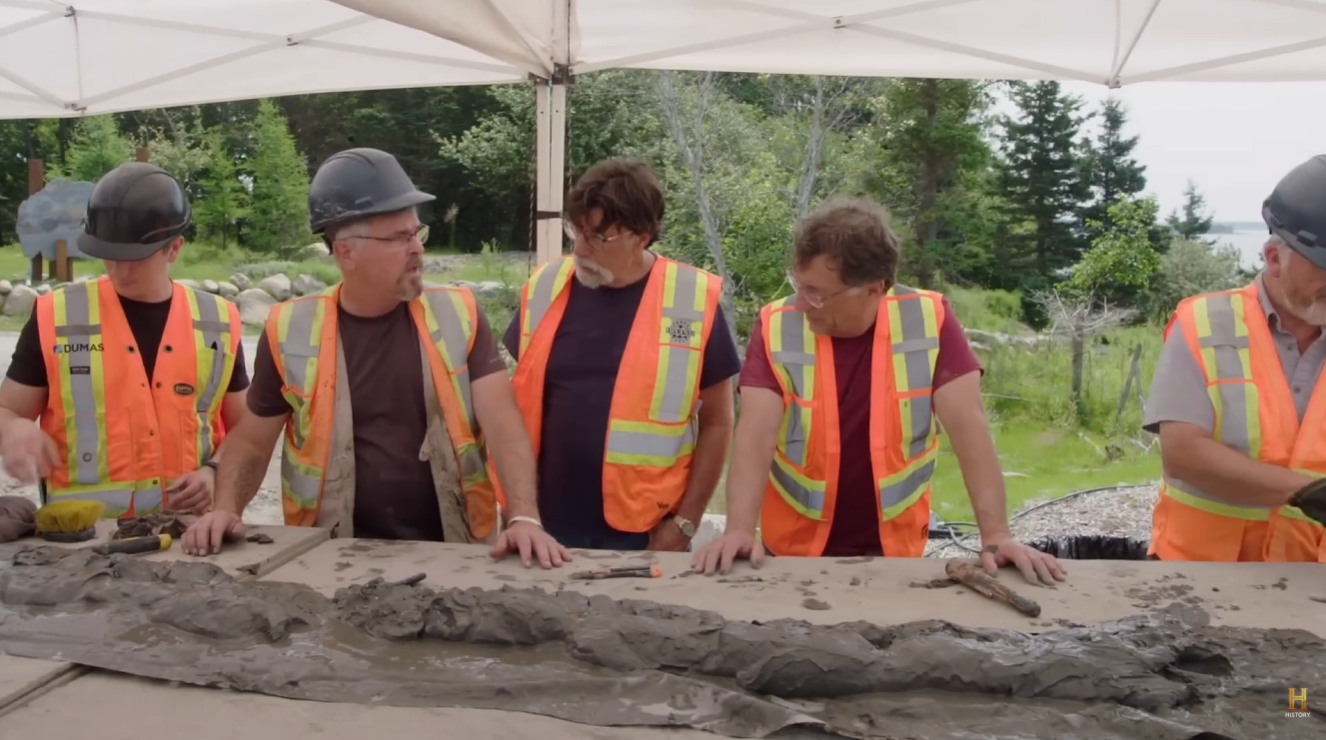
At Smith’s Cove and nearby shafts, the evidence grew even stranger. The team reportedly found paper, leather, human bones from the 17th century and signs of a large wooden box pushed deep into the mud. Parchment-like materials, stone artifacts, pottery and charred iron pieces added to a sense that the island had seen repeated phases of activity involving excavation, transport and perhaps concealment. Some finds seemed to point toward military or naval connections, while others opened the door to theories about privateering, piracy and organised treasure movement.
The coin discoveries on Lot 5 only added to that sense of historical overload. The team recovered several coins from different eras and regions, including what experts identified as a Tudor-period British coin, a Roman coin and another piece that may have originated in India between the 6th and 8th centuries. One tiny Roman coin may even be the oldest coin yet discovered on Oak Island. Those finds do not provide a simple answer, but they do suggest that the island’s story may involve a far wider web of contacts and timelines than treasure hunters once imagined.
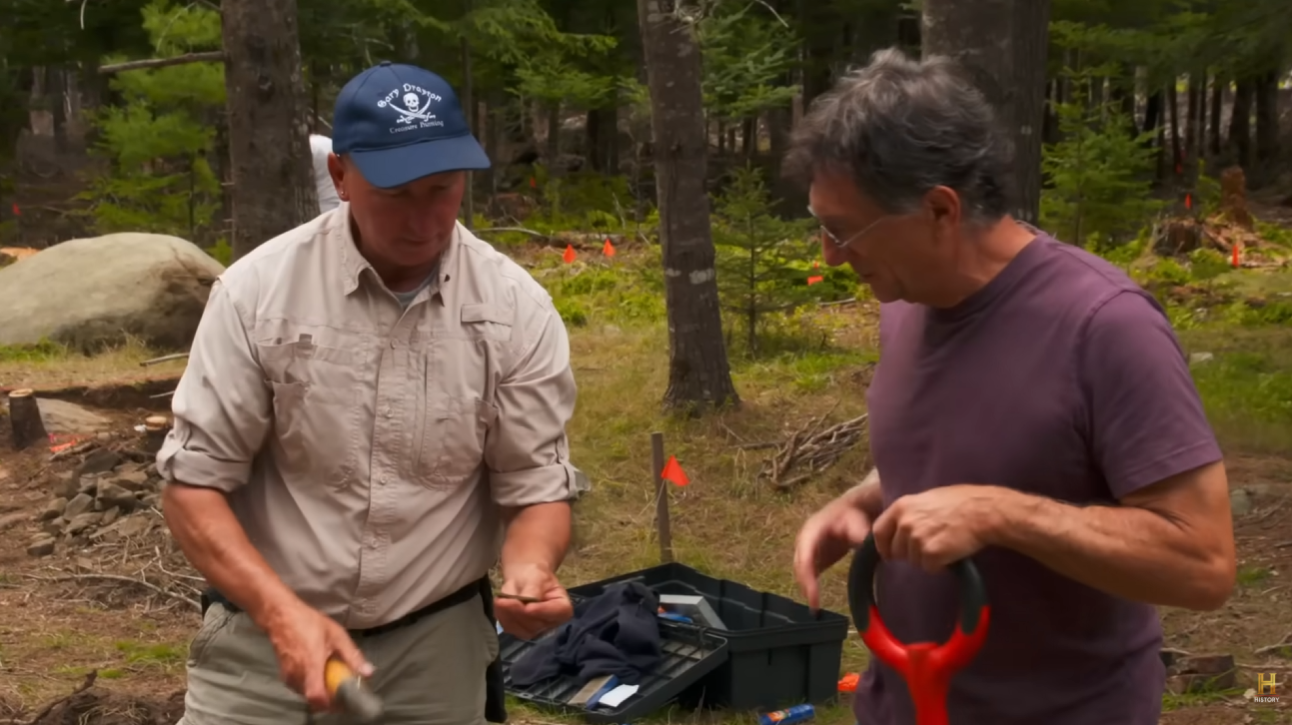
For Rick and Marty Lagina, that is both the frustration and the fascination of Oak Island. Every breakthrough seems to generate two more questions. A flooded shaft leads to timber. A timber leads to a possible tunnel. A tunnel leads to a cave. A cave suggests metals, passageways and hidden chambers. Meanwhile, surface finds hint at trade, shipping, colonial activity and perhaps something much older.
What makes this latest chapter especially compelling is that it does not rest on a single dramatic object. Instead, it is the convergence of clues that matters. The flooding crisis forced the team to stabilise the Garden Shaft, but in doing so, they uncovered more evidence that the underground world beneath Oak Island may be structured, layered and intentionally altered. Aladdin’s Cave now sits at the heart of that belief. If it contains man-made features, it could become one of the strongest pieces of evidence yet that the island’s mystery was engineered, not imagined.
For now, the answers remain out of reach. But with ancient artifacts, submerged cavities, old wood, chest hardware and tunnel-like features all appearing in the same wider search zone, Oak Island’s enduring mystery looks more alive than ever. The team may not yet have found the final prize, but they have clearly uncovered enough to suggest that whatever happened on that island was far more ambitious than a simple tale of buried treasure.
