Scientists Offer New Explanation for Oak Island Mystery After Centuries of Treasure Theories

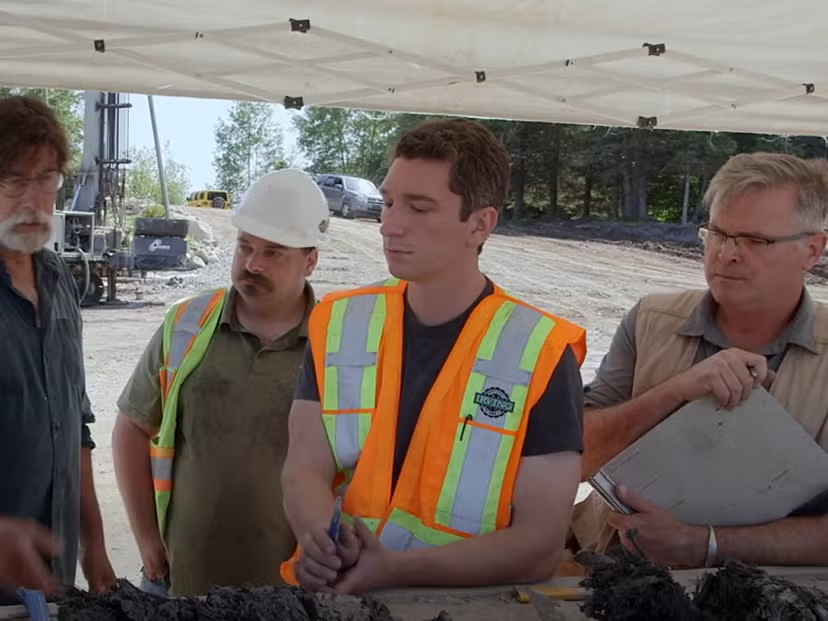
For more than 200 years, Oak Island has held a powerful place in the imagination of treasure hunters, historians and television viewers. Its famous Money Pit, strange artifacts, buried structures and long list of theories have turned the small Nova Scotia island into one of the most enduring mysteries in North America.
But while many fans continue to search for signs of pirates, Knights Templar relics or hidden treasure, some researchers believe the real explanation may be very different.
The modern story of Oak Island began in 1795, when three young men — Daniel McGinnis, John Smith and Anthony Vaughan — reportedly discovered a strange depression in the ground. Above it, an old block and tackle was said to have hung from an oak branch, suggesting that something heavy may once have been lowered into the earth.
As the young men dug, they reportedly found flagstones and layers of logs at regular intervals. The site later became known as the Money Pit, and it quickly became the center of speculation. Over the decades, searchers returned again and again, convinced that something important had been hidden deep below the surface.
One of the most famous stories surrounding the pit involves a mysterious stone reportedly found at around 90 feet. The stone was said to contain strange markings, and later accounts claimed the symbols may have pointed to buried wealth deeper underground. The stone itself has since become part of Oak Island legend, though its exact history and interpretation remain disputed.
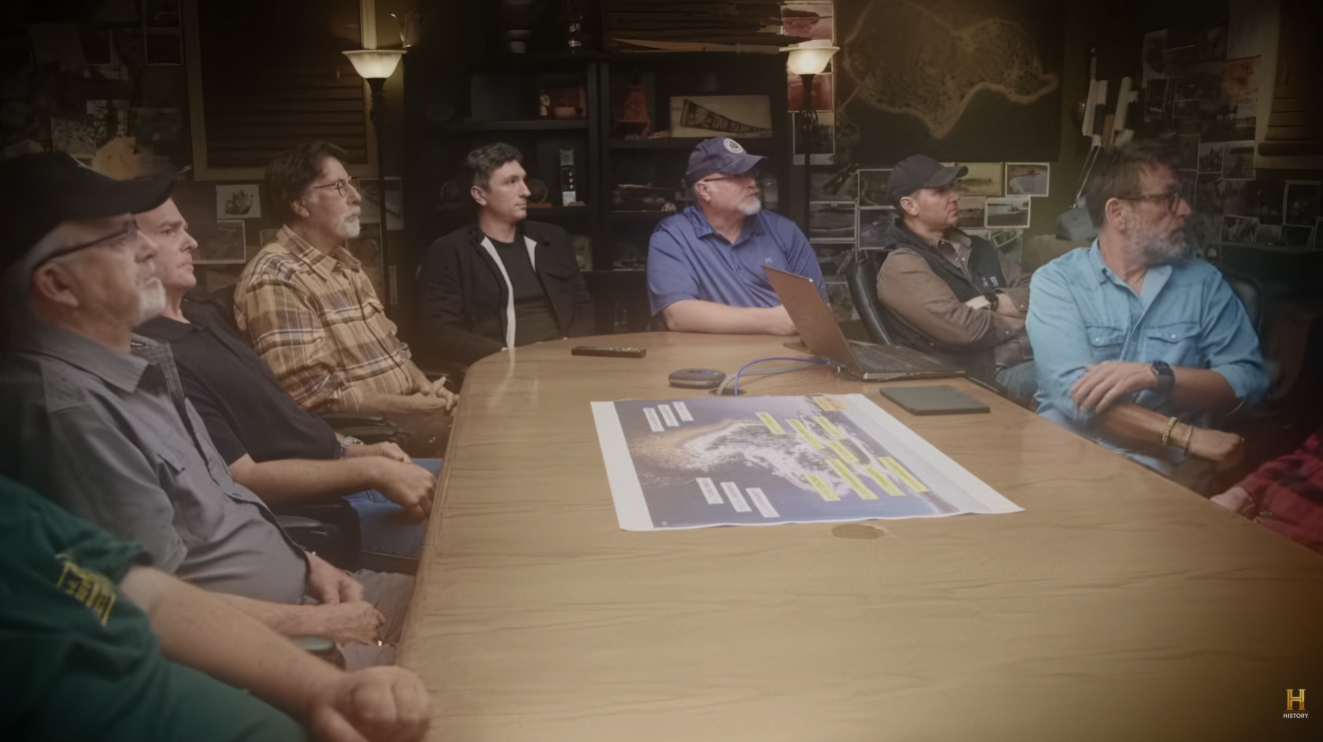
Other discoveries added to the island’s reputation. A small piece of parchment reportedly found deep in the Money Pit led some to suggest the site could contain lost manuscripts. A coin said to show a Templar-style cross encouraged theories linking the island to the medieval order. A Spanish silver ring from the swamp area raised questions about possible European activity in the 18th century.
Then there is Nolan’s Cross, a large arrangement of boulders discovered by treasure hunter Fred Nolan. Its unusual shape has been interpreted by some as a deliberate marker, possibly connected to Templar symbolism. For supporters of that theory, the cross-like alignment suggests that Oak Island may have been designed as part of a larger hidden system.
Smith’s Cove has also produced major interest. A U-shaped wooden structure discovered there has been dated to a period before the Money Pit was found. The presence of Roman numerals carved into some wooden pieces has led researchers and viewers to debate whether the structure was part of a sophisticated engineering system connected to flood tunnels or shoreline construction.
The island’s swamp has produced further clues, including a ship brace showing signs of stress and burning. Some believe this could support the theory that a ship was intentionally sunk or hidden in the swamp. Others argue that the evidence may point to ordinary maritime activity from the 18th century.

Coconut fiber found in and around the Money Pit has also puzzled searchers. Since coconut trees do not grow near Nova Scotia, its presence has often been cited as evidence of long-distance trade or deliberate construction. However, some researchers note that coconut fiber was commonly used as packing material on ships, meaning it could have arrived on the island through more practical routes.
One of the more serious finds came from borehole H8, where human bone fragments were recovered. The discovery raised difficult questions about who may have been on the island and why. It also added a human dimension to a mystery often dominated by treasure theories and engineering puzzles.
Yet not every dramatic claim has survived close examination. One supposed Roman sword once drew attention because it appeared to suggest ancient European contact with North America. Later, however, it was identified as a modern replica. For many researchers, that case became a reminder that Oak Island evidence must be carefully authenticated before major historical claims can be made.
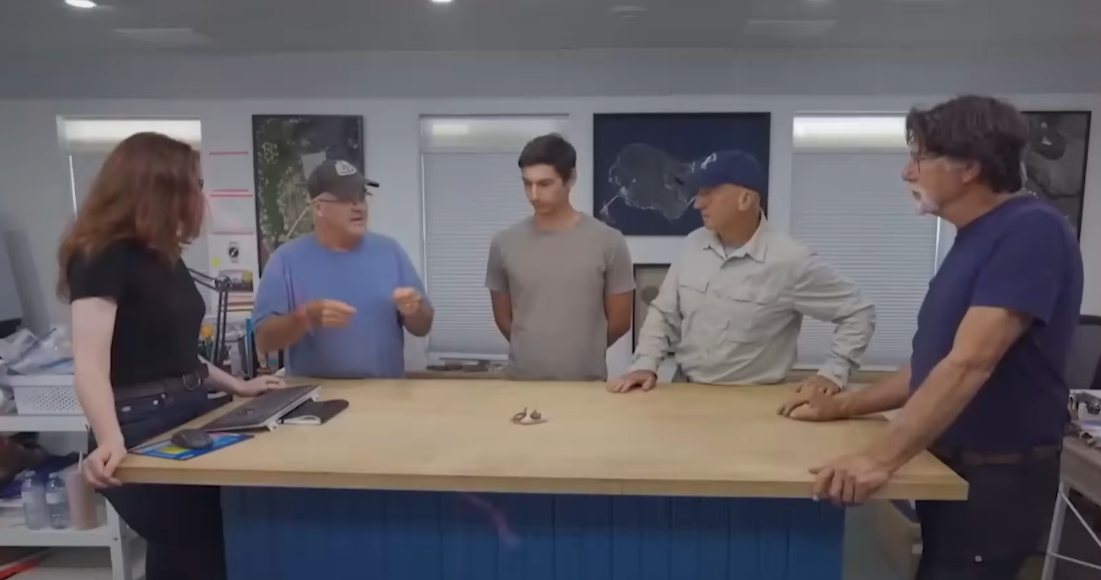
Other finds have been more grounded. A British military button and a large metal hinge discovered at the Gal 1 dig site were dated to the 17th or 18th century. These objects support the idea that British military or maritime activity may have occurred on or near the island. They do not solve the mystery, but they place parts of Oak Island’s story within a more realistic historical setting.
The story of Samuel Ball has also added a powerful layer to the island’s history. Born into slavery in South Carolina, Ball gained freedom after serving with British forces during the American Revolutionary War and later became a landowner on Oak Island. Artifacts found on his former property, including coins, buttons and a pistol part, have led some to question whether he knew more about the island’s secrets than history records.
While many theories remain popular, some scientists and researchers have offered a more practical explanation. Marine geologist Gordon Fader and historian Joy Steele have argued that Oak Island may once have been the site of a secret British industrial operation. Their research points to possible activities such as pine tar production, brass manufacturing and wire drawing during the early 18th century.
Under this interpretation, the Money Pit may not have been a treasure vault at all. It may have been a natural geological feature later used as part of an industrial site, possibly a pine tar kiln. Layers of wood, charcoal and putty found in the pit could fit that explanation, according to this theory.
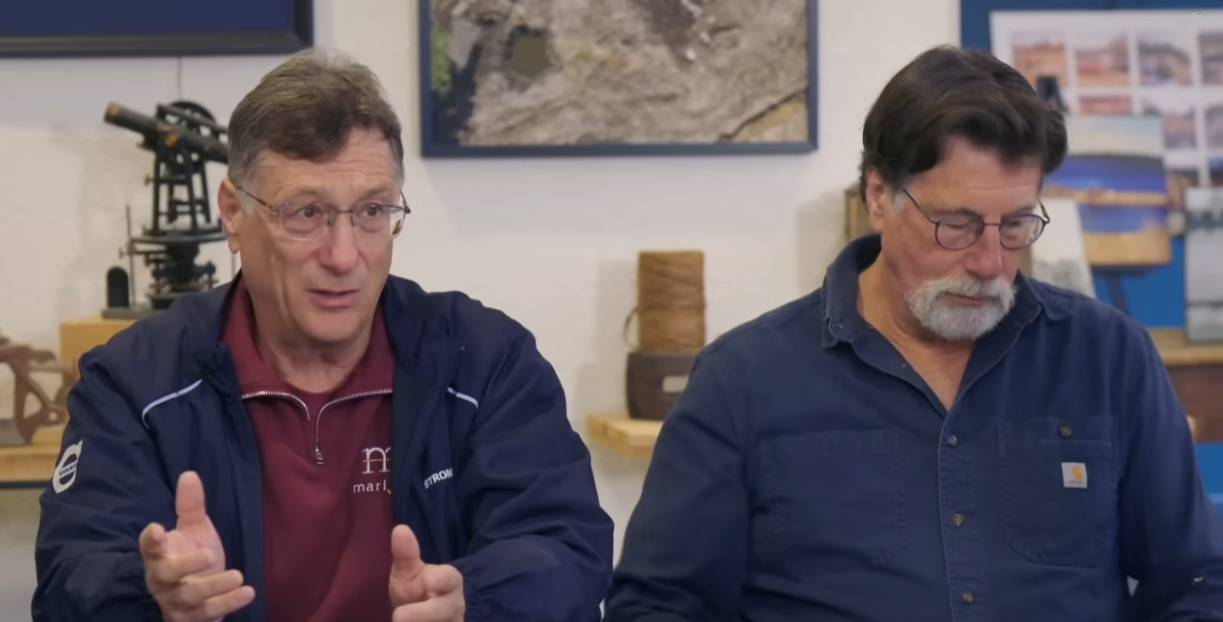
The flood tunnel claims may also have a less mysterious origin. Some researchers have suggested that structures near Smith’s Cove may be linked to sea salt harvesting or other coastal industry rather than a hidden treasure defense system. In this view, many of Oak Island’s clues may come from ordinary but forgotten industrial activity.
That explanation does not remove the mystery completely. Instead, it changes the question. Rather than asking only where the treasure is, researchers may need to ask what kind of activity truly took place on the island, who organized it, and why so much of it was forgotten.
For Rick and Marty Lagina, the search continues with modern tools, including seismic testing, drilling, ground-penetrating radar and dye tests. Their work has kept Oak Island at the center of public attention, while also bringing new scientific methods to a story once driven mostly by legend.
Whether the final answer involves treasure, industry, military activity or a mixture of all three, Oak Island remains compelling because each discovery opens another door. The island may not offer a simple solution, but its history continues to grow more complex with every artifact pulled from the ground.
After centuries of speculation, one thing is clear: Oak Island’s mystery is not only about what may be buried beneath the surface. It is also about how easily history, legend and human hope can become tangled together — and how difficult it can be to separate one from the other.