The Curse of Oak Island turns attention to Lot 8 after boulder discovery raises fresh tunnel questions

A new discovery on Lot 8 has pushed one of Oak Island’s quieter search areas into the centre of the mystery, after the team uncovered what appears to be a man-made feature beneath a massive boulder and recovered evidence that may point to hidden underground activity. What had long been treated as a secondary location is now being discussed as a potentially significant site, with a void beneath the stone, unusual soil conditions and intriguing camera images all adding to the sense that the island may still be hiding something important away from the Money Pit.
According to the transcript, attention turned to the boulder after the team noticed it was surrounded by smaller stones spaced in a way that did not appear natural. The arrangement suggested the rock had been deliberately held in place, rather than simply left behind by glacial movement. Once the surrounding area was examined more closely, the team also found disturbed soil underneath, strengthening suspicions that human activity had taken place there at some point in the past.
That suspicion deepened when a snake camera was inserted beneath the boulder. The footage revealed a void below the stone, along with what was described as a possible iron stake and a small round white object that some members of the team believed looked like a pearl. The find was striking not simply because of the objects themselves, but because of the space they appeared to sit within. Rather than a narrow gap or a simple hollow, the camera seemed to reveal a more substantial underground opening, possibly even a connected series of empty spaces beneath the rock.
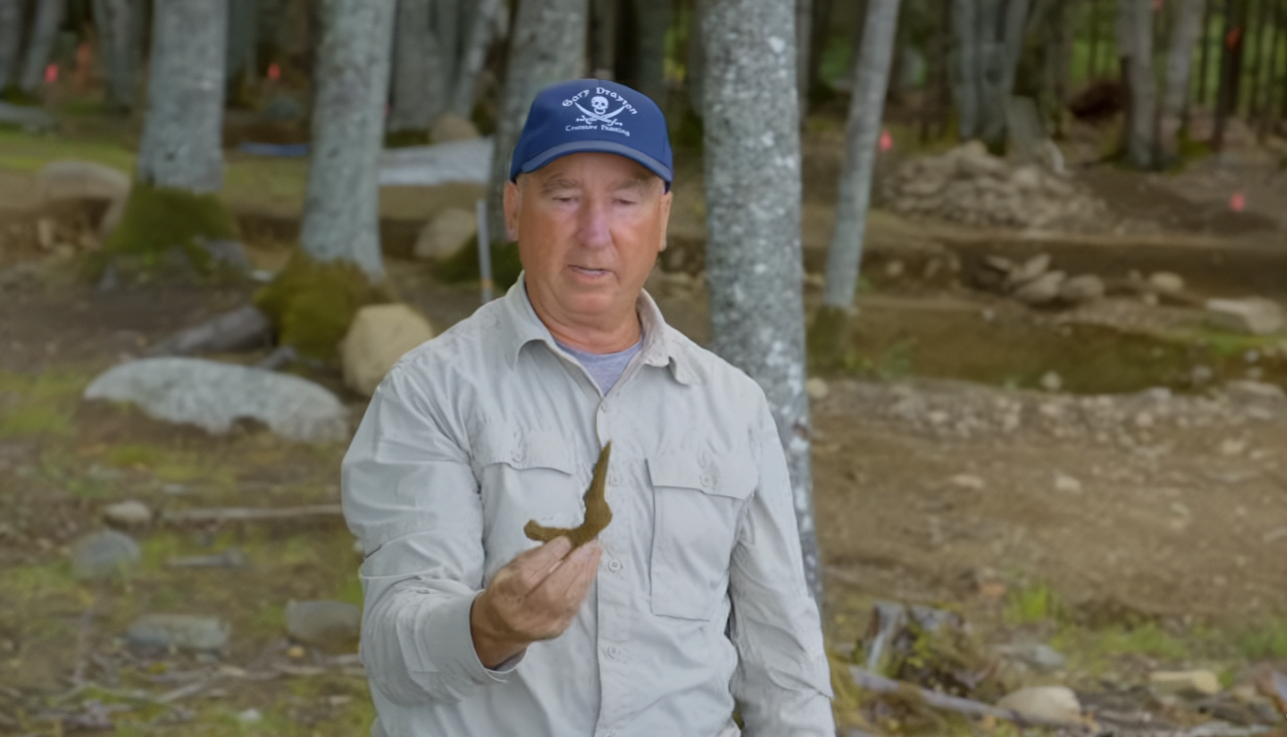
To determine whether the feature had been shaped by people rather than nature, Dr Ian Spooner was brought in to analyse the soil. Core samples taken from beneath the boulder produced one of the most notable results in the sequence. The sediment showed lead concentrations far above what would normally be expected on the island, with the transcript stating that usual levels were around 12 parts per million, compared with readings as high as 140 parts per million under the stone. Just as important, nearby samples did not show the same spike, suggesting the lead was highly localised rather than part of a broader geological pattern.
That finding gave fresh weight to the idea that the boulder could be concealing a human-made shaft or chamber. In the transcript, Spooner linked the lead signature to burning activity and noted that fire had historically been used to create airflow in underground workings. If that interpretation proves correct, the void beneath the boulder may not simply be an empty space but part of an engineered feature, possibly connected to a tunnel system. For a team that has spent years trying to understand how different parts of the island may fit together, that possibility has obvious significance.
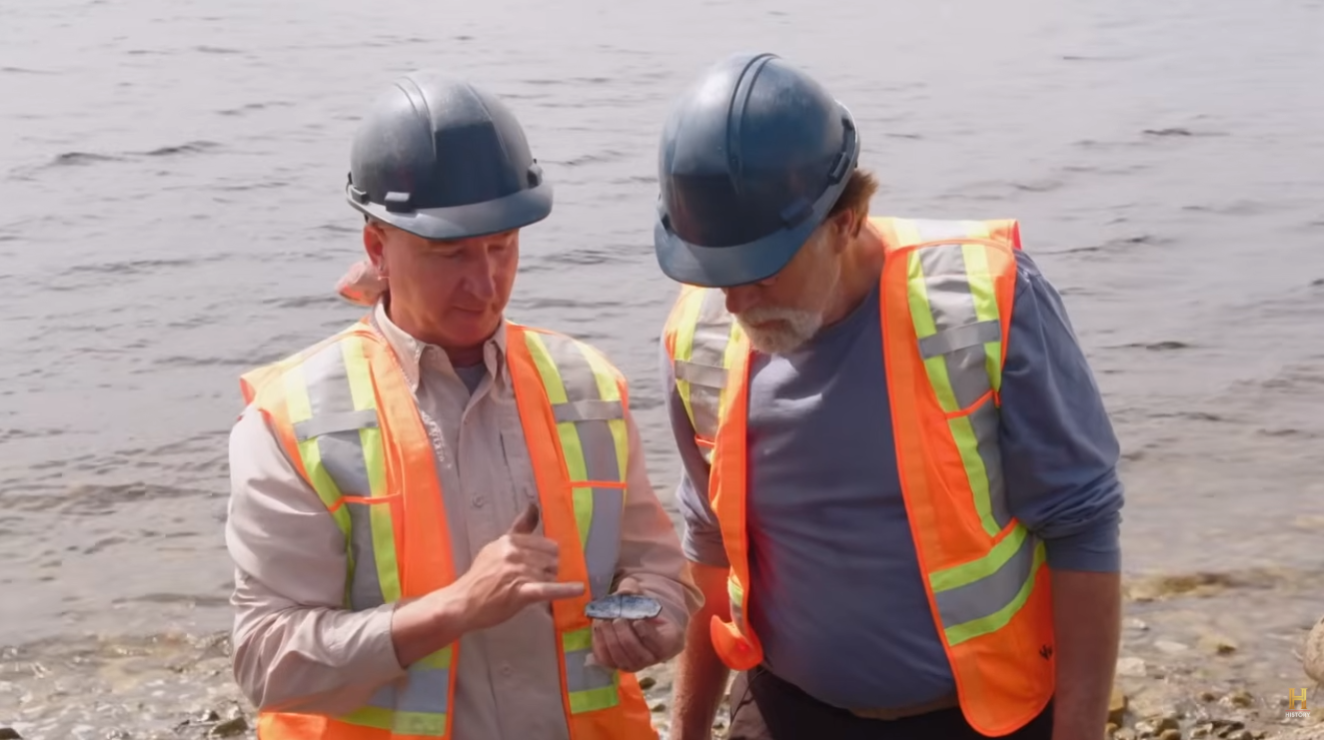
The case for further excavation only intensified when the camera was sent back beneath the rock after archaeologists cleared more access around the site. This time, the footage appeared to show yellow-gold veining or lustre in material lying within the void. Members of the team openly questioned whether the shine could be gold, while also acknowledging that it might be something else. Even so, the visual impression was enough to change the mood around the site. In a search defined by fragments, traces and inconclusive clues, the suggestion of a valuable material lying exposed beneath a carefully positioned boulder was enough to turn Lot 8 into a priority.
The archaeologists had initially approached the area carefully, using delicate tools and slow excavation methods to preserve as much information as possible. But by the end of the transcript, that stage had effectively run its course. With surface analysis no longer yielding enough answers, the decision was made to prepare for a lift of the boulder itself. That marks a significant escalation. Moving a stone of that size is not simply another step in the dig. It is an operational and interpretive turning point, because whatever lies directly underneath will either support or weaken the theory that Lot 8 contains one of the island’s more deliberate hidden structures.

The transcript also reflects a broader shift in how the site is being understood. Lot 8 is no longer being treated as an isolated curiosity. Instead, it is increasingly framed as a possible key to the island’s wider design. The combination of evenly spaced support stones, disturbed ground, a subsurface void and chemically unusual sediment suggests planning, concealment and purpose. Whether that purpose relates to a tunnel, a ventilation shaft, a sealed chamber or something less dramatic remains unproven. But the evidence has been strong enough to persuade both the archaeologists and the Lagina brothers that the boulder can no longer be left untouched.
For a series built on anticipation, Lot 8 now offers one of the clearest tests in recent memory. If the boulder is lifted and a structured feature is found beneath it, the discovery could reshape current theories about how Oak Island was used and which parts of it mattered most. If not, it will still close off one of the most visually compelling clues the team has examined in some time. Either way, the island’s long-running mystery has shifted again, and Lot 8 has become the latest place where speculation is giving way to action.