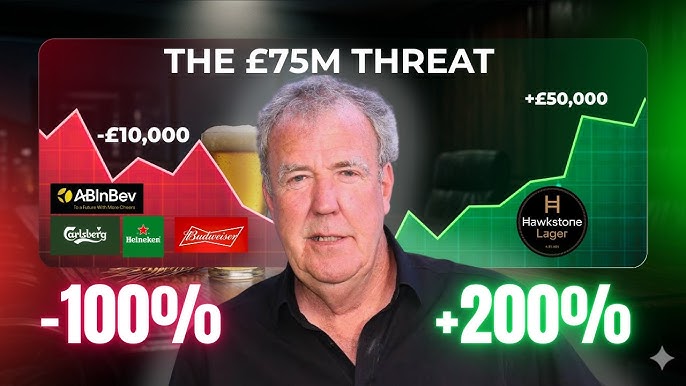
For decades, Britain’s beer aisle has looked like a place of choice. Different logos, different bottles, different prices, and different marketing campaigns all suggest a competitive market. But behind many of the country’s best-known lager brands sits a much smaller group of global brewing giants.
Companies such as AB InBev, Carlsberg, Heineken and Asahi dominate huge parts of the market, controlling famous names, major supply chains and powerful distribution networks. For years, that system has been difficult for smaller challengers to break. The scale is enormous, the capital requirements are high, and the pub trade has long been shaped by tied arrangements and established supply contracts.
But Jeremy Clarkson’s Hawkstone brand has become an unexpected challenge to that model.
What began as a farming-related beer brand connected to Clarkson’s Cotswolds land has grown into something far more significant. Hawkstone is not simply another celebrity product trying to cash in on a famous name. Its real power lies in the supply chain behind it.
The central idea is simple: buy barley directly from British farms, reduce the number of middlemen, and build a product around provenance, traceability and local agriculture. In a market where many mass-produced beers rely on global commodity sourcing and centralized production, Hawkstone offers a different story.
That story matters because it gives the consumer something the major brewing companies often struggle to provide: a visible connection between the farmer, the field and the final pint.
Clarkson’s farming journey has been widely followed through Clarkson’s Farm, the Amazon Prime series that turned Diddly Squat into one of the most famous farms in Britain. Viewers watched him battle weather, machinery, bureaucracy and the realities of agriculture. But away from the cameras, Hawkstone was quietly building a commercial model that linked the farm narrative to a real product.
Instead of presenting beer as just another supermarket choice, Hawkstone sells the idea that what is in the glass has a clear origin. The barley is not just an anonymous input in a global supply chain. It comes from farmers who know where their crop is going, and from a system designed to give British agriculture a stronger role in the value of the final product.
That is where the threat to larger brewers begins.
The big beer companies have scale. They have vast brewing facilities, established logistics networks and huge marketing budgets. They can produce consistent beer at massive volume. But they are built around centralization. Their advantage comes from efficiency, volume and control.
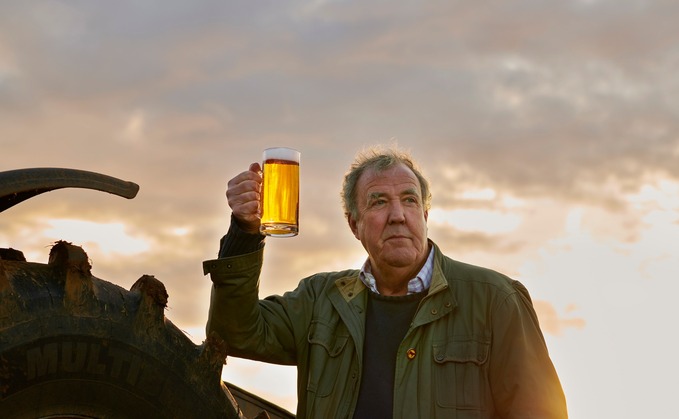
Hawkstone is trying to win on a different battlefield. It is not trying to beat global lager brands on price. It is charging a premium by offering authenticity, traceability and a direct farming connection. For consumers who care about where their food and drink come from, that can be a powerful selling point.
The pub trade is another key part of the story. For many independent pubs, stocking a beer like Hawkstone is not just about adding another tap. It can bring in customers who already know the brand from television, social media and Clarkson’s wider farming world. Once those customers arrive, they may spend on food, soft drinks and other items as well.
That makes Hawkstone valuable not only as a beer, but as a footfall driver.
According to the narrative around the brand, its growth has been rapid, with increasing pub distribution and supermarket presence. That kind of expansion makes the major brewers pay attention, because it suggests there is a real market for beer built around British farming rather than anonymous commodity supply.
The most important point is that Hawkstone is not just selling alcohol. It is selling a challenge to the existing food and drink system. It asks whether farmers should remain at the bottom of the chain, selling into commodity markets with little influence over the final product, or whether they can become part of a more direct and valuable relationship with consumers.
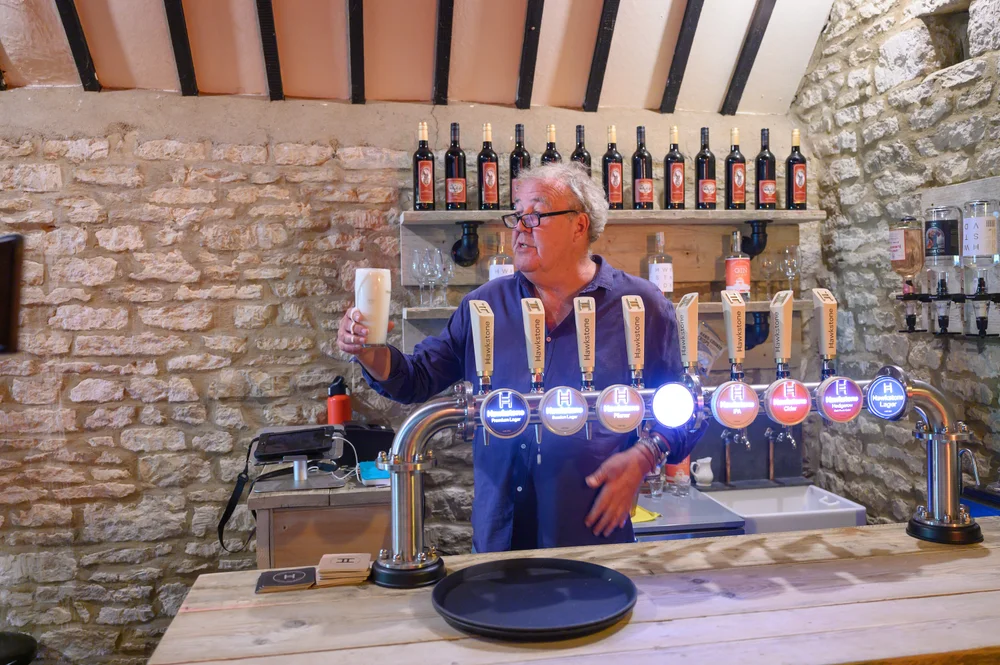
That is why Clarkson’s beer brand has become such an interesting case study. The product itself may be lager, but the model behind it touches on bigger questions about British farming, rural business and consumer trust.
Can local sourcing compete with global scale? Can provenance justify a higher price? Can a farm-linked brand build enough loyalty to challenge the old brewing structure?
Hawkstone’s rise suggests the answer may be yes.
For Jeremy Clarkson, this is another example of how his farming project has moved beyond television entertainment. Clarkson’s Farm made millions of viewers care about agriculture. Hawkstone gives some of those viewers a product connected to that story.
The established beer giants are not likely to disappear. Their scale, money and distribution power remain enormous. But Hawkstone has shown that there is space for a different kind of beer business — one that gives farmers a clearer role, consumers a clearer story, and pubs a product with built-in public interest.
In the end, the threat is not that Hawkstone will replace the biggest brewers overnight. The threat is that it has proved another model can work.
And once consumers start asking where their pint really comes from, the old brewing giants may find that branding alone is no longer enough.
