The Cotswolds has quickly emerged as one of the UK’s most desirable property markets, attracting a growing wave of international buyers in search of luxury homes, restored estates and countryside living with global appeal.
Once prized mainly for its postcard scenery, honey-coloured stone villages and slower pace of life, the region is now being viewed through a different lens. For wealthy buyers from overseas, the Cotswolds offers not just beauty and privacy, but also status, lifestyle and cultural relevance. Its rise has been accelerated by a combination of high-profile influences, including Soho Farmhouse, Clarkson’s Farm and the luxury hotel Estelle Manor, each of which has helped reshape the area’s image in a distinct way.
Soho Farmhouse played a major role in putting the Cotswolds on the map for an international audience of creatives, entrepreneurs and celebrities. Its members-only appeal, polished rustic design and carefully curated exclusivity turned the region into more than a traditional country retreat. It became a lifestyle destination. For many affluent buyers, that shift mattered. The Cotswolds was no longer simply a charming rural escape within reach of London. It became somewhere fashionable, connected and culturally current.
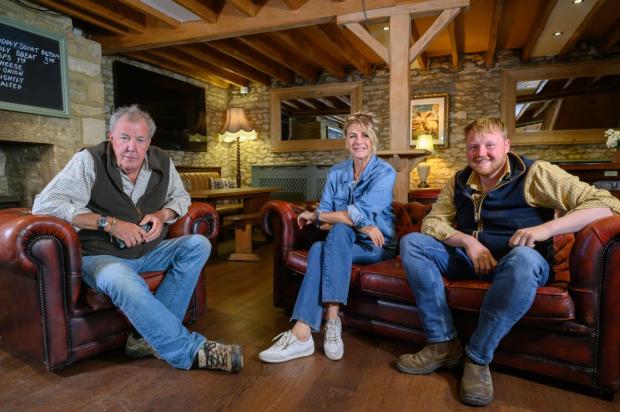
Clarkson’s Farm then expanded that visibility in an entirely different way. Through its global success, the series introduced millions of viewers to the landscape, rhythms and identity of the Cotswolds. While the programme focused on farming and rural life, it also gave the area repeated international exposure, turning local fields, villages and businesses into recognisable settings for a huge audience. That visibility has had a wider effect than tourism alone. It has added to the region’s reputation and helped reinforce its position as one of the most talked-about countryside locations in Britain.
Estelle Manor has added yet another dimension to the area’s growing appeal. The luxury hotel has strengthened the Cotswolds’ position at the top end of the hospitality market, combining restored heritage architecture with private members’ club culture, high-end wellness facilities and a refined contemporary aesthetic. For international buyers, developments like this signal that the region can now compete with some of the most exclusive lifestyle destinations in Europe. It offers heritage and tradition, but also the level of service, design and privacy that wealthy clients increasingly expect.
Alex Hancock, co-founder of Bloom Studio, said the changes in the region are becoming more visible with each new project and each new wave of buyers.
The Cotswolds is evolving, he said. What the studio is seeing is a new level of international buyer who values heritage but expects refinement. He explained that the challenge is to preserve the architectural integrity of these buildings while quietly introducing the flow, material quality and technical performance that modern living demands.
That shift in buyer expectations is now shaping the market in a significant way. Prices are rising, but so too are the standards attached to premium homes. Traditional period properties, converted barns and listed farmhouses remain highly sought after, yet appearance alone is no longer enough. Buyers want homes that feel authentic, but they also expect comfort, efficiency and craftsmanship at a very high level.
Today’s luxury buyers are looking for spatial flow rather than awkward, fragmented layouts. They want discreet technology rather than obvious modern interventions. They expect spa-like bathrooms, natural materials, understated lighting and a sense that every detail has been carefully considered. The best properties are not those that simply look impressive in photographs. They are the ones that manage to blend historical character with the ease and performance of contemporary living.
Bloom Studio, founded by Alex Hancock and Kit Maplethorpe, has recently expanded its presence in the region as demand continues to grow. Hancock, who grew up and still lives in the Cotswolds, brings local knowledge to a market that increasingly requires both sensitivity and sophistication. The studio’s wider experience restoring heritage properties in Ibiza and prime London has translated naturally to the Cotswolds, where many homes sit within protected landscapes and involve complex restoration work. In such settings, success often depends on achieving a careful balance between preservation, craftsmanship and modern refinement.
That balance is becoming more important as the Cotswolds continues to evolve from a domestic prestige market into a globally recognised lifestyle destination. International buyers are not only purchasing homes there. Many are investing in a complete vision of rural luxury, one shaped by privacy, design, hospitality and social cachet.
The region is now associated not just with countryside charm, but with discretion, architectural quality and a globally connected social scene. Prime village houses, restored farmsteads and turnkey country homes are commanding significant premiums, especially when they combine original features with polished, move-in-ready interiors. Buyers at the top end of the market want homes that require no compromise: places that honour the past while delivering the quiet luxury of the present.
As that momentum continues, there is little sign that the Cotswolds’ premium property boom is slowing. What was once seen as a picturesque English escape is increasingly being viewed as one of Britain’s most coveted addresses, shaped by heritage, elevated by design and reinforced by a powerful mix of media attention, hospitality and international demand.
