Oak Island Team Follows Templar Trail to Italy as Ancient Symbols Raise New Questions


The Oak Island mystery has taken another dramatic turn, this time thousands of miles away from Nova Scotia, as Rick Lagina and members of the team travelled to Italy in search of possible links between the island’s most debated artifacts and the medieval Knights Templar.
While work continued on Oak Island, Rick Lagina was joined by Alex Lagina, Peter Fornetti, historian Doug Crowell and researcher Cory Mole for a field investigation across several historic Italian sites. Their journey focused on underground cave systems, medieval churches and carved symbols that may connect to items previously discovered on Oak Island.
The investigation began in Cammarano, Italy, where the team met researchers Emiliano Sacchetti and Alberto Recanatini. The group was there to examine the Cammarano Caves, a vast man-made underground network believed to date back more than 2,500 years.

According to the episode transcript, the caves were first associated with an ancient civilization in the region and were later modified during the medieval period, when the area was re-established as a stronghold linked to the Knights Templar. For the Oak Island team, the most important detail was the shape of one section of the cave system, which appeared to resemble the lead cross found on Oak Island in 2017.
That lead cross has long been one of the most discussed objects in the modern Oak Island search. Found at Smith’s Cove, it has been viewed by some researchers as a possible clue pointing toward European, and potentially Templar, involvement in the island’s story.
During the visit, the team examined a section of the cave known as the Venus Cave. Its layout appeared to include two arms, one slightly longer than the other. That detail drew immediate attention because the Oak Island lead cross also has an uneven form.
Rick Lagina appeared visibly moved by the possible connection, especially because the research built on earlier work shared by his late friend Zena Halpern, whose theories had helped push the team toward the Templar line of inquiry.
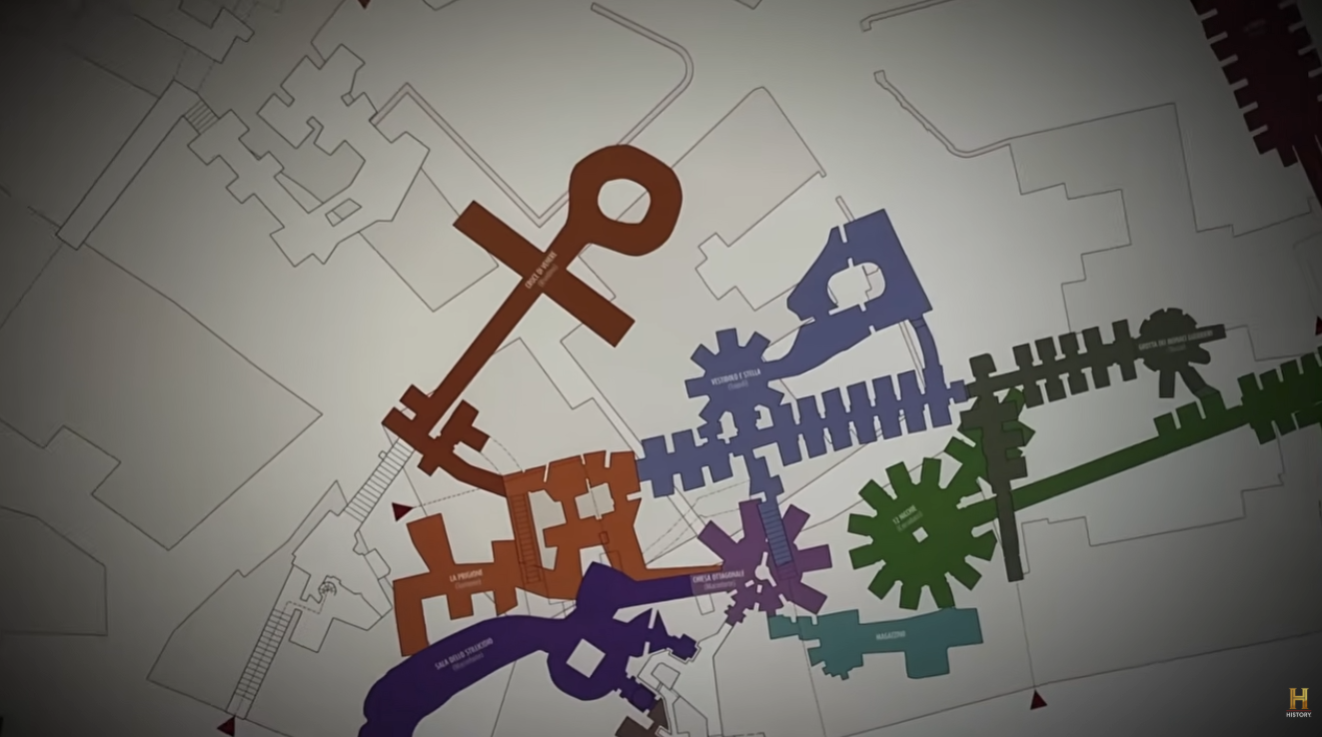
For Rick, the visit was not simply about matching shapes. It was about testing whether there could be a deeper cultural or symbolic relationship between the Italian underground site and the artifact recovered on Oak Island.
The team then moved to Osimo, Italy, where they visited another underground site known as Grotte Simonetti. There, Alex Lagina and Peter Fornetti spotted a carved symbol that immediately stood out. The marking appeared to match a symbol seen on the so-called HO Stone, an artifact fragment linked to a much larger boulder discovered on Oak Island in the 1920s.
The HO Stone has become another intriguing piece of the wider puzzle because of the symbols it reportedly carried. One of those markings, a circle with a dot, has been interpreted by some as a symbol associated with gold. In the Italian cave, the team found what they believed could be a similar symbol, raising new questions about whether the HO Stone may have been a coded marker rather than a random carving.
The investigation then continued to Viterbo, a city with strong medieval significance. The team met Gianluca Diprospero, an author and Templar researcher, who guided them through Santa Maria Nuova, a church built in 1080.
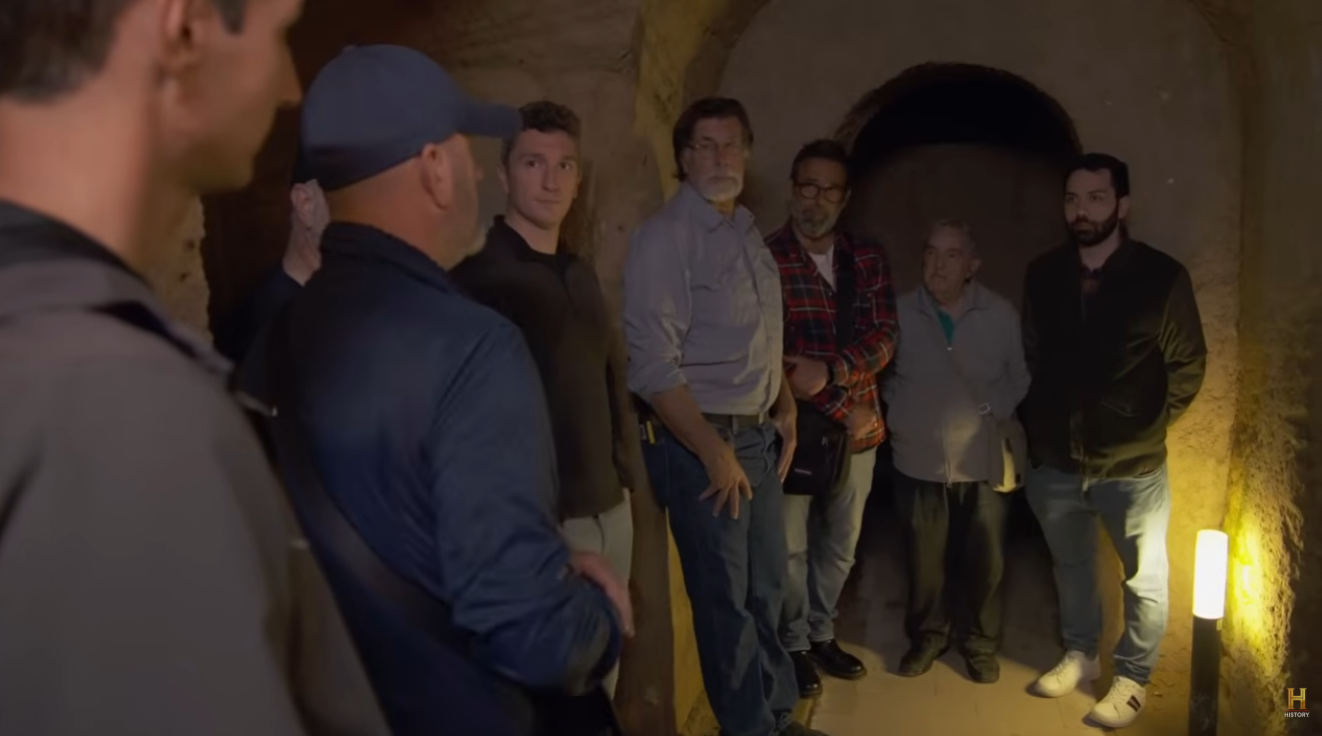
Inside the church, the team found another symbol that appeared to match markings associated with the HO Stone: a cross surrounded by four dots. According to the interpretation offered during the visit, such a marking may have been used in places connected to the Templars, and possibly to protected relics.
That discovery gave the team another reason to reconsider the HO Stone’s possible meaning. If the markings found in Italy were genuinely connected to Templar locations or relic traditions, then the similar symbol on Oak Island could carry more significance than previously understood.
Alex Lagina then proposed a possible interpretation of the HO Stone symbols. By combining the cross-and-four-dots symbol with the circle-and-dot marking, he suggested the stone could point toward the idea of Templar gold or a Templar-linked relic.
The theory remains speculative, but for the Oak Island team, the value of the Italy trip was in building a broader pattern. The same types of symbols appeared across caves, churches and historic Templar-linked locations, while similar markings have also appeared in the Oak Island record.
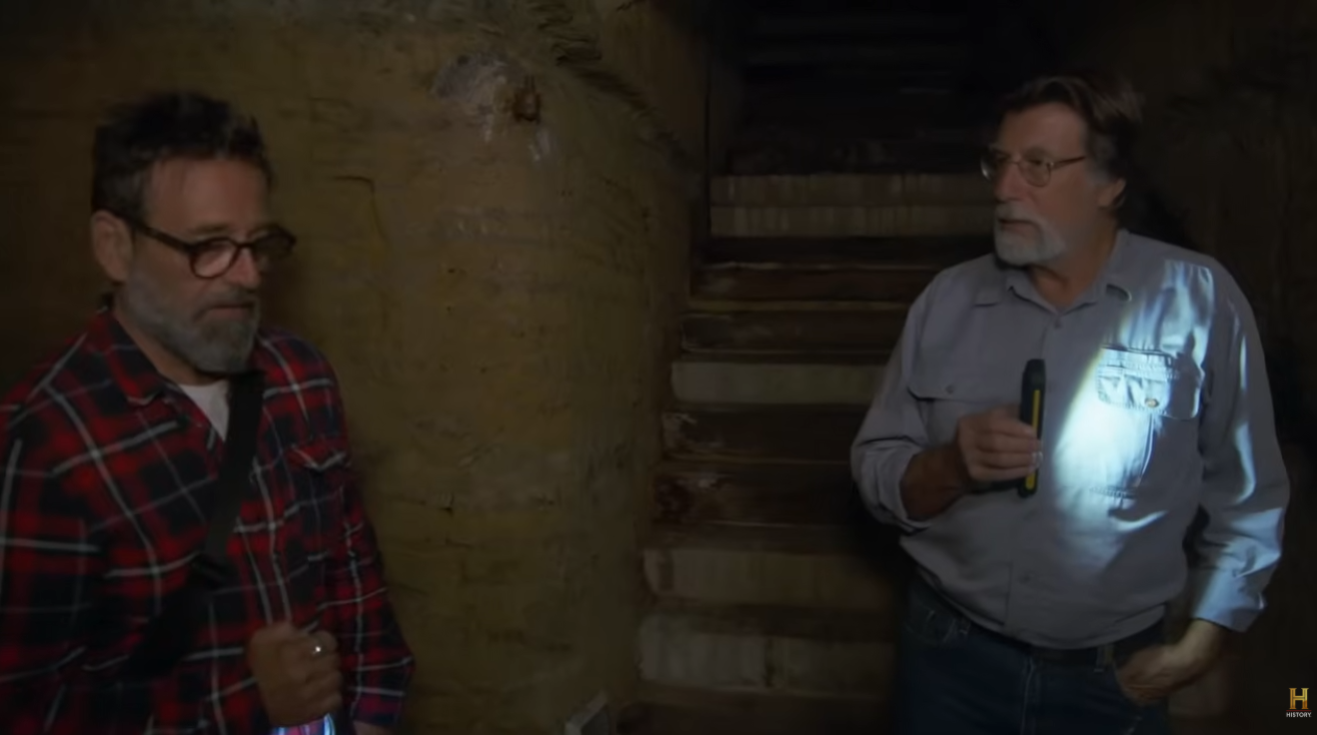
The investigation also touched on possible Masonic symbolism. In Santa Maria Nuova, the team examined markings that some believed could resemble a compass and square. That detail added another layer to the long-running theory that Freemasons may have inherited or preserved knowledge connected to the Templars.
Freemasons have been linked to the Oak Island mystery for generations, with members of Masonic circles involved in several organized search efforts since the Money Pit was first discovered in 1795. The possible appearance of Masonic-style symbols in a medieval Italian church therefore added further interest for the team.
By the end of the journey, Rick Lagina appeared convinced that Italy had offered more than coincidence. The team had not solved the Oak Island mystery, but they had gathered a series of visual and historical clues that may strengthen one of the show’s most enduring theories.
The central question now is whether these symbols are part of a meaningful trail or simply echoes of medieval imagery found across Europe. For Oak Island believers, the Italy investigation may represent another step toward connecting the island’s artifacts with a much older story of hidden knowledge, sacred relics and a treasure trail that may have crossed the Atlantic centuries ago.