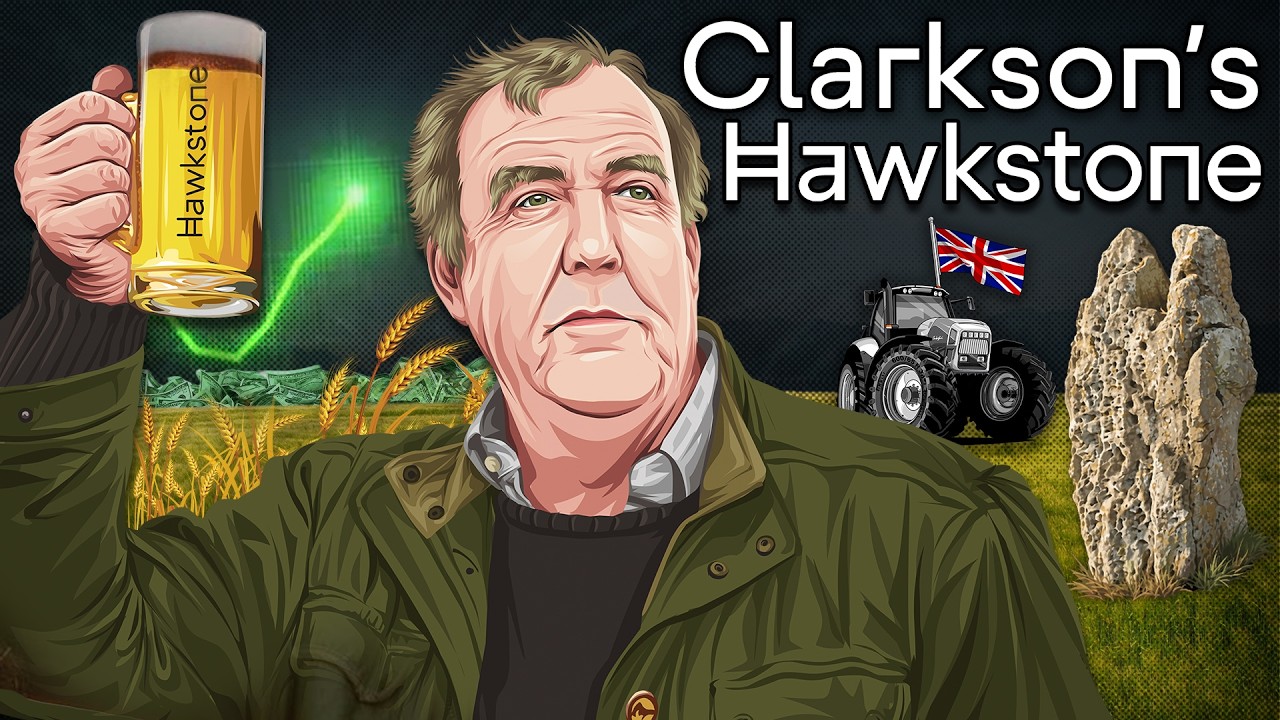
Jeremy Clarkson may have built his public image around fast cars, loud opinions and life on the road, but his most unexpected success story now comes from the fields of the Cotswolds.
Since taking over the day-to-day running of Diddly Squat Farm in 2019, the former Top Gear and The Grand Tour presenter has transformed a difficult farming venture into a wider business network built around British produce, television storytelling and a fast-growing drinks brand.
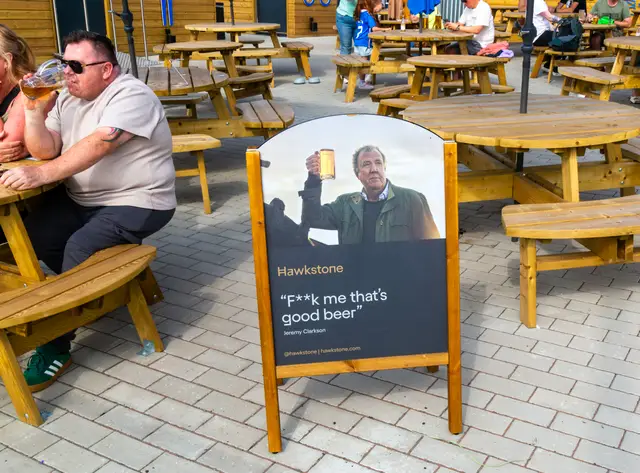
At the centre of that growth is Hawkstone, the beer and cider company connected to Clarkson’s farm and made using British ingredients, including barley grown on his land near Chipping Norton. What began as a practical response to farming problems has become one of the most recognisable celebrity-backed drinks brands in the UK.
Clarkson inherited around 1,000 acres of Cotswolds farmland after his contracted farmer retired. The land had long been used to grow crops such as barley, rapeseed and wheat, but the area’s rocky soil made farming far from simple. In the early stages of Clarkson’s Farm, viewers saw him learn how technical and unforgiving agriculture could be.
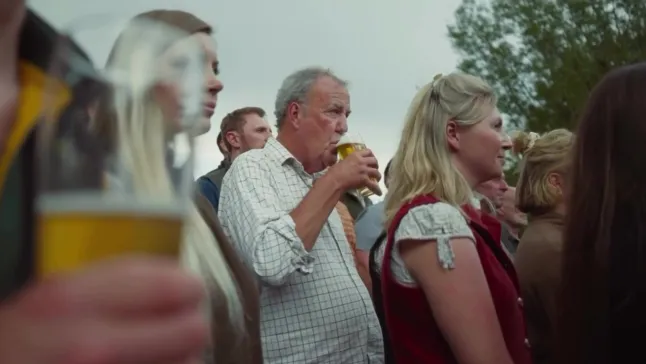
One key lesson came from barley. To be suitable for brewing, barley must meet strict standards, including the correct nitrogen level. If it fails those checks, it can be downgraded and sold as animal feed for a lower price. Clarkson discovered that his farm could produce high-quality malting barley, giving him a chance to turn a crop into a higher-value product.
But there was a problem. Major buyers were not immediately interested in the quantity or supply chain he could offer. Instead of accepting a poor return, Clarkson moved toward producing his own lager.
That decision led him to Rick and Emma King of the Cotswold Brewing Company, a local craft brewery with years of experience. Clarkson later partnered with the company to develop Hawkstone, a brand built around British barley, local identity and the audience already invested in Diddly Squat through the Prime Video series.
The name Hawkstone comes from an ancient standing stone near the farm. It gave the brand a local identity that fitted the wider Clarkson’s Farm story: rooted in the Cotswolds, connected to the land and presented with Clarkson’s familiar mixture of humour and bluntness.
When Hawkstone launched, the response was immediate. According to the source material, it became the UK’s number one selling beer on Amazon within eight hours, outselling established names and creating early fears that stock could run out before Christmas.
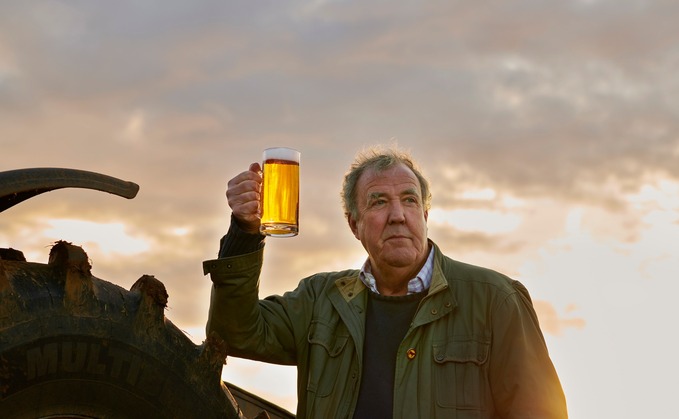
That success was not driven by advertising alone. Clarkson’s advantage was that viewers had already followed the journey. They had seen the farm struggle with weather, paperwork, crop failures, council rows and financial pressure. When Hawkstone appeared, it did not feel like a separate product placement. It felt like part of the farm’s survival plan.
The brand also benefited from a distinctive public voice. In 2023, Hawkstone faced a serious problem when some bottles of cider began over-fermenting after bottling, creating pressure inside the glass. Clarkson addressed the issue publicly and directly, telling customers how to identify affected bottles and seek refunds. The incident later became part of the Clarkson’s Farm narrative, and the source material states that sales rose after the admission, with Clarkson crediting the brand’s honesty.
By 2024, Hawkstone had become more than a farm-side experiment. The company appeared on the Sunday Times list of fast-growing UK businesses, with reported sales of £7.8 million in the year to March 2024. The following financial year, sales reportedly rose to £21.3 million, while company equity increased from £430,000 to just over £3 million.
The business has also expanded beyond lager and cider into other drinks, including stout, gin and vodka. It has secured supermarket listings, entered pubs across the UK and become closely tied to Clarkson’s wider hospitality venture, The Farmer’s Dog pub in Asthall.
The pub has given the brand another physical home, while also showing the difficulty of turning popularity into profit. Clarkson has spoken about the heavy costs of running a pub, suggesting that strong footfall does not automatically create easy margins. In that context, selling Hawkstone beer and cider on site has become a vital part of the business model.
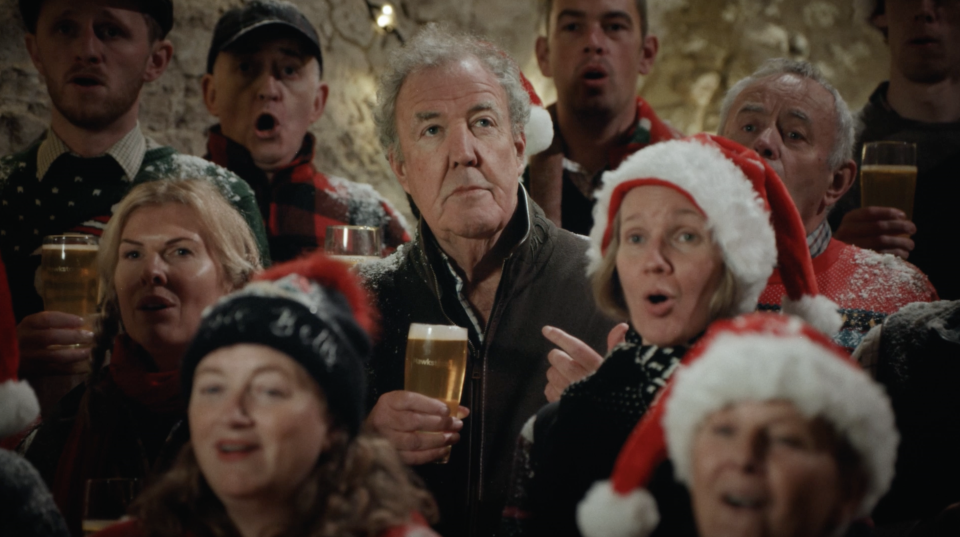
Hawkstone’s marketing has also leaned heavily on Clarkson’s personality. The brand’s adverts, including those featuring the Hawkstone Farmers Choir, have used humour, rural imagery and controversy to generate attention. One advert was reportedly blocked from television because of its language, which only helped create more discussion around the campaign.
The Farmers Choir later gained wider attention after appearing on Britain’s Got Talent, where they received a Golden Buzzer. Clarkson publicly praised the group, saying the moment showed public affection for farmers and the hard work behind rural life.
Hawkstone has since reached further into mainstream hospitality, including a collaboration with Five Guys that emphasised British farming and local sourcing. Clarkson framed the partnership around the idea that customers buying certain food and drink choices could support British producers.
The growth has not come without financial pressure. As sales have expanded, the company’s obligations to creditors have also increased, reflecting the cost of scaling production, supplying pubs, entering supermarkets and pursuing larger ambitions. But the underlying strategy remains consistent: the story sells the product, and the product supports the story.
That is what makes Clarkson’s business model unusual. Diddly Squat is no longer just a farm, and Hawkstone is no longer just a drinks brand. Together, they form an ecosystem built around television, agriculture, hospitality, merchandise, direct audience loyalty and British identity.
For many farmers, a difficult barley crop might have marked another financial setback. For Clarkson, it became the start of a commercial machine that now stretches from a Cotswolds field to supermarket shelves and thousands of pubs.
The result is one of the more surprising reinventions in British television: a presenter once known for cars and combustion has become the face of a modern rural brand, proving that the most valuable crop at Diddly Squat may not be barley alone, but the story built around it.
